
Livraison le jour même ou le lendemain

Qualité garantie

Débloquez vos offres de bienvenue: Livraison GRATUITE | Jusqu'à -80 % | 30 jours d'essai gratuits à JoyPlus
Téléchargez l'application
The time has come to give your child their very first bike. But between Grandpa's tricycle, a bike with training wheels, and the famous balance bike, it's not easy to navigate the options. Yet, in recent years, the balance bike (or push bike) has emerged as the best introduction to two-wheeled riding. Its secret? It allows children to develop a sense of balance and coordination completely intuitively, leaving the complexity of pedals for later.
This guide is here to give you clear benchmarks for choosing the perfect balance bike for your 2-year-old: one that is well-suited, safe, and durable. As product experts at Joybuy, our mission is to guide you toward an informed choice, free of marketing jargon. Let's focus on what really matters for you and your future little cyclist.
Before diving into our selection, let's review the key points that will guide your choice.
This is the essential starting point. To be comfortable and perfectly safe, your child must be able to sit on the saddle while having both feet flat on the ground, with their knees slightly bent. The best approach? Measure their inseam (from the ground to the groin) and compare this measurement with the minimum seat height indicated by the manufacturer.
Opting for an adjustable balance bike, with a height-adjustable seat and handlebar, is a smart investment. It will grow with your child, easily transitioning from a 2-year-old's balance bike to a 3-year-old's balance bike, and even beyond.
The lighter a balance bike is, the easier it is for a toddler to handle. They'll be able to lift it, turn it, and right it without help, which is excellent for their independence and confidence. And a detail that's more important than it seems for parents: you'll often be the one carrying it at the end of a ride! Steel frames are known for their robustness, while aluminum offers a perfect balance of lightness and durability.
Ensure the model complies with European safety standards (CE marking). Take a look at the tires: models with solid EVA foam are puncture-proof and require no maintenance. That's real peace of mind for daily use. Also, check the grips: they should have protective ends to prevent little hands from slipping and to spare your walls during indoor rides.
Let's move on to our selection. Here are models that check all the boxes (safety, adjustability, practicality) and will make an excellent first kids' bike or a great gift for a 2-year-old.

A true classic in the world of pedal-less bikes, designed to last as your child grows. Its strength? A very wide age range (2 to 6 years), made possible by the extensive adjustment range of the seat and handlebar. It's an investment that will last for years.
For parents looking for a classic, robust model that can grow with their child. A reliable choice for discovering the joys of two-wheeled riding.
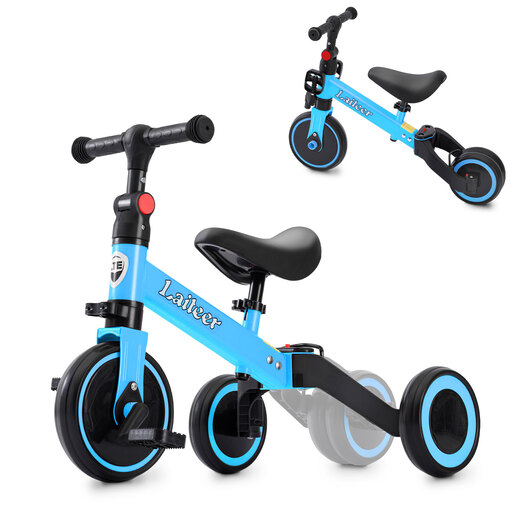
This one is all about versatility. This 2-in-1 model is both a tricycle balance bike and a classic push bike. The pedals are removable, and the rear wheels can be brought together to switch from the ultra-stable tricycle mode to the more dynamic balance bike mode in a snap.
For families who want an all-in-one product. It's the perfect solution for children who need the reassuring step of a tricycle before taking on an adjustable two-wheeled balance bike.
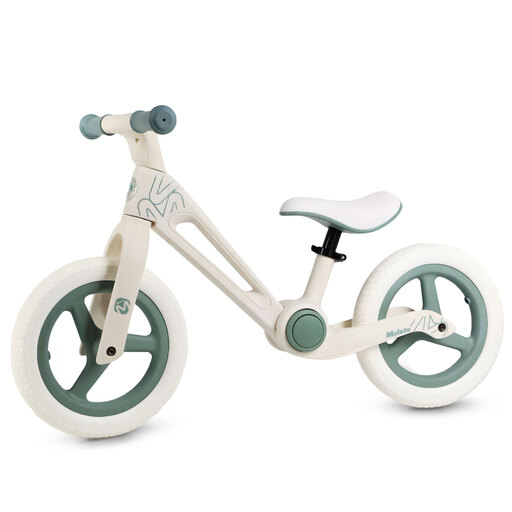
This model focuses on simplicity and a feather-light design. Its clean look and light weight make it an excellent choice for toddlers, who will handle it effortlessly. Its ultra-fast assembly is a real bonus for busy parents.
For parents who prioritize a lightweight and simple design above all. It's the ideal choice for a very first balance bike, where ease of handling is the top priority.
A balance bike is a fantastic starting point, but the world of toys is endless. If you're looking for inspiration for another age or a special occasion, feel free to explore other options.
To broaden your horizons, check out our selection of Gifts for 5-Year-Old Girls.
Most children are ready between 18 and 24 months, as soon as they are walking confidently. Age 2 is often the perfect time: their coordination and strength are sufficient to propel and steer the balance bike.
It's a simple but essential adjustment. Once seated, the child should have their feet flat on the ground with their knees slightly bent. This posture gives them confidence and allows them to push off effectively. An incorrect setting (seat too high or too low) will make learning more difficult.
Although not required by law, wearing a helmet is highly recommended. It's the best way to establish a safety habit from a young age that will stay with them for life, especially when they move on to a pedal bike. Choose a helmet that fits their size and ensure it is always properly adjusted.