
Livraison le jour même ou le lendemain

Qualité garantie

Débloquez vos offres de bienvenue: Livraison GRATUITE | Jusqu'à -80 % | 30 jours d'essai gratuits à JoyPlus
Téléchargez l'application
The arrival of a new baby brings a wave of joy... and a host of new responsibilities. At the top of the list? Hygiene, especially when it comes to feeding. The chore of bottle cleaning can quickly become a repetitive and time-consuming task. Between a simple brush and an all-in-one machine, it's easy to get lost in the options.
This guide is here to help you navigate the choices. We'll share our tips for selecting the equipment that will truly fit your daily routine, along with a curated selection of products for every need and budget.
Before you settle on a model, here are the key points to consider to find the solution best suited to your lifestyle.
Your time is precious. The level of automation in bottle cleaning solutions will determine how much time you spend on the task.
Consider the number of bottles you use each day. A high-capacity machine (6 to 8 bottles) is practical, allowing you to run just one cycle per day. Also, check if the bottle steriliser can accommodate other accessories: teats, soothers, breast pump parts, or small teething toys. Some multi-functional devices even offer a bottle warmer or defrosting mode, combining several functions into a single piece of equipment.
Your child's safety is the absolute priority. Opt for products made with food-grade materials and insist on the BPA-free (Bisphenol A) label for all plastic components. Electric appliances must also include essential safety features, such as an automatic shut-off at the end of a cycle or when the water level is low.
To help you make an informed decision, here is a selection of products that cater to different needs, from portable solutions to all-in-one machines.
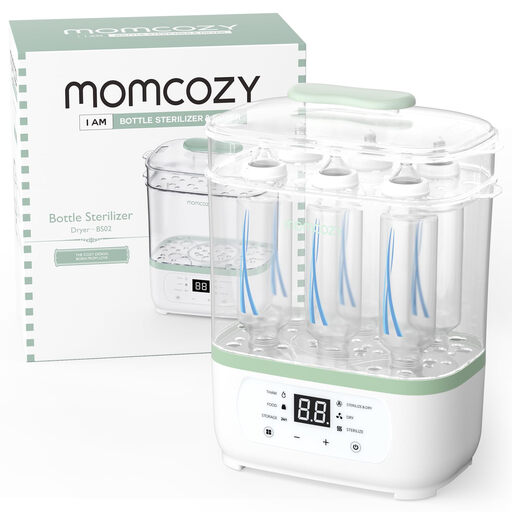
Why it stands out
This model is a true Swiss Army knife for bottle care. It combines the key functions of steam sterilisation and rapid drying in a single unit. Its large capacity can hold up to 8 bottles and their accessories at once. It's a comprehensive solution that goes beyond simple sterilisation, offering modes for warming meals, defrosting breast milk, and even keeping equipment sterile.
Advantages
Who is it for?
Parents looking for a central, all-in-one solution for daily bottle maintenance. It's the ideal choice for those who want to optimise their time by consolidating several appliances into one.
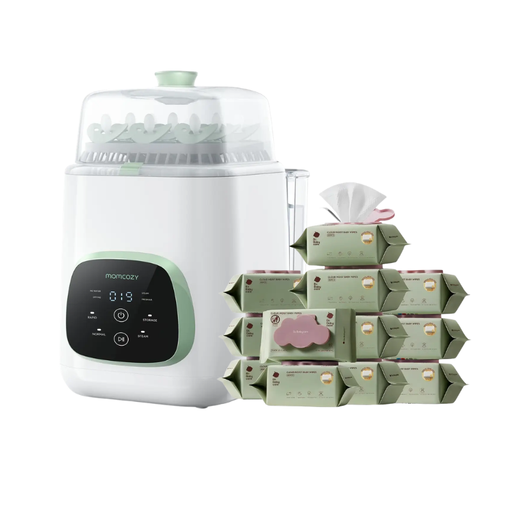
Why it stands out
The KleanPal Pro is the future of bottle cleaning: near-total automation. This appliance doesn't just sterilise and dry—it washes. Thanks to its 26 powerful water jets, it ensures a spotless clean, inside and out. Simply place the bottles inside, start the cycle, and the machine does the rest. This bundle also includes a pack of wipes for sensitive skin, making it an excellent gift for new mums.
Advantages
Who is it for?
Parents who want to fully delegate the chore of bottle cleaning. It's a premium investment for those who demand maximum efficiency and want to free up more time for their baby (or themselves!).
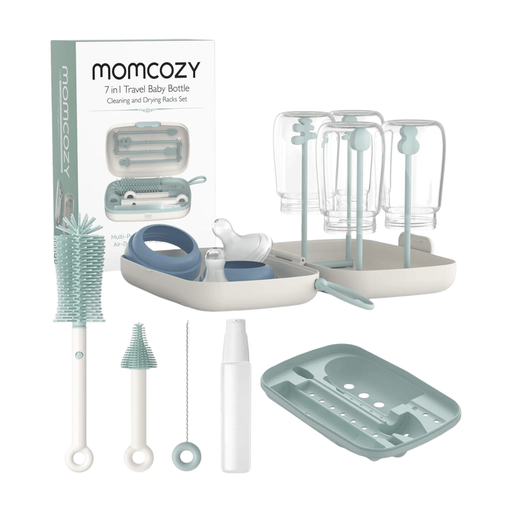
Why it stands out
This manual solution focuses entirely on efficiency and portability. The kit packs everything you need for a perfect clean into a compact, waterproof case, wherever you are. It includes a silicone bottle brush, a teat brush, a straw cleaner, a soap dispenser, and even a mini foldable drying rack. The silicone brush heads clean effectively without ever scratching the bottles.
Advantages
Who is it for?
Parents on the go, those looking for a secondary cleaning solution for nursery or grandparents' houses, or anyone who prefers a manual but perfectly organised approach. It's also a very practical and affordable baby shower gift.
Our selection covers a range of uses, but the world of baby products is vast. If you want to explore other steriliser models, discover bottle warmers, or simply compare other accessories, feel free to browse our catalogue.
Discover our full range of baby bottles and accessories and find the equipment that's right for you.
A newborn's immune system, especially in the first few months, is still developing. Sterilising after each wash helps eliminate bacteria, viruses, and other germs that can survive a simple cleaning and may cause digestive issues (colic, gastroenteritis, etc.). It's an essential precaution to ensure impeccable baby hygiene.
It is generally recommended to sterilise bottles and teats until the child is 4 to 6 months old. After this age, their immune system is more robust. However, a meticulous cleaning with hot, soapy water and a clean brush remains essential. When in doubt, the best course of action is to consult your paediatrician.
Yes, but it's not ideal. It's better to use demineralised or filtered water in an electric steriliser and dryer. Tap water, especially if it's hard, will cause limescale to build up on the appliance's heating plate, reducing its efficiency and lifespan. If you use tap water, regular descaling will be necessary to maintain its performance.