
Livraison le jour même ou le lendemain

Qualité garantie

Débloquez vos offres de bienvenue: Livraison GRATUITE | Jusqu'à -80 % | 30 jours d'essai gratuits à JoyPlus
Téléchargez l'application
The beauty of a fresh rose is incomparable, but also all too fleeting—not to mention the upkeep. To blend aesthetics with longevity, the artificial rose is establishing itself as an increasingly compelling alternative. Whether you want to elevate your home decor, plan a wedding with flower decorations, or give a timeless gift, knowing how to spot a quality model is essential.
Our guide is here to help you navigate the options: we've broken down the essential criteria and selected standout models to help you find the perfect realistic faux rose, cutting through the marketing hype.
The market is flooded with options. To make the right choice, focus on a few key points that make all the difference in terms of realism and longevity.
The choice of material is the first indicator of quality. For high-end artificial flowers, several materials stand out:
A realistic faux rose is about more than just the petals. The stem is equally important: check that it has a wire core. This allows you to bend, curve, or cut it to perfectly fit your vase or artificial floral arrangement. Meticulously crafted foliage, with realistic veins and textures, is the finishing touch that grounds the flower in reality.
How you plan to use them will determine the right choice. For indoor decor, most materials will suffice. If you plan to use your bouquet of artificial roses outdoors or near a very sunny window, opt for UV-treated models. This ensures the colours won't fade after a few months. For an event like a wedding, the ease of handling the stems and the option to order in bulk will be decisive factors.
Our editorial team has scoured the market to bring you a selection of models that stand out for their value and realism.

Why this model stands out: It stands out for its use of latex for the petals and leaves, giving it a stunningly realistic look and feel, very close to a genuine Austin rose. Its generous flower head (approximately 9.5 cm in diameter) and multiple layers of petals create an opulent and natural volume.
Highlights:
Best for: Those looking to create an ultra-realistic small floral arrangement or add a high-quality centrepiece to an existing bouquet. Perfect for a coffee table or desk.
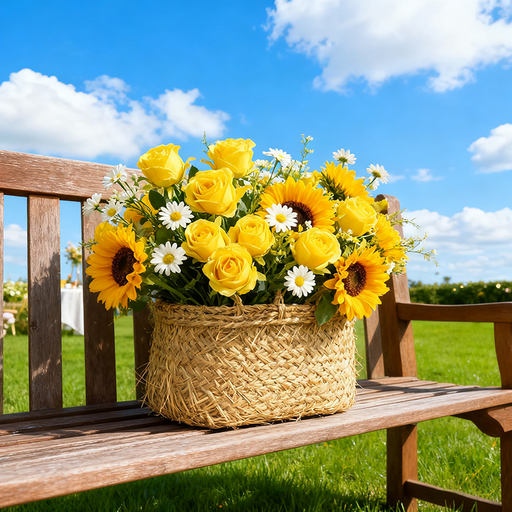
Why this bouquet stands out: This set of 10 roses focuses on versatility and longevity. The silk (polyester) petals are UV-resistant, ensuring excellent colour retention even when exposed to direct sunlight. Their long 50 cm stems offer great freedom for creating a generous bouquet of artificial roses.
Highlights:
Best for: Event planners, decorators, or individuals needing a large volume of flowers for a wedding decoration, a reception, or furnishing a large space.

Why this set stands out: Here, the emphasis is on volume and creativity. With 20 roses per set and fully flexible stems, this is the ideal base for all your DIY projects and custom arrangements. A handy tip: the flower heads, made from eco-friendly PE material, can be easily reshaped with a hairdryer (on a warm setting) if they get compressed during shipping.
Highlights:
Best for: DIY enthusiasts, large-scale decor projects (flower walls, arches), or for creating a generous bouquet to give on Valentine's Day or Mother's Day.
If roses are just the beginning, our catalogue is filled with other varieties to explore. From pre-made bouquets to orchids and peonies, get inspired by our complete collection.
? Discover our complete collection of artificial floral arrangements
1. How do you clean artificial roses? It couldn't be simpler. For dust, a feather duster or a blast of cool air from a hairdryer will do. For a deeper clean, a soft, damp cloth is perfect for gently wiping the petals and leaves. Above all, do not use harsh chemical products, as they could damage the colours.
2. What's the difference between an artificial rose and a preserved rose? It's a common point of confusion, but the difference is significant. An artificial rose is made from scratch using synthetic materials (latex, silk, plastic). A preserved rose, also known as an eternal rose, is a real, natural rose that has been stabilised through a process (freeze-drying) to maintain its appearance for several years. The artificial rose is more durable, its stem is posable, and it isn't sensitive to humidity, unlike its preserved cousin.
3. Can you really use artificial flowers for a wedding? Absolutely! In fact, high-end artificial flowers are increasingly popular for weddings. The advantages are undeniable: they don't wilt, they can withstand heat, they are hypoallergenic, and they can be prepared weeks in advance, which significantly reduces stress on the big day. The icing on the cake: the bride's bouquet becomes a keepsake that can be cherished, intact, for years to come.