
Livraison le jour même ou le lendemain

Qualité garantie

Débloquez vos offres de bienvenue: Livraison GRATUITE | Jusqu'à -80 % | 30 jours d'essai gratuits à JoyPlus
Téléchargez l'application
Breathing cleaner air at home is a growing concern, whether it's to soothe allergies, get rid of pet odours, or simply reduce indoor pollution. But with an overwhelming number of options on the market, it's hard to know where to start. To avoid any unpleasant surprises, let's break down the pitfalls to watch out for before you buy.
To make the right choice, here are the criteria we've scrutinised.
Far from being a mere decorative object, the effectiveness of a HEPA air purifier rests on three technical pillars that guarantee its day-to-day performance.
The heart of the system is, of course, its filtration. The gold standard remains the HEPA filter (High Efficiency Particulate Air).
Forget the marketing-hyped square footage; the only true performance indicator is the CADR (Clean Air Delivery Rate). Expressed in cubic metres per hour (m?/h), it indicates the volume of air the device can process in one hour.
For a home air purifier, the rule is simple: match the CADR to your room's volume. A good purifier should cycle the air in a room between 2 and 5 times per hour. In practical terms, for a bedroom air purifier in a 20 m? room (with a volume of about 50 m?), a device with a 150 m?/h CADR will circulate the air 3 times per hour. That's an excellent ratio.
Beyond raw performance, certain features make daily use much more pleasant.
To move from theory to practice, here are a few models that tick all the right boxes, each tailored to a specific need.
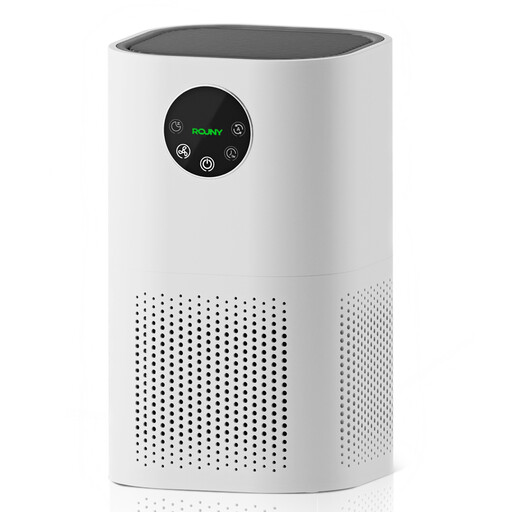
The verdict : Perfect for a first-time purchase or for equipping a bedroom or small office. It gets straight to the point : effective filtration in a compact design at an affordable price.
Its 150 m?/h CADR is honest and advertised for rooms up to 50 m? (for moderate air exchange), a far cry from the unrealistic coverage areas of some competitors. The night mode, measured at 25 dB, is genuinely designed not to disturb sleep.
True H13 HEPA filtration that's effective against allergens. We also appreciate the timer (2/4/8h) for managing power consumption.
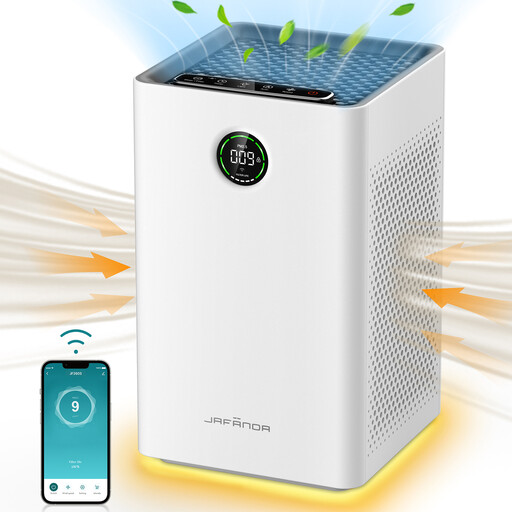
The verdict : Built for large living rooms and open-plan spaces, this model combines serious power with smart features. A must-have for those who want automated purification and total control.
With a robust 260 m?/h CADR, it has the muscle to handle large volumes. Its PM2.5 sensor and auto mode adjust the power as needed, optimising both efficiency and noise levels.
Control via the mobile app or voice commands (compatible with Alexa/Google Assistant) is a real plus. Its 3-in-1 filtration (H13 HEPA + activated carbon) tackles both particles and odours.
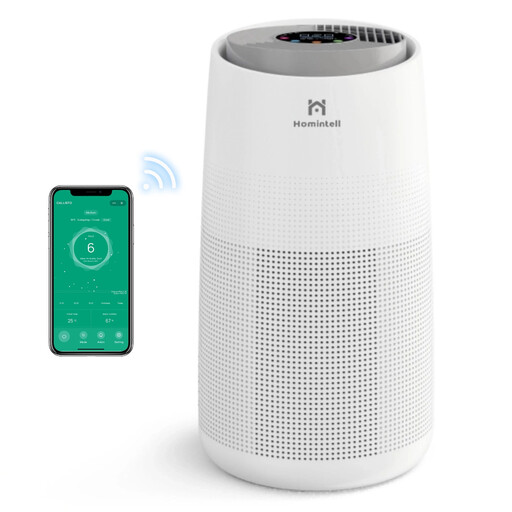
The verdict : With its high power and advanced purification options, this is the perfect ally for homes with pets, smokers, or individuals particularly sensitive to pollutants and odours.
Its powerful 300 m?/h CADR ensures heavy-duty treatment, even when the air is heavily polluted. The filter change indicator is very practical for remembering maintenance and maintaining optimal performance.
Its filtration is enhanced by a UV lamp and an ioniser for an all-out assault on germs and stubborn odours. The child lock is a welcome safety feature.
Discover our full selection of products that meet our performance criteria and European safety standards.
1. When should the HEPA filter be changed?? It all depends on your usage and the ambient pollution level. Generally, a replacement is needed every 6 to 12 months. Fortunately, most recent models include an indicator light that tells you when the time has come, which greatly simplifies maintenance.
2. Where should the air purifier be placed for maximum efficiency?? Ideally, in the room where you spend the most time (bedroom, living room). Give it space to breathe?: a clearance of at least 30 cm on all sides is necessary for good air circulation. Avoid placing it right against a wall or hiding it behind a sofa.
3. Is it really effective against pollen allergies?? Absolutely. A device with a true HEPA filter is incredibly effective at capturing airborne pollen. For optimal results, use it with the windows closed during peak allergy season. This will drastically reduce the amount of pollen inside your home.