
Livraison le jour même ou le lendemain

Qualité garantie
Téléchargez l'application
Catégories
The quality of the air we breathe indoors has become a major concern for many households. Between seasonal pollen, infiltrating urban pollution, and the presence of pet hair or dust, finding an effective solution to purify your home is a practical step. An air purifier is a device designed to meet this need, but with so many options on the market, it's essential to rely on objective criteria to avoid getting lost in marketing claims.
As a Product Recommendation Officer at Joybuy, my role is to provide you with clear guidelines to help you choose a device that fits your actual needs and budget. Here is some practical advice and a selection of products to guide you.
Before you start looking at models, it's helpful to understand a few key concepts that will allow you to compare devices on a factual basis.
The CADR, or Clean Air Delivery Rate, is a standard metric that measures a purifier's efficiency. Expressed in cubic metres per hour (m³/h), it indicates the volume of clean air the device can process. The rule for choosing is simple: the larger the room, the higher the CADR needs to be. For example, a device with a CADR of 250 m³/h is well-suited for a medium-sized living room, while a model with a CADR over 500 m³/h will be more effective in large, open-plan spaces.
The heart of any home air filter is its filtration system. Most high-performance models combine several layers:
An air purifier is often intended to run continuously, including overnight. A quiet air purifier is therefore a crucial comfort factor, especially for use in a bedroom. The noise level is measured in decibels (dB). A model with a night mode that operates below 25 dB is generally considered whisper-quiet.
Here are a few options that stand out for their technical specifications and suitability for specific needs.
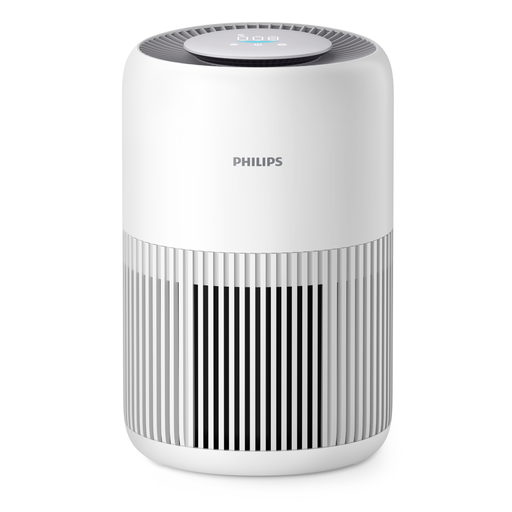
Why we recommend it: This Philips model offers an excellent balance of compact design, efficiency, and quiet operation. With a CADR of 250 m³/h, it effectively covers areas up to 65 m². Its dual filtration system (HEPA and activated carbon) makes it a powerful ally against allergens and fine particles.
Pros:
Who is this product for?: Ideal for those looking for a high-performance, discreet device for a bedroom, office, or medium-sized living room. It's a top choice for anyone sensitive to noise.
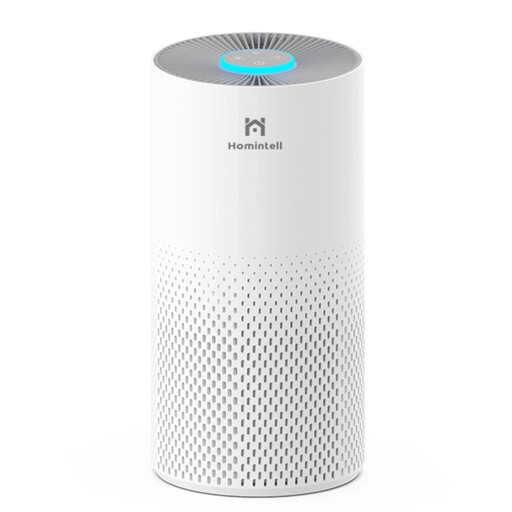
Why we recommend it: This Homintell purifier is an affordable and functional solution for smaller spaces. Its 130 m³/h CADR is suitable for rooms up to 16 m². It integrates a three-layer filtration system (pre-filter, HEPA, activated carbon) into a compact form factor.
Pros:
Who is this product for?: Perfect for a studio, small bedroom, or office. It's an attractive option for a first-time purchase or as a secondary unit, offering great value for its features.
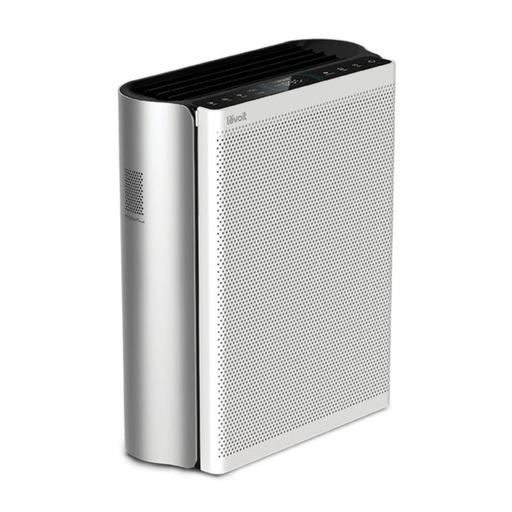
Why we recommend it: The LEVOIT EverestAir is designed for those who need to purify large volumes of air. Its impressive 612 m³/h CADR allows it to treat the air in rooms up to 130 m². Its smart features and advanced sensors make it a very comprehensive device.
Pros:
Who is this product for?: Recommended for owners of large spaces, large families, or tech enthusiasts who will appreciate smartphone control and detailed air quality data.
Some users look for a device that not only purifies the air but also offers a fan function to cool the room in the summer. These combination models can be a practical, space-saving alternative.
If this dual functionality interests you, you can explore our selection of models in the air purifier fan category.
1. What is the difference between a HEPA filter and an activated carbon filter? The HEPA filter is designed to capture physical airborne particles, such as dust, pollen, or pet dander. The activated carbon filter, on the other hand, works through adsorption to trap the gas molecules responsible for bad odours and certain chemical pollutants. The two are complementary and work together for comprehensive purification.
2. Is an air purifier effective against pet hair and pollen allergies? Yes. The pre-filter captures most visible pet hair, while the HEPA filter handles finer allergenic particles, such as dander and pollen grains. An anti-allergy air purifier equipped with these filters can help significantly reduce the presence of these allergens in your indoor air.
3. How long should an air purifier be left running? For optimal efficiency, it is often recommended to let the device run continuously, especially during periods of high pollution or peak pollen season. Most recent models are designed for 24/7 use and feature automatic or night modes that adjust fan speed and power consumption for quiet and energy-efficient operation.