
Livraison le jour même ou le lendemain

Qualité garantie

Débloquez vos offres de bienvenue: Livraison GRATUITE | Jusqu'à -80 % | 30 jours d'essai gratuits à JoyPlus
Téléchargez l'application
With the multitude of soy sauces on store shelves, distinguishing an authentic product from an ultra-processed version is becoming increasingly complex. For quality-conscious consumers who care about the ingredients in their food, finding an additive-free soy sauce can be a challenge. This seasoning, a cornerstone of Asian cuisine, owes its unique umami flavour to a fermentation process. However, many commercial products contain preservatives, flavour enhancers, or sweeteners that alter not only the taste but also the product's nutritional profile.
As a Product Recommendation Manager at Joybuy, my role is to help you navigate this landscape and make an informed choice. Here are some practical tips and a selection of products that prioritise natural ingredients and authentic flavour.
Before diving into specific products, it's helpful to know a few objective criteria for evaluating a natural soy sauce.
A short ingredient list is often a good indicator. A traditionally brewed premium soy sauce requires only a few basic components:
Be wary of long lists that include additives like potassium sorbate (E202), sodium benzoate (E211), or artificial sweeteners such as sucralose (E955) or acesulfame K (E950). The presence of yeast extract or a small amount of sugar is acceptable and common, even in traditional recipes.
In Asia, the quality of soy sauce is often measured by its total amino acid nitrogen content. This figure, usually indicated on the label in g/100mL, reflects the protein richness and the depth of umami flavour derived from fermentation. According to standards in several Asian countries, soy sauce is graded as follows:
A value above 1.0 g/100mL is often the sign of a very high-quality product with a rich, complex flavour.
The manufacturing process has a direct impact on the final product. The traditional method, or natural fermentation, can last several months, allowing the flavours to develop fully. Conversely, acid hydrolysis is a rapid chemical process that breaks down soy proteins in just a few days. This method often requires the addition of colourings, syrups, and flavour enhancers to mimic the taste of authentic soy sauce. A label stating "naturally brewed" is therefore a mark of quality to look for.
Keeping these criteria in mind, here are a few options that stand out for their simple ingredients and flavour profiles.
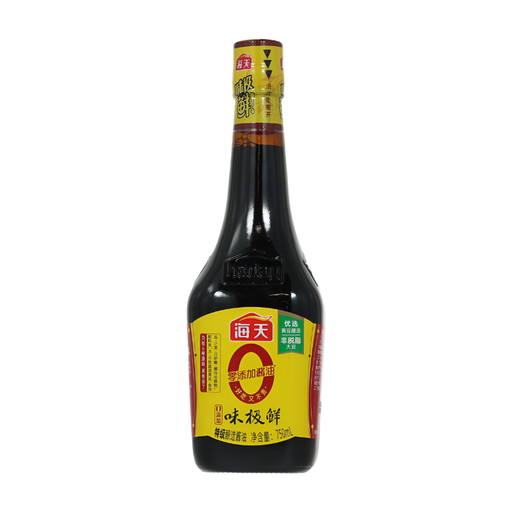
Why we recommend it This Chinese soy sauce from the Haday brand highlights its complete absence of added preservatives and sweeteners. Its simple composition, based on six natural ingredients, and its high amino acid nitrogen content (≥1.1g/100mL) make it a solid choice for everyday use.
Pros
Who is this product for? Families and everyday cooks looking for a reliable Asian seasoning with an authentic taste and no unnecessary ingredients. Its large 750ml format offers good value for money.
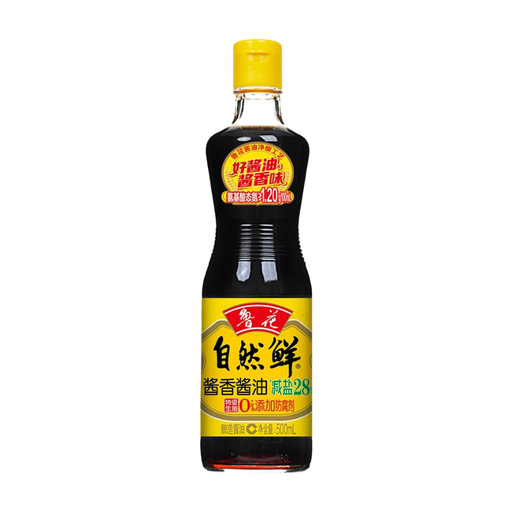
Why we recommend it Lu Hua soy sauce stands out with a particularly high amino acid nitrogen content (≥1.20g/100mL), promising a rich soy aroma and a mellow finish. The brand also advertises a 28% reduced salt content compared to its own braising soy sauce, which may be a deciding factor for some.
Pros
Who is this product for? Cooking enthusiasts looking for a premium soy sauce with a bold character to elevate their dishes. It's an interesting option for those monitoring their salt intake without wanting to sacrifice depth of flavour.
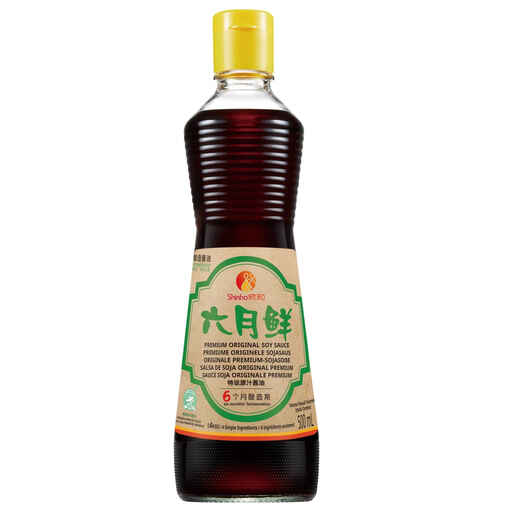
Why we recommend it With only four ingredients (water, soybeans, wheat, salt), this soy sauce from Shinho is the epitome of simplicity. Its six-month fermentation process gives it a delicate and pure flavour. The complete absence of added sugar, preservatives, and sweeteners makes it a purist's choice.
Pros
Who is this product for? For purists and consumers who are highly mindful of ingredients, prioritising the least processed products available. Its balanced flavour is perfect for stir-fries, marinades, and enhancing the taste of meats.
An additive-free soy sauce is an excellent starting point for healthy and flavourful cooking. To add variety and discover other cornerstones of Asian gastronomy, feel free to explore other ingredients. For example, to bring a different umami flavour and texture to dishes like fried rice or stews, Chinese-style fresh sausage is a traditional ingredient worth considering.
1. What is the difference between light soy sauce and dark soy sauce? Light soy sauce is the most common type. It is saltier, thinner, and used as a general-purpose seasoning for cooking, dips, or dressings. Dark soy sauce is aged longer, often with the addition of molasses or caramel, which gives it a darker colour, a thicker texture, and a sweeter, less salty taste. It is mainly used for colouring dishes and adding a deep flavour to stews and braises.
2. How should I store natural soy sauce after opening? A preservative-free soy sauce is more susceptible to oxidation. Once opened, it is recommended to seal the cap tightly and store it in the refrigerator. This helps to preserve its freshness, colour, and aromas for longer.
3. Is an additive-free soy sauce necessarily a low-sodium soy sauce? Not necessarily. Salt is a fundamental ingredient in the fermentation process and acts as a natural preservative. An additive-free soy sauce can therefore have a standard salt content (around 15-18 g per 100 ml). However, more and more brands, like the ones featured here, are developing low-sodium soy sauce versions by adjusting their manufacturing process, without adding chemical preservatives. It is therefore important to check the nutritional label if sodium content is a key criterion for you.