
Livraison le jour même ou le lendemain

Qualité garantie

Débloquez vos offres de bienvenue: Livraison GRATUITE | Jusqu'à -80 % | 30 jours d'essai gratuits à JoyPlus
Téléchargez l'application
Noise-cancelling earbuds and hearing protection serve different purposes: listening to music on your commute, working in an open-plan office, sleeping despite background noise, travelling or protecting a child’s ears at a noisy event. Yet choosing between them still too often comes down to a noise-reduction figure or a promise of comfort.
Before you buy, it’s worth considering how you’ll use them, how securely they fit, their technical limitations and the safety guidance. Here are the key points to check so you can avoid protection that’s uncomfortable, impractical or simply unsuitable.
Active noise-cancelling earbuds use microphones and electronic processing to reduce certain background noises, particularly continuous sounds such as the hum of a plane or train. Their primary purpose is to improve your listening experience.
Passive earplugs and earmuffs rely instead on insulating material and a good seal around or inside the ear. They’re designed more specifically to limit your exposure to noise. No device blocks out every sound, so don’t use one to prevent yourself from hearing an alarm or warning when you need to stay alert.
A stated rating, such as 35 dB for foam earplugs or 24 dB SNR for silicone earplugs, depends on the product, the measurement method and how it’s fitted. In practice, a poor fit can significantly reduce the advertised level of noise reduction.
For protection intended for a professional environment, check that the packaging carries the relevant marking and regulatory information. Leisure earplugs are not a substitute for mandatory personal protective equipment on a building site or in a noisy workplace.
A pair of earbuds may boast excellent battery life, but become uncomfortable after an hour if the ear tips aren’t right for you. The same applies to earplugs for sleeping: people who sleep on their side may quickly feel uncomfortable pressure.
A choice of ear tip sizes, stabilising fins or an adjustable headband can make a real difference day to day. Weight, material, ventilation and ease of cleaning matter just as much as audio features.
When choosing Bluetooth earbuds with ANC, look for at least:
Wireless noise-cancelling earbuds also need regular battery checks. An advertised battery life of ‘up to’ a certain number of hours is usually based on specific conditions, and may vary depending on volume, calls and the mode you use.
Passive noise reduction depends directly on the seal created by the ear tip. For sports earbuds that can withstand sweat, a rating such as IPX4 indicates protection against splashes. It doesn’t mean the product can be submerged or used for swimming.
Models supplied with several ear tips and stabilising fins let you fine-tune the fit. With foam earplugs, compress them properly and insert them gently, then wait for them to expand back to shape. Never push them deep into your ear canal.
After use, store wireless earbuds in their charging case. Some products offer fast charging or Qi-compatible wireless charging. A wired USB-C model may suit a compatible computer or phone, with no pairing or built-in battery required.
For sleeping or travelling, reusable or disposable earplugs mean you don’t have to worry about a battery. They still need to be kept clean, checked before each use and replaced as soon as they’re worn or misshapen.
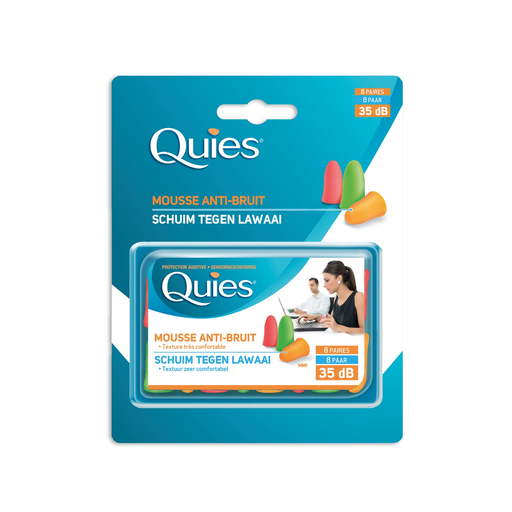
Why it’s a good choice for this profile : These foam earplugs are suitable for commutes, concerts, libraries or the occasional noisy night. The pack of eight pairs lets you try them out and keep a few spares handy.
The soft foam and anatomical shape reduce the chance of the earplugs feeling too rigid. However, fitting them correctly is essential to achieve the stated level of noise reduction.
Stated 35 dB noise reduction, soft polyurethane foam and a fluorescent colour that makes them easier to spot.
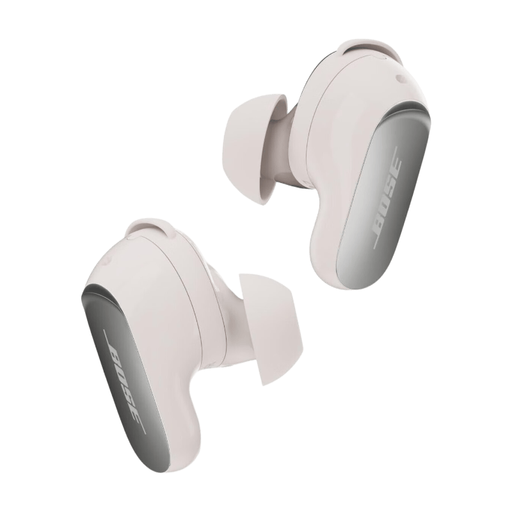
Why it’s a good choice for this profile : These earbuds are for anyone looking for Bose QuietComfort headphones with advanced settings for music, calls and everyday travel.
Nine combinations of ear tips and stability bands make it easier to find a secure fit, rather than having to make do with one size.
Multipoint Bluetooth, Quiet, Aware and Immersion modes, up to 6 hours of stated battery life, and USB-C or Qi charging.
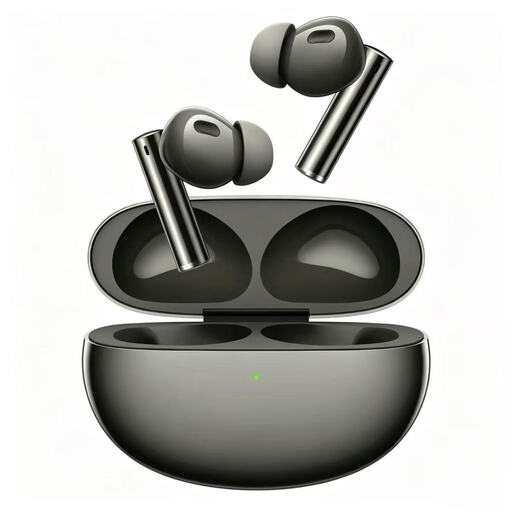
Why it’s a good choice for this profile : If you switch between work, commuting and exercise, you’ll appreciate the wireless design, dust and splash resistance, and long-lasting case.
The manufacturer’s stated IP55 rating gives you more precise information than a vague ‘sweat-resistant’ claim. However, it doesn’t protect against immersion.
Stated 50 dB ANC, Bluetooth 5.3, dual 11 and 6 mm drivers, and up to 40 hours of stated total battery life.
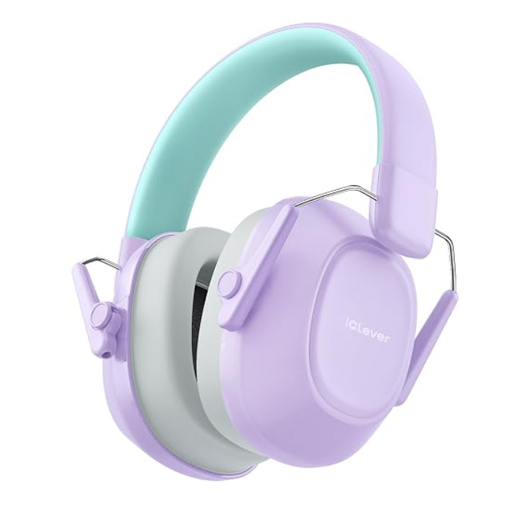
Why it’s a good choice for this profile : These noise-reducing earmuffs for children are suitable from age 3. They can be used at a concert, fireworks display, airport or motor race, always under adult supervision.
The adjustable headband and thick foam cushions make it easier to get a good fit. The manufacturer states that the earmuffs reduce sound without blocking it completely.
Stated NRR of 25 dB, foldable headband, stated weight of 210 g and soft cushions.
We’ve put together a complete, real-time updated selection of products that meet these demanding criteria and European safety standards.
Yes, some earplugs designed for sleeping can be worn for several hours. Wax or soft silicone models are often suitable for people who are sensitive to pressure. If you sleep on your side, check that the earplug doesn’t stick out too far. Remove it at the first sign of pain, irritation or ongoing discomfort.
Foam earplugs are generally intended for limited use. Replace them when they’re dirty, misshapen or no longer compress properly. Wax earplugs are also generally disposable after use. Reusable silicone models should be cleaned according to the manufacturer’s instructions. For earbuds, check the condition of the ear tips, case and battery, and stop using them as soon as you notice any visible damage.
They can reduce some background noise and let you listen at a lower volume, but they aren’t automatically a substitute for certified hearing protection. Keep the volume moderate, take breaks and use a mode that lets surrounding sounds through whenever safety requires it.