
Livraison le jour même ou le lendemain

Qualité garantie

Débloquez vos offres de bienvenue: Livraison GRATUITE | Jusqu'à -80 % | 30 jours d'essai gratuits à JoyPlus
Téléchargez l'application
Whether you're a content creator, a weekend warrior, or an avid traveller, choosing an action camera can quickly become overwhelming. Faced with a jungle of models and endless spec sheets, it's easy to feel lost.
This guide is here to bring clarity. We've scrutinised the camera features that truly matter to help you find the perfect model for your needs and budget in 2026.
Before diving into our top picks, let's review the essential criteria that will guide your decision.
This is the heart of the matter: image quality. A 4K action cam has now become the standard for capturing sharp, detailed videos. Also, consider the frame rate (expressed in fps): 60 fps or higher is essential for creating smooth slow-motion footage, a major plus for sports scenes.
But resolution isn't everything. A high-performance camera with image stabilisation is non-negotiable to ensure smooth shots, even in the heat of the action (mountain biking, skiing, running). Electronic stabilisation technologies have made spectacular progress and have become a key selling point for industry leaders like DJI and Insta360. The sensor size also plays a crucial role, especially in low-light conditions.
A true sports camera must be able to withstand the harshest treatment. Check for resistance to shocks, dust, and freezing temperatures to ensure it's ready for your adventures.
Waterproofing is another crucial point. Most recent models are designed as waterproof cameras without needing an additional housing, often down to 10 metres. For scuba diving, however, a dedicated housing is still essential to go deeper.
Compactness and a lightweight design are the very DNA of an action camera. Good ergonomics, with easy-to-reach buttons and a responsive screen, make all the difference in the field. For a vlogging camera or a travel camera, a front-facing or articulating screen is a major asset for framing your shots perfectly.
Finally, don't underestimate battery life. Make sure the battery can go the distance for your outings, or plan on investing in extra batteries.
Here are the models that caught our eye, designed for different types of users.

Why it stands out The DJI Osmo Action 6 focuses on versatility and all-around performance. Its large 1/1.1-inch sensor and variable aperture allow it to shine in all lighting conditions, from bright sunlight to near darkness. Its rugged design and built-in memory make it a reliable partner for long shooting sessions.
Pros:
Who is it for? Ideal for creators and vloggers who demand high image quality, day or night. It will also appeal to adventurers who need a durable camera that's ready to face the elements.
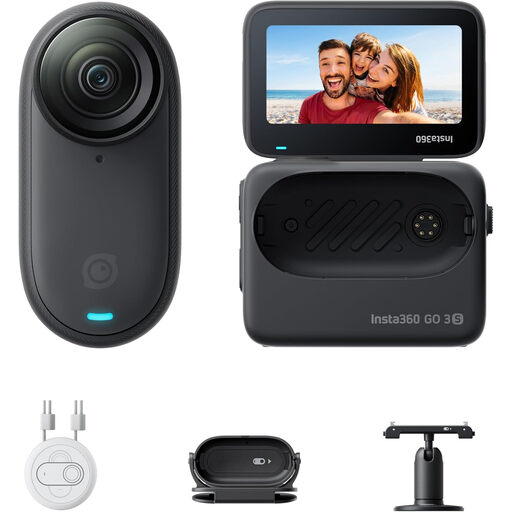
Why it stands out Weighing in at just 39 grams, the Insta360 GO 3S shatters portability records. Its modular design, featuring an "Action Pod" with a flip-up touchscreen, offers unique flexibility. Its magnetic mounting system lets you place it almost anywhere to capture truly original shots.
Pros:
Who is it for? For vloggers, travellers, and creators who prioritise discretion, portability, and creativity. Its tiny form factor and accessories make it the perfect tool for spontaneous and unique shots.
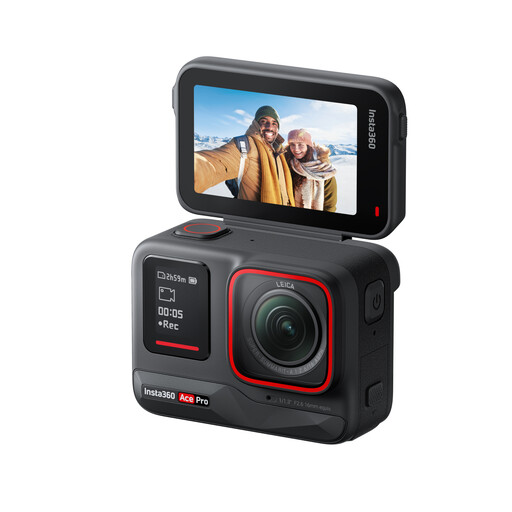
Why it stands out The Insta360 Ace Pro goes all-in on image quality, with a large 1/1.3-inch sensor and a lens co-engineered with the prestigious manufacturer Leica. It features a dedicated 5nm AI chip for image processing, with a "PureVideo" mode that the manufacturer claims dramatically improves low-light footage.
Pros:
Who is it for? For those most demanding about image quality, day or night. A top choice for semi-pro creators and enthusiasts of beautiful imagery who are looking for high-end visual results.
The world of imaging doesn't stop at action cameras. For more specific needs, such as wildlife observation or surveillance, other types of equipment will be more suitable.
Feel free to explore other categories to find the perfect gear for your next mission.
? Discover our selection of rated trail cameras
1. What's the difference between a DJI and an Insta360 action camera? Both brands are industry benchmarks, but they have slightly different philosophies. DJI, with models like the Osmo Action, focuses primarily on ruggedness, impeccable image quality, and an ultra-intuitive user experience. On the other hand, Insta360 stands out for its boldness and innovation: 360 cameras, modular models like the GO 3S, and creative, AI-powered software features. The choice will depend on your priorities: reliability and versatility (DJI) or creativity and modularity (Insta360).
2. Is a 4K action camera really necessary? In 2026, 4K is more than just a recommendation. It not only offers much more detailed footage but also provides great flexibility in post-production (for example, the ability to crop into the image without losing quality for a 1080p export). If you're on a tight budget and your videos are mainly for smartphone screens, 1080p can still get the job done. But 4K remains a much more future-proof investment.
3. Can you use an action camera for vlogging? Absolutely. A good vlogging camera needs to be compact, well-stabilised, and offer decent audio. Modern action cameras tick all these boxes. Models like the Insta360 Ace Pro or the DJI Osmo Action, with their front-facing or articulating screens, are particularly well-suited for this purpose as they allow you to constantly monitor your framing. For professional-quality audio, however, adding an external microphone is still recommended.