
Livraison le jour même ou le lendemain

Qualité garantie

Débloquez vos offres de bienvenue: Livraison GRATUITE | Jusqu'à -80 % | 30 jours d'essai gratuits à JoyPlus
Téléchargez l'application
Whether you are an artist, illustrator, or simply a passionate crafter, finding the right tool can make all the difference. The acrylic marker has established itself as an essential, thanks to its versatility and ease of use. But with a plethora of options available, choosing the right set can quickly become a daunting task.
This guide is here to help you navigate the choices. As a product expert for this publication, my mission is to give you practical advice for selecting the perfect acrylic paint pen for your projects, without drowning you in marketing jargon.
Before we dive into our top picks, let's review the essential criteria to ensure you make the right choice.
The type of tip dictates the style of your linework.
One of the biggest advantages of an acrylic paint pen is its ability to adhere to a multitude of surfaces. A good multi-surface marker should be effective on:
Always check the manufacturer's recommendations to ensure the marker is suitable for the surface of your project.
Ink quality is the heart of the matter. Opt for a water-based, non-toxic, and nearly odourless ink. Rich pigmentation is the secret to a highly opaque colour, even on dark backgrounds. Water and light resistance after the ink has dried also ensures the longevity of your creations.
Finally, a set of acrylic markers with a wide colour palette, including metallic or neon shades, will open up a world of creative possibilities.
Let's get to the specifics with our selection of products, chosen for their versatility and excellent user feedback.

Why it stands out: This set is impressive for its XXL colour palette and the convenience of its dual tips. It's the all-in-one solution for artists who don't want to compromise.
Pros:
Who is it for? Ideal for artists and crafting enthusiasts seeking maximum flexibility. This set of acrylic markers is perfect for those working on complex projects that require both fine details and large, flat areas of colour.
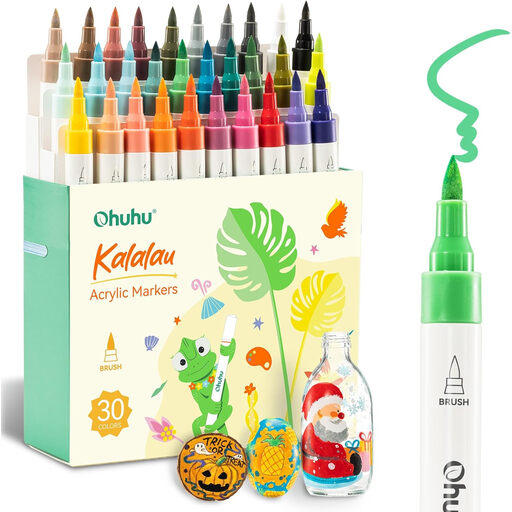
Why it stands out: Its main asset is its flexible brush tip, which offers an incredibly smooth and expressive drawing experience. The highly opaque ink is ready to use without shaking or pumping the marker, making it particularly pleasant to work with.
Pros:
Who is it for? Perfect for illustrators, lettering artists, and calligraphy enthusiasts. This Ohuhu marker is also an excellent choice for those who love the look of traditional paint but with the simplicity of a marker.
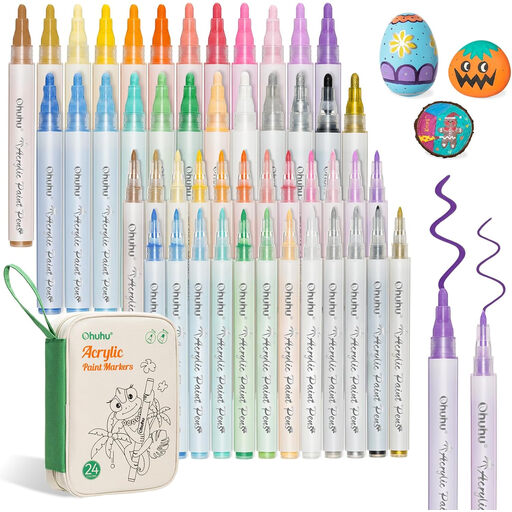
Why it stands out: The strength of this pack is its combination of two types of markers for maximum versatility. It contains a set of 24 fine-tip markers and another set of 24 reversible-tip markers, all in the same 24 colours for perfect consistency.
Pros:
Who is it for? This set is aimed at creatives who need a complete and coherent system. It is particularly well-suited for technical drawing, character illustration, or any project that combines crisp lines and bold fills with identical colours.
If our selection doesn't exactly match your needs, or if you simply want to explore other options, feel free to browse our complete category. There you will discover a much wider range of markers and tools to unleash your creativity.
Discover All Our Acrylic Paints
For perfect adhesion, the surface must be pristine: clean, dry, and free of grease. Once the paint is applied and completely dry, you can apply a coat of clear finishing varnish. This will protect your creation from friction and moisture, especially for objects intended for outdoor use.
Yes, absolutely. Once dry, acrylic ink becomes permanent and water-resistant on most porous surfaces (wood, paper, stone, etc.). On smooth, non-porous surfaces like glass or ceramic, the ink adheres well but remains susceptible to scratching. Applying a varnish is therefore highly recommended to ensure its longevity.
To extend the life of your markers, the number one rule is simple: always recap them tightly after each use. Storing them horizontally is also recommended, as it keeps the tip (or both tips, on dual-tip models) evenly saturated with ink. Keep them in a cool, dry place, away from direct sunlight.