Choosing the right A4 sketchbook can quickly become overwhelming. Paper weight, binding, texture... every detail matters and can transform the final look of your artwork. Whether you're a seasoned artist, a student, or simply a passionate hobbyist, finding the surface that will elevate your technique isn't just an option—it's a necessity.
Don't worry, this guide is here to help you make sense of it all. We'll break down the essential criteria and present a selection of sketchbooks suited for every medium, from quick pencil sketches to complex watercolour illustrations.
How to Choose the Right A4 Sketchbook
Before diving into our selection, let's review the key technical points that will make all the difference.
1. Paper Weight: The Most Critical Factor
Paper weight, expressed in grams per square metre (gsm), defines the thickness and sturdiness of the sheet. This is the number one criterion, as it directly depends on the tools you plan to use.
- Lightweight Paper (under 120 gsm): Perfect for dry media like graphite pencil, charcoal, or sanguine. This is the preferred weight for an A4 sketch pad dedicated to quick sketches and studies.
- Mid-weight Paper (120 to 180 gsm): The artist's all-rounder. Versatile enough, it handles ink, fine-liners, and coloured pencils well. A 165 gsm paper, for example, offers an excellent compromise for detailed illustrations without fear of ink bleeding through.
- Heavyweight Paper (over 180 gsm): A must-have for wet media. If you're looking for a watercolour sketchbook, a weight of at least 200 gsm is essential to prevent the paper from buckling at the first touch of water.
2. Binding and Cover: A Matter of Comfort and Durability
The way the pages are bound radically changes your user experience and the longevity of your sketchbook.
- Spiral-bound: The champion of flexibility. It allows for a 360° fold-over, ideal for drawing flat on a desk, on your lap, or even while standing. A highly practical format for working outdoors or in a small space.
- Stitched or Glued Binding: Often paired with a hardcover, it provides a more refined finish and better protection. An artist's notebook with this type of binding is perfect for archiving your work. The hardcover acts as a real shield against bumps and creases.
Our Recommended A4 Sketchbooks
Here are a few top picks, each with its own strengths to suit your artistic practice.
Deli Finenolo Sketch Pad, A4 Spiral-Bound
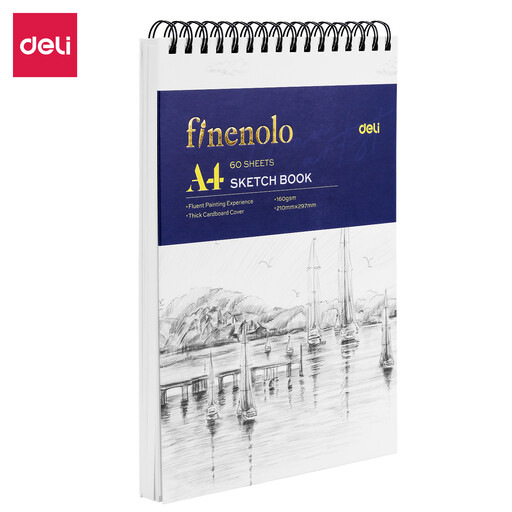
- Why it stands out: Its top-bound notepad format makes it the ideal companion for sketching on the go. Simple, effective, and always ready to use.
- Advantages:
- Top-wire binding: Allows you to flip pages over completely, perfect for use on an easel or for drawing freehand.
- Smooth white paper: The 60 sheets offer a very pleasant surface for dry media like pencil and charcoal.
- Lightweight and portable: Slips effortlessly into a backpack for drawing anywhere.
- Who is it for?: Students, drawing enthusiasts, and artists looking for a simple and functional drawing pad for their daily sketches.
SAKURA Sketch/Notebook, 21 x 29.7 cm
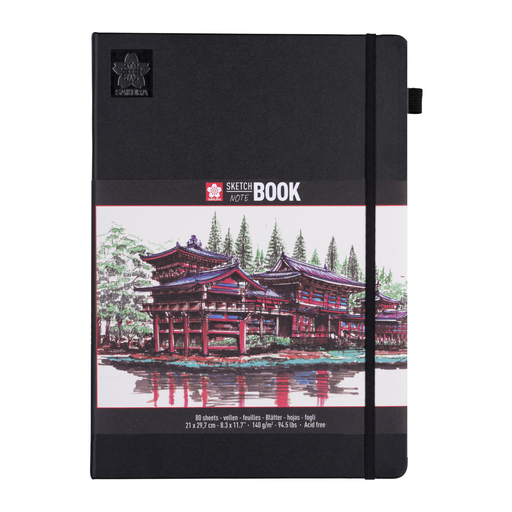
- Why it stands out: More than just a sketchbook, this is a true pocket studio. It combines excellent paper with game-changing details: a pen holder, a storage pocket, all protected by an elegant hardcover.
- Advantages:
- 140 gsm paper: A versatile weight suitable for ink, pencil, and pastels, with a cream-white tint that adds warmth to drawings.
- Integrated features: It includes a pen holder, a bookmark, an expandable back pocket, and an elastic closure.
- Archival quality: The acid-free paper and hardcover ensure excellent preservation of your artwork.
- Who is it for?: Illustrators and designers looking for a well-designed, professional sketchbook for their projects, compatible with a wide range of dry media and inks.
MOLESKINE Art Sketchbook, A4
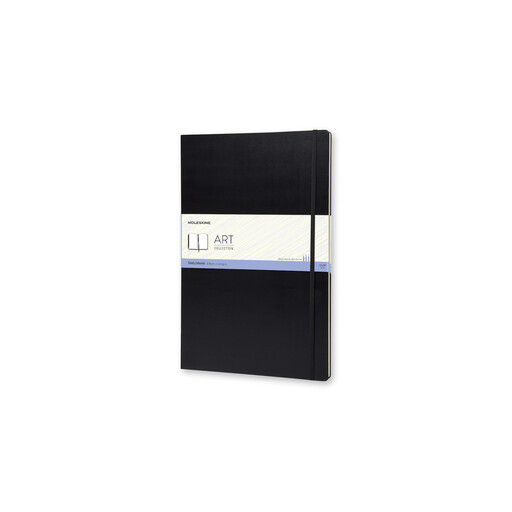
- Why it stands out: The Moleskine A4 is an institution. Instantly recognizable, it's favoured by artists for its thick 165 gsm paper and iconic design, making it a work tool that is as reliable as it is elegant.
- Advantages:
- 165 gsm ivory-coloured paper: Highly durable, it provides a smooth and robust surface ideal for ink, markers, and light washes, with excellent resistance to bleed-through.
- 180° lay-flat opening: Allows you to use the entire surface of both pages without being hindered by the binding.
- Durable design: Hardcover, elastic closure, bookmark, and inner pocket, all with FSC-certified paper.
- Who is it for?: Artists, professionals, or discerning hobbyists who want a top-tier sketchbook for their finished works, combining durability with user comfort.
MOLESKINE Watercolour Sketchbook, A4
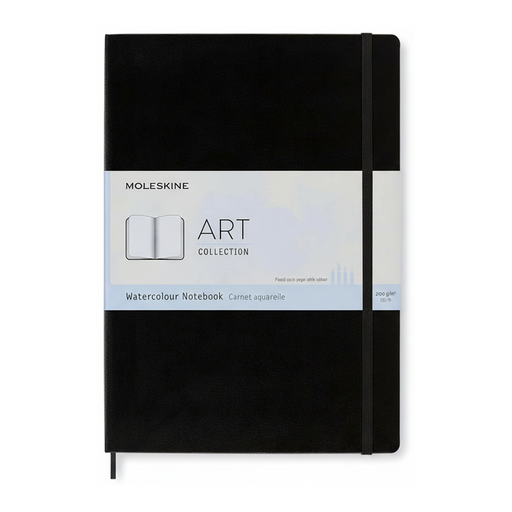
- Why it stands out: The travelling watercolourist's nightmare? Paper that buckles. This sketchbook is the answer, specially designed for wet media and artists who are always on the move.
- Advantages:
- 200 gsm watercolour paper: Its heavy weight is designed to absorb water with minimal warping, a critical feature for watercolour and gouache.
- Resilient surface: The acid-free paper handles washes and colour blending very well without pilling.
- Professional format: The hardcover and lay-flat opening provide a stable work surface and protect paintings once they are dry.
- Who is it for?: Artists specialising in watercolour, ink, or any other wet media, who are looking for a studio-quality watercolour sketchbook in a portable A4 format.
Looking for Other Options?
Our selection highlights some of the most popular options, but choosing a sketchbook is a very personal decision. To discover a wider variety of brands, weights, and formats, feel free to explore our full category.
? Discover all our sketchbooks
Frequently Asked Questions
What's the difference between a sketchbook and a drawing pad?
It's all about the binding and intended use. A sketchbook is designed to be carried and kept: it's bound like a book (on the long or short edge) and protected by a cover. A drawing pad, on the other hand, has its sheets glued on one side, ready to be torn out. It is therefore better suited for studio work.
What paper weight should I choose for alcohol markers?
Alcohol markers are notorious for bleeding through most papers. To minimise this, opt for a paper of at least 160 gsm, like the one in the Moleskine Art sketchbook. A good rule of thumb, even on thick paper, is to always place a protective sheet under your drawing to avoid damaging the next page.
Can I use watercolour in a standard sketchbook?
It's generally not a good idea. Paper under 200 gsm will quickly buckle, or even tear, and the pigments are likely to bleed through. For a very light wash, a 165 gsm paper might do the trick in a pinch. But for serious watercolour work, nothing beats a dedicated watercolour sketchbook with 200 gsm (or heavier) paper, like the Moleskine Watercolour. The difference in comfort and results is night and day.


