
Livraison le jour même ou le lendemain

Qualité garantie

Débloquez vos offres de bienvenue: Livraison GRATUITE | Jusqu'à -80 % | 30 jours d'essai gratuits à JoyPlus
Téléchargez l'application
You've already made the toughest decisions: choosing Mini LED technology for its stunning contrast and a 65-inch screen for total immersion. But making the final choice can still be a real challenge. Between image processors, gaming-specific features, and various Smart TV ecosystems, it's easy to get lost. This guide is here to bring clarity, focusing on the criteria that truly matter for cinephiles and gamers on PS5, Xbox Series X, or PC.
Before we dive into our top picks, let's review a few essential technical criteria to ensure you make the right choice.
For owners of new-generation consoles (PS5, Xbox Series X) or a high-powered gaming PC, the presence of HDMI 2.1 ports is simply non-negotiable. This standard is the only one that unlocks features that have become essential:
Ideally, a TV built for the PS5 or Xbox should offer at least two HDMI 2.1 ports to connect multiple devices without compromise.
A TV compatible with Dolby Vision and Dolby Atmos promises a true home cinema experience.
For a use case focused on cinema, compatibility with both formats is a key deciding factor.
While 120?Hz has become the standard on consoles, a 144?Hz gaming TV offers a significant advantage, especially for PC gamers. This higher frequency ensures enhanced responsiveness and motion clarity in compatible titles. For those seeking absolute performance and future-proof hardware, it's a very wise investment.
This Mini LED TV comparison highlights three models that, despite their different approaches, all meet a high standard of excellence.
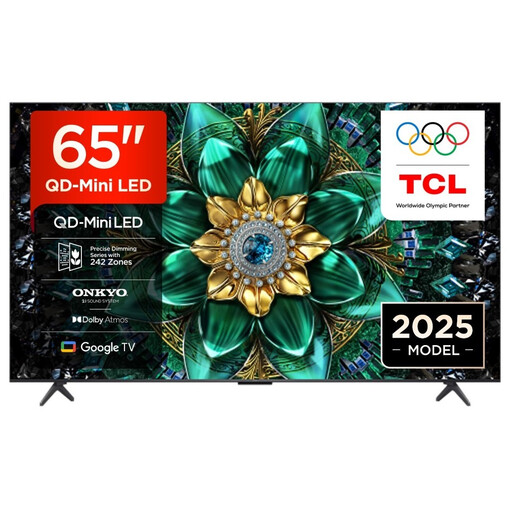
Why It Stands Out
The TCL 65Q6C stands out as the smart choice for gamers who refuse to compromise on performance. It combines a stunningly high-contrast QD-Mini LED panel, a native 144?Hz refresh rate, and the full Game Master arsenal (VRR, ALLM...). Its Google TV interface also makes it a comprehensive and intuitive 65-inch Smart TV.
Key Strengths
Who Is It For? Demanding gamers and tech enthusiasts looking for the best performance-to-price ratio, without sacrificing high-end refinements like 144?Hz or Dolby Vision.
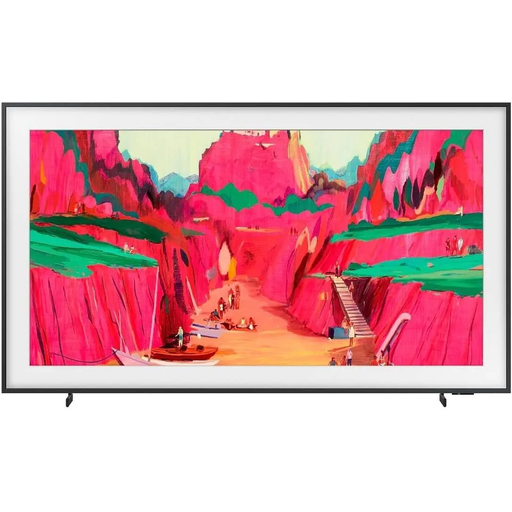
Why It Stands Out
Samsung's The Frame is much more than just a TV: it's a design object. Its key feature is Art Mode, which transforms the screen into a work of art thanks to a stunning matte, anti-reflection screen. The external One Connect box, linked by a single, nearly invisible cable, ensures an impeccably clean wall-mounted installation. But make no mistake: beneath this elegant exterior lies powerful Neo QLED (Mini LED) technology, featuring a 144?Hz panel and the NQ4 AI Gen3 processor for top-tier 4K upscaling.
Key Strengths
Who Is It For? Those who prioritise design and integration without wanting to sacrifice performance. Its dual role as a TV and a piece of art makes it an excellent choice for cinephiles and gamers alike.
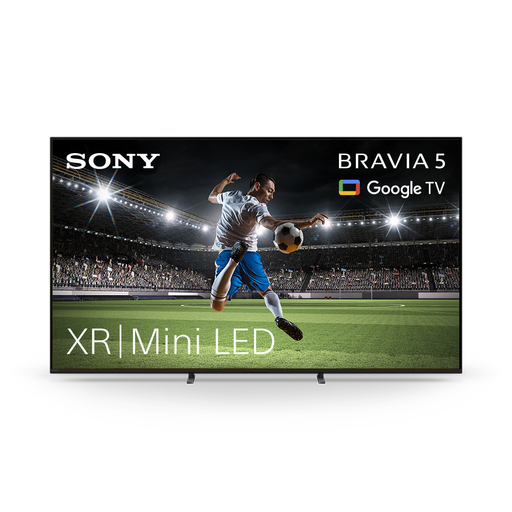
Why It Stands Out
At Sony, the absolute priority is image fidelity, embodied by the Cognitive Processor XR. This processor analyses content in real time to optimise every detail, getting as close as possible to the director's original intent. The XR Backlight Master Drive technology controls the Mini LEDs with pinpoint precision, delivering abyssal blacks and spectacular peak brightness. The immersion is completed by the Acoustic Multi-Audio system, which makes it seem as though the sound is coming directly from the screen.
Key Strengths
Who Is It For? Cinephiles and image purists who demand impeccable colour accuracy and video processing. It is the ultimate choice for transforming your living room into a genuine private cinema.
Our selection focuses on specific use cases, but the market is filled with a wide variety of models. If you want to explore other screen sizes, technologies, or budgets, feel free to browse our full catalogue.
Explore our complete collection of Mini LED TVs to find the model that perfectly meets your needs.
These are two complementary, not competing, technologies. QLED (Quantum Dot Light Emitting Diode) is a quantum dot filter placed over the panel to enrich the colour palette and vibrancy. Mini LED, on the other hand, is a backlighting technology that replaces a few large LEDs with thousands of much smaller ones. A "Mini LED" TV, like those in our selection, very often combines both approaches: it uses a Mini LED backlight to achieve exceptional contrast and deep blacks, and a QLED layer for brilliant colours. Together, they allow performance to approach that of OLED.
Not at the moment. The PS5 and Xbox Series X are limited to a 4K display at 120?Hz. Therefore, a 144?Hz TV won't give you any immediate advantage on these consoles. However, it remains an excellent investment for the future and is especially relevant for PC gamers, whose graphics cards can easily exceed 120 frames per second. If PC gaming is your priority, a 144?Hz gaming TV is a very smart choice.
They aren't essential, no. But they do completely transform the experience. Dolby Vision delivers a much more refined and dynamic HDR image, while Dolby Atmos creates an incredibly immersive sound bubble. For a cinephile or a gamer seeking absolute immersion, compatibility with both formats is a major plus that can clearly justify the investment in a higher-end model.