
Livraison le jour même ou le lendemain

Qualité garantie

Débloquez vos offres de bienvenue: Livraison GRATUITE | Jusqu'à -80 % | 30 jours d'essai gratuits à JoyPlus
Téléchargez l'application
On the road, the unexpected can happen at any time. Emergency braking, a parking lot scrape, a hit-and-run… In these stressful situations, reliable video proof can change everything. Far from being a simple gadget, a 4K front and rear dash cam is now an essential ally for your car's security and your peace of mind.
But with an overwhelming number of options and often opaque spec sheets, how do you find your way? This guide is here to help. We've analysed the market to offer you clear advice and a selection of relevant models, without the unnecessary marketing jargon.
Before diving into our selection, let's review the essential criteria for making the right choice.
4K resolution ensures superior image sharpness, which is crucial for reading a license plate or identifying details from a distance. But resolution isn't everything. The quality of night vision is a decisive factor. Pay close attention to models equipped with high-performance image sensors, like the Sony STARVIS 2. These sensors are designed to capture maximum light, ensuring clear and detailed images even in low-light conditions. HDR (High Dynamic Range) technology is also a significant advantage: it balances the contrast between dark and bright areas, for example, when exiting a tunnel or facing the headlights of another vehicle.
A good dash cam does more than just record while you drive. The 24-hour parking mode is an indispensable feature for protecting your vehicle when it's parked. Using motion sensors or an accelerometer (G-sensor), the camera automatically starts recording if an impact or suspicious activity is detected near your car. This is essential for identifying the person responsible for a parking lot scrape while you're away. To use this feature, a specific hardwire kit is often required to power the camera without draining the vehicle's battery.
Everyday convenience should not be overlooked. A Wi-Fi dash cam allows you to view, download, and share your videos directly on your smartphone via a dedicated app, without ever having to remove the memory card. Models equipped with a car camera with built-in GPS go a step further by continuously recording your speed and geographical coordinates. In the event of an incident, this time-stamped and geolocated data strengthens the evidentiary value of your recording as potential accident evidence.
Here are three options that stand out for their performance and meet different needs.

Why It Stands Out The WOLFBOX G900 is notable for its rearview mirror design and three-channel setup. It records not only what's happening in front (4K) and behind (2.5K), but also a third view (1080P), which you can point towards the cabin or use as a bumper camera. It's an ultra-comprehensive surveillance solution that comes with a 256GB card, making it operational right out of the box.
Key Features
Who Is It For? Ideal for professional drivers (ride-sharing, taxis), families wanting to monitor the cabin, or anyone seeking the most extensive video coverage possible in a discreet format that replaces the central rearview mirror.
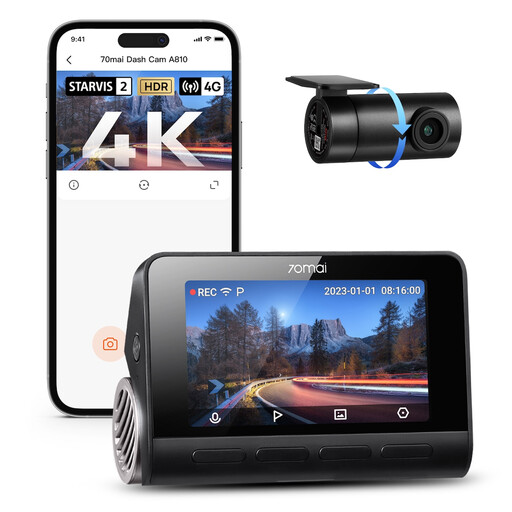
Why It Stands Out The 70mai A810-2 is a dual dash cam that focuses on delivering impeccable image quality. It is one of the few to integrate Sony STARVIS 2 sensors for both the front (4K) and rear (1080P) cameras. Combined with the brand's image processing technologies, like "70mai Night Owl Vision," it produces stunningly clear recordings, even in challenging light conditions.
Key Features
Who Is It For? Perfect for tech enthusiasts and demanding drivers who make no compromises on video quality. Its advanced surveillance features and optional 4G connectivity make it a top-tier choice for those seeking maximum security.
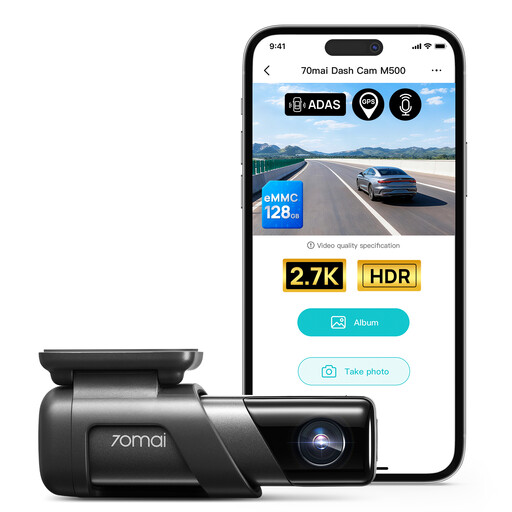
Why It Stands Out Although this is a front-only camera, the M500 earns its spot for its simplicity and reliability. Its main advantage is its built-in 64GB eMMC storage. No more dealing with SD cards; the camera is ready to use, and its integrated storage offers better durability and stability than traditional memory cards.
Key Features
Who Is It For? For drivers who primarily seek the simplicity and reliability of an excellent front camera. It's the ideal option if you don't need a rear camera and want to free yourself from managing SD cards.
Our selection highlights some particularly high-performing models, but the dash cam market is vast. If these products don't meet your expectations in terms of budget, design, or features, many other solutions are available.
To explore a wider range, feel free to browse our complete category of dash cams.
? Explore our selection of dash cams
Yes, using a dash cam for personal use is completely legal in France. You have the right to film public spaces from your vehicle. However, sharing these images online or elsewhere must respect privacy rights: people's faces and license plates must be blurred. In the event of a dispute, a recording can be presented as preliminary accident evidence, but its admissibility is left to the judge's discretion.
This is a risk, but manufacturers have it covered. To activate 24-hour parking mode, it is generally necessary to install a "hardwire kit," often sold separately. This kit connects directly to the vehicle's fuse box and includes a low-voltage protection system: it automatically cuts power to the dash cam if the battery's voltage drops below a certain threshold, ensuring there's enough power left to start the engine.
While 1080p (Full HD) is sufficient to observe an event, 4K offers a level of detail that can make all the difference. This sharpness is invaluable for identifying crucial elements at a distance, such as a moving license plate, a road sign, or the details of an incident. In low-light or poor weather conditions, 4K maintains better legibility, an advantage that can be decisive in establishing liability.