
Livraison le jour même ou le lendemain

Qualité garantie

Débloquez vos offres de bienvenue: Livraison GRATUITE | Jusqu'à -80 % | 30 jours d'essai gratuits à JoyPlus
Téléchargez l'application
Choosing the right 4K drone can be a daunting task. Between image quality, regulations, and a maze of features, it's easy to get lost. Whether you want to immortalise your travels or bring your creative projects to life, you're dreaming of spectacular aerial videos. The catch? You want a device that is simple, powerful, and compliant with the law. This guide is here to cut through the noise and help you find the drone that truly meets your needs, all without impenetrable technical jargon.
Before diving into our selection, let's review the crucial points that will help you make the right choice.
In the European Union, regulations for drones are strict. A drone under 250g (or <249g) belongs to the C0 class. Its main advantage: it exempts the pilot from any online training or exams. This is a welcome simplification for recreational use. It's a decisive factor if you're looking for a travel drone that gives you peace of mind, without worrying about administrative formalities.
Be careful, the "4K" label alone isn't everything. Two elements require close attention:
A drone with long battery life gives you time to focus on framing your shot rather than on the remaining battery percentage. Today, a flight time of 30 minutes or more is the standard for high-performance models. As for smart features like subject tracking (Follow Me), they turn the drone into your personal camera operator: it can automatically follow and film a person or a moving object.
We have selected a few models that tick all the boxes, for different needs and budgets.

Why It Stands Out
This DJI drone achieves the feat of packing cutting-edge performance into a pocket-sized format. Tipping the scales at 249g, it incorporates technologies previously found only on much heavier and more expensive models. Its 4K/60p HDR camera, mounted on a 3-axis gimbal, guarantees stunningly smooth and clear videos. The RC 2 remote controller with its built-in screen is a major advantage: no more need to tie up your smartphone, and visibility remains perfect, even in direct sunlight.
Advantages
Who Is It For?
Ideal for content creators, demanding amateur videographers, and travellers seeking flawless image quality and advanced features, all in a mini drone with a camera that slips into any bag.
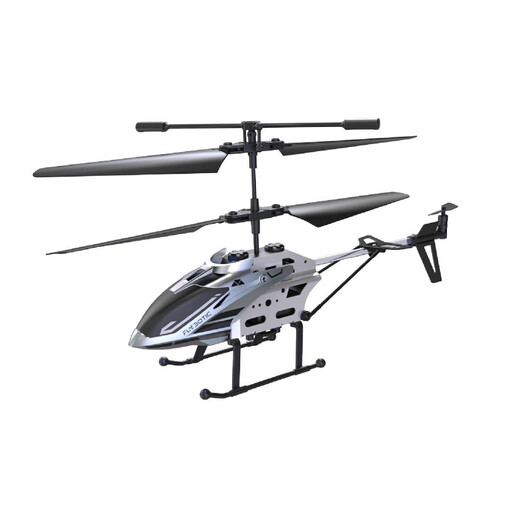
Why It Stands Out
Changing gears: this one has no camera, but offers the pure joy of indoor flying. The Air Mamba is a remote-controlled helicopter designed to be stable and easy to get the hang of. It's not a filmmaking tool, but an excellent way to get started with remote-controlled flight safely at home.
Advantages
Who Is It For?
For budding young pilots (from age 8, with supervision) and kids at heart looking for a high-tech toy for indoor fun, far from the constraints of filming.
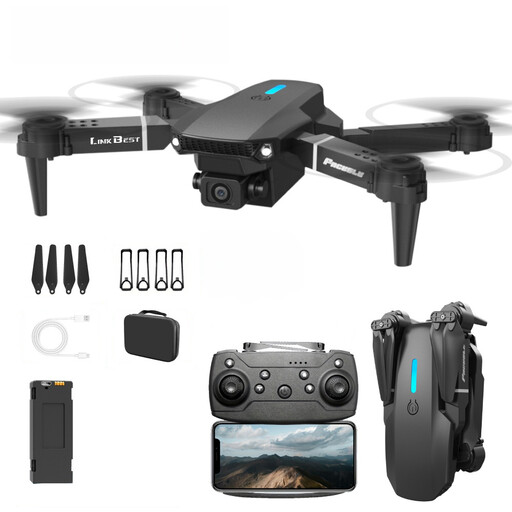
Why It Stands Out
The FACEGLE E88 Pro is positioned as an entry-level drone, ideal for discovering piloting without breaking the bank. Its foldable chassis and feather-light weight make it very easy to transport. It includes some flight aids, like altitude hold (barometer) and optical flow for stabilisation, which give it a more stable hover than the most basic models.
Advantages
Who Is It For?
For complete beginners and curious individuals on a tight budget who want to have fun and learn the basics of piloting before, perhaps, upgrading to a true 4K drone.
The world of flying and remote-controlled devices is vast. If our selection doesn't cover your specific needs, feel free to explore our complete category to discover other models and accessories.
Discover Our Remote Control Range
1. What are the regulations for a drone under 250g in the EU? For a drone under 250g (C0 class), the legislation is indeed more flexible. There's no need to pass the online exam. However, you must still respect the basic rules: do not fly over people, keep the drone in your line of sight, respect no-fly zones (airports, military sites, etc.), and, of course, people's privacy.
2. Is a 4K drone difficult for a beginner to fly? Not necessarily. Today, even high-end models are packed with flight aids (GPS, altitude hold, obstacle detection) that make them incredibly stable and accessible. Automatic take-off and landing functions further simplify the experience for newcomers.
3. How important is stabilisation for a camera drone? It is absolutely crucial. Without a good mechanical gimbal, your videos will be a series of shaky, blurry images, ruined by motor vibrations and gusts of wind. A drone with 3-axis stabilisation is the only way to guarantee the smooth, cinematic look that makes all the difference.