
Livraison le jour même ou le lendemain

Qualité garantie

Débloquez vos offres de bienvenue: Livraison GRATUITE | Jusqu'à -80 % | 30 jours d'essai gratuits à JoyPlus
Téléchargez l'application
The proliferation of our electronic devices has turned the modern desk into a veritable battlefield of cables and chargers. Between the laptop, smartphone, tablet, and countless accessories, finding a free outlet has become an uphill battle. And what about the frustratingly slow speed of some adapters? For professionals and creatives who rely on their tools, this daily clutter is more than just an annoyance: it's a drag on productivity.
This guide is here to help you find THE centralized, high-performance solution that will satisfy everyone. We will break down the essential criteria for choosing the right charging station and present our selection of the best models available today, whether you're looking for raw power for a complete setup or a compact charger for when you're on the go.
Before you take the plunge, let's review the key technical features that will make all the difference in your daily use.
The total power, expressed in watts (W), indicates the charger's capacity to power multiple devices at the same time. A 250W USB-C charging station is built for the most power-hungry setups. But be careful, raw power isn't everything. The most important thing is to check how this energy is distributed among the different ports. A high-performance charger dynamically allocates power according to the needs of the connected devices. For example, it should be able to dedicate up to 140W to a fast charger for a MacBook Pro, while efficiently powering a smartphone or tablet on the other ports.
GaN (Gallium Nitride) technology has literally revolutionized the world of chargers. It allows for the design of devices that are smaller, lighter, and generate much less heat than traditional silicon chargers, all while delivering significantly more power. A multi-port GaN charger is therefore the ideal choice to declutter your workspace. The number of ports is, of course, another key criterion. A 6-port USB-C (and USB-A) charger offers maximum versatility to plug everything into a single outlet.
Some models stand out with features that truly simplify daily life. For example, a charger with an LCD screen can display the power delivered by each port in real time. This is ideal for ensuring that each device receives the optimal charge and for monitoring the station's performance. Other options, like a control dial or a dedicated mobile app, allow for even more granular customization of power distribution.
Here is our selection of chargers that meet a wide variety of needs, from the ultra-powerful 250W desktop charger to ultra-compact travel solutions.
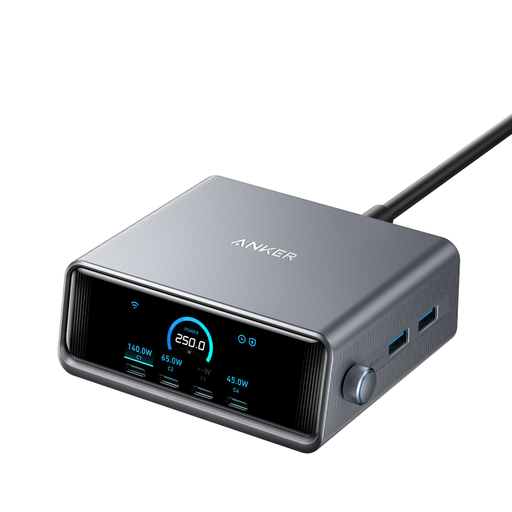
Why it stands out: The Anker Prime 250W charger is a true powerhouse for your desk. With a total output of 250W spread across four USB-C ports and two USB-A ports, it can simultaneously power a laptop, a tablet, a smartphone, and several other accessories without breaking a sweat. According to Anker, its main USB-C port can deliver up to 140W, enough to restore 50% battery to a 16-inch MacBook Pro in just 25 minutes. Its LCD screen and smart control dial allow you to monitor and adjust the charge in real time for optimal efficiency.
Advantages:
Who is it for? For professionals, content creators, and tech enthusiasts who juggle numerous power-hungry devices and want THE single solution to recharge everything at top speed.
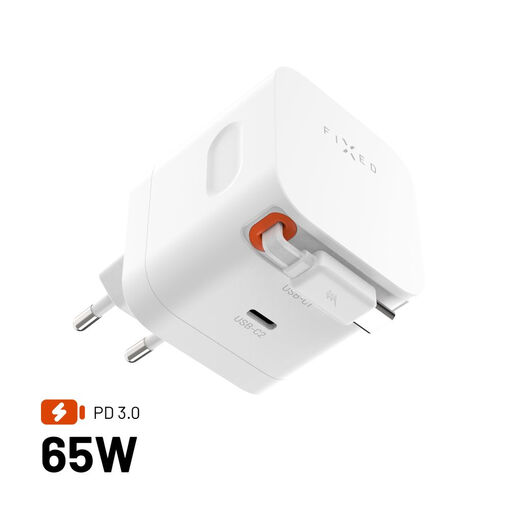
Why it stands out: This charger stands out with its design, which is entirely focused on mobility. It features a 64 cm retractable USB-C cable that stores magnetically: no more tangled cables at the bottom of your bag! In addition to this clever cable, it offers a second USB-C port. Its 65W output is sufficient to quickly charge a laptop like a MacBook Air, or two devices at once (45W + 20W).
Advantages:
Who is it for? For travelers and digital nomads looking for a charging solution that is powerful, practical, and ultra-discreet.
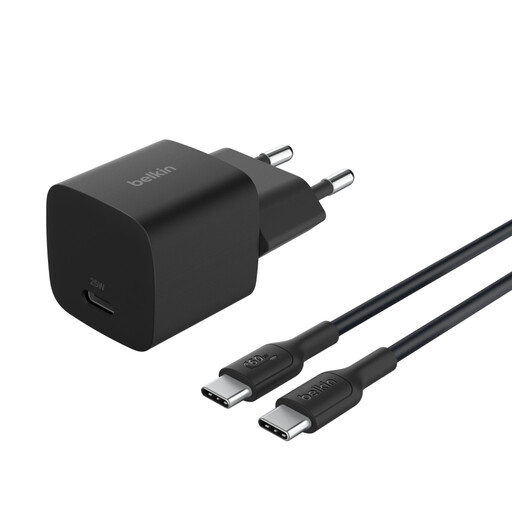
Why it stands out: The Belkin BoostCharge 45W is an ultra-compact wall charger equipped with two USB-C ports. It uses GaN technology, which allows it to be both tiny and efficient. Its 45W of power can be focused on a single device for a fast charge (an iPad Pro or a MacBook Air, for example) or intelligently split between two devices (25W + 20W for a smartphone and earbuds, for instance). It comes with a USB-C to USB-C cable, making it a solution that's ready to use out of the box.
Advantages:
Who is it for? For those who want to charge their smartphone and another device (tablet, earbuds...) at the same time and are primarily looking for a compact charger for both home and travel.
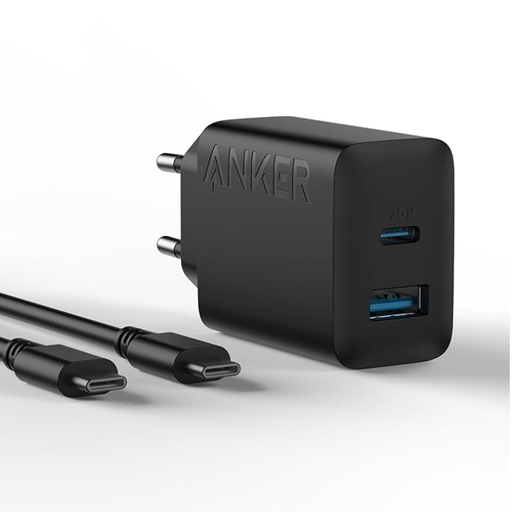
Why it stands out: Sometimes, simplicity is best. This 20W Anker charger is designed for one essential mission: to fast-charge a smartphone. It has one USB-C port and one USB-A port, allowing you to power two devices at once. Its 20W output via the USB-C port is ideal for the latest iPhone models and many Android smartphones, giving them a significant battery boost in record time.
Advantages:
Who is it for? For those looking for a simple, effective, and affordable charger, primarily for their smartphone and a small accessory.
The charger market is vast, and technologies are evolving at lightning speed. If the models in our selection don't check all your boxes—whether you're looking for a different wattage, more ports, or a specific design—be aware that many other options exist.
? Discover our complete collection of fast-charging accessories
GaN (Gallium Nitride) is a semiconductor material that is replacing silicon in modern chargers. It conducts electricity with much greater efficiency, which generates less heat. The result: for the same power output, GaN chargers are much smaller and lighter than their silicon counterparts. This is what makes them perfect for multi-port models and travel chargers.
No, not necessarily. It all depends on the power output (in watts) of the specific USB-C port. While a smartphone is happy with 20W, a laptop like a MacBook Pro will require between 65W and 140W to charge efficiently. It is therefore crucial to check the maximum power of each port before buying.
Yes, absolutely. Modern charging stations, especially those with the USB Power Delivery (PD) standard, are smart. They "communicate" with the connected device to provide only the right amount of power needed. You can therefore safely plug your 20W smartphone or your 5W earbuds into a 250W station: the charger will automatically adapt the power delivered.