
Livraison le jour même ou le lendemain

Qualité garantie

Débloquez vos offres de bienvenue: Livraison GRATUITE | Jusqu'à -80 % | 30 jours d'essai gratuits à JoyPlus
Téléchargez l'application
That dreaded 1% battery notification just as you need your GPS or digital train ticket… it's a classic scenario. A 10,000?mAh power bank seems like the perfect solution. Yet, the market is a jungle of often misleading marketing claims. The risk? Ending up with a bulky device, disappointing charging speeds, and ultimately, money down the drain.
To avoid buyer's remorse, learn how to spot the most common pitfalls. Here are the points you absolutely must check.
When finding the right portable charger for you, capacity isn't everything. Here are the three decisive technical criteria for a successful purchase.
Charging speed doesn't depend on capacity (mAh), but on the output power, expressed in watts (W). For recent devices (the latest iPhones, Samsung Galaxies, Google Pixels, etc.), a USB-C power bank compatible with the Power Delivery (PD) protocol is no longer an option—it's a necessity.
A 10,000?mAh capacity offers the perfect compromise between battery life and portability. But be warned, not all models are created equal when it comes to size. A good compact power bank should be able to slip into a pocket or a small bag and be forgotten. Pay close attention to the dimensions and weight (usually between 180g and 250g). A well-optimised design makes all the difference in daily use.
Forgetting your cable is the easiest way to render your power bank completely useless. That's why a power bank with a built-in cable is a game-changer. The smartest models go even further by integrating both a USB-C and a Lightning connector. This lets you travel light, whether you're on Android or Apple.
Rather than an endless list, we've chosen to match user profiles with models that meet specific needs, based on our criteria of performance, practicality, and common sense.
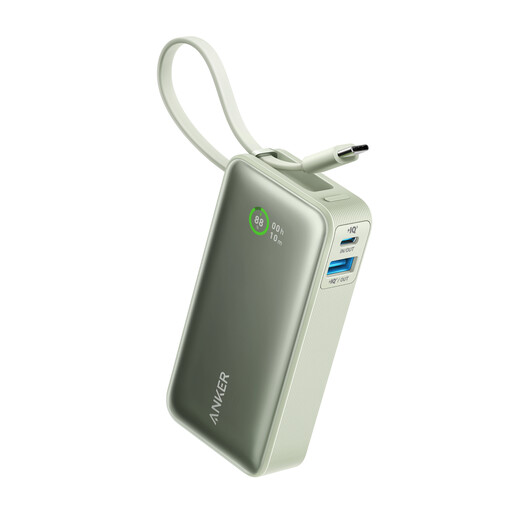
Why it's the right choice: Ideal for owners of recent devices who make no compromises on charging speed, all in a pocket-sized format. Its built-in USB-C cable and 30W output make it the perfect companion for professionals on the go or students.
This model doesn't just promise "fast charging"—it truly delivers, with a measurable 30W PD output suited for the most power-hungry devices. The integrated cable eliminates the risk of forgetting it.
30W two-way charging (the power bank itself recharges at top speed) and an ultra-compact design. Eco-friendly bonus: the shell is made from 80% recycled plastic.
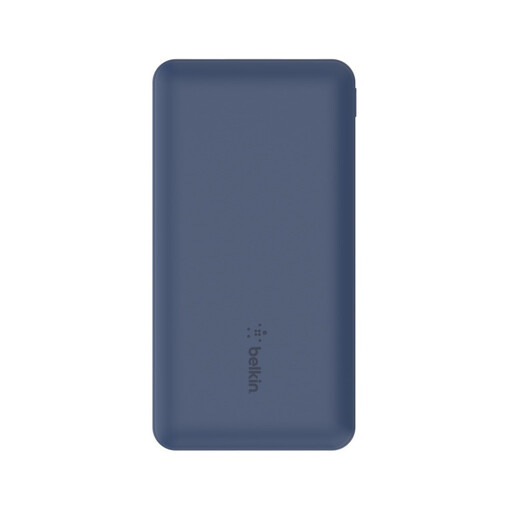
Why it's the right choice: The reliable and affordable solution for those juggling multiple devices (smartphone, earbuds, smartwatch). It's the sensible choice for daily use as well as for holidays.
Belkin plays it straight by advertising 15W: an honest power output that's sufficient for most uses. No empty promises, just reliable performance and the ability to power three devices at once.
Its three output ports (1x USB-C, 2x USB-A) give it maximum versatility. The real bonus? Belkin's Connected Equipment Warranty, which offers a peace of mind that is rare in this market.
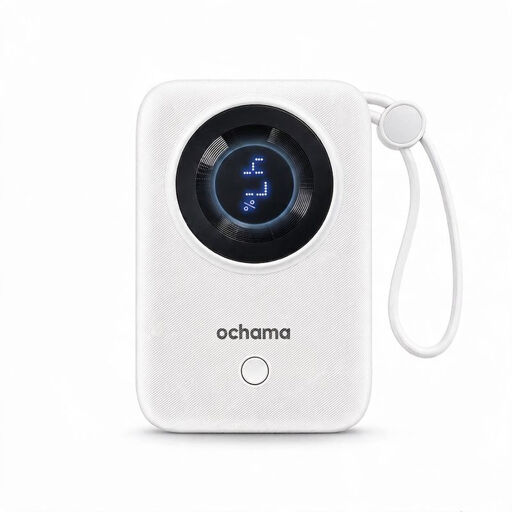
Why it's the right choice: The ultimate "no-fuss" solution for those who never want to look for a cable again. With its built-in Lightning and USB-C connectors, it's always ready to go, whether you have an iPhone or an Android smartphone.
It tackles the biggest ergonomic nightmare: cable management. No more forgotten cables or tangled messes in your backpack. Its screen, which displays the exact battery percentage, is also far more practical than simple LED indicators.
The two built-in cables (Lightning and USB-C) ensure near-universal compatibility. Its digital display, which shows the remaining battery life to the exact percent, is a real convenience.
Discover our complete selection of power banks that meet our performance criteria and all European safety standards.
It all depends on your smartphone's battery capacity. Assuming an average efficiency of 70%, a 10,000?mAh power bank will give you a usable capacity of about 7,000?mAh.
Yes, absolutely. Modern technologies like Power Delivery (PD) allow the power bank and your device to "communicate" to adjust the power in real time. The power bank will never supply more power than your phone can safely accept, which prevents any risk of overheating or damage.
A power bank's lifespan is measured in charge cycles (a full discharge/recharge from 0 to 100%). Generally, a quality model retains about 80% of its original capacity after 300 to 500 cycles. For regular use, this equates to a lifespan of two to three years before its performance begins to visibly decline.