
Livraison le jour même ou le lendemain

Qualité garantie

Débloquez vos offres de bienvenue: Livraison GRATUITE | Jusqu'à -80 % | 30 jours d'essai gratuits à JoyPlus
Téléchargez l'application
Our mission at Joybuy is to help you navigate the crowded world of power banks. We've all been there: your battery dies at the worst possible moment. A 10,000 mAh power bank with fast charging seems like the perfect solution, but choosing the right one can be a real headache. It's easy to get tripped up by the gap between marketing promises and technical reality.
Before you decide, watch out for these three common pitfalls:
To make the right choice, focus on the few technical criteria that truly make a difference in performance and convenience for a portable smartphone charger.
Charging speed doesn't just depend on milliamp-hours (mAh); it's primarily determined by the power output, measured in watts (W). For truly fast charging on modern smartphones (iPhone, Samsung, etc.), compatibility with the Power Delivery (PD) protocol is essential.
Cable management is one of the most frequently overlooked aspects. A power bank with a built-in USB-C cable saves you from having to carry an extra one—a detail that makes all the difference in daily use. The presence of multiple ports (USB-C and USB-A) also ensures versatility for charging different devices simultaneously.
A compact power bank is one you won't hesitate to slip into your bag. Pay close attention to the dimensions and weight. A 10,000 mAh model typically weighs between 180 and 250 grams. Anything heavier quickly becomes a brick in your pocket or a small bag.
Instead of an endless list, here are three models that cater to specific user profiles, all meeting our strict criteria for performance and practicality.
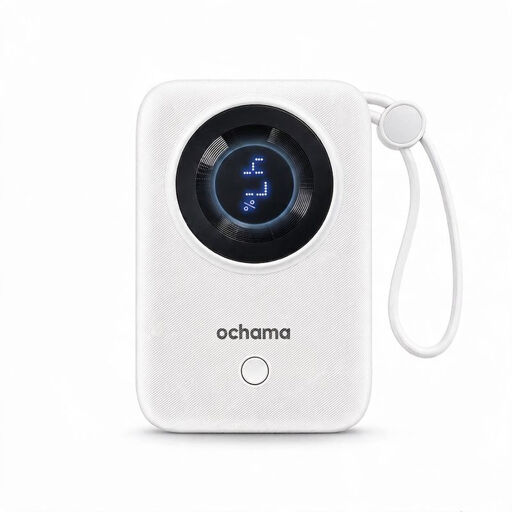
The ultimate all-in-one solution. Whether you have an iPhone or an Android, its integrated cables ensure you'll never forget yours. It's the perfect companion for daily commutes and long trips alike.
It tackles the ergonomics problem head-on by integrating both Lightning and USB-C cables. No more tangled cords or forgotten cables!
22.5W fast charging, two built-in cables, and a screen that accurately displays the remaining battery percentage.
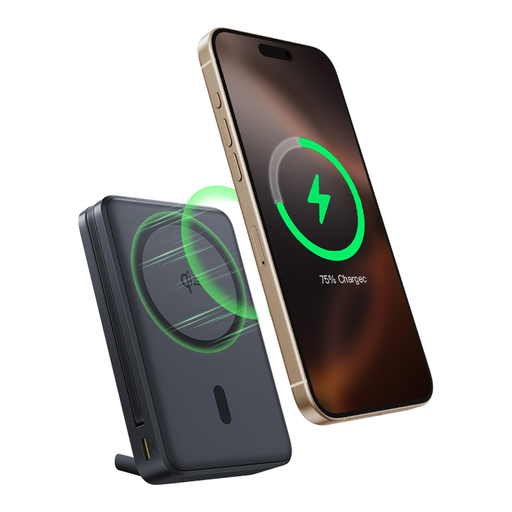
For those who own premium devices and accept no compromises on speed. Its 45W output can even top up a laptop, while the Qi2 wireless charging is a fantastic bonus.
It sidesteps the "fake" fast charging trap by delivering a true, high-power output of 45W via its built-in USB-C cable, well above the market average.
45W power output, 15W Qi2-certified wireless charging, and a built-in stand to hold your phone upright.
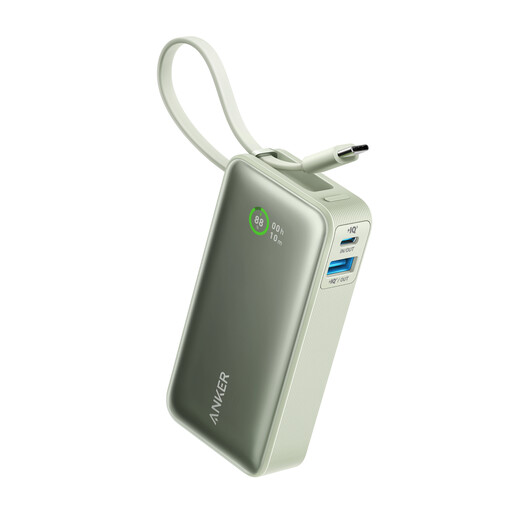
For those who make portability an absolute priority. This model is designed to slip into a jeans pocket or a small bag without weighing you down, all while delivering seriously respectable charging power.
It proves that a compact power bank doesn't have to sacrifice performance. Its pocket-friendly size doesn't stop it from delivering an efficient and fast 30W charge.
Excellent power-to-size ratio, with a built-in bidirectional USB-C cable for charging both your devices and the power bank itself.
We have curated a complete selection of products that meet our strict selection criteria and current safety standards.
Factoring in energy loss, a 10,000 mAh backup battery provides a real-world capacity of about 6,500 to 7,000 mAh. This is enough to fully charge:
Yes, absolutely. Airline regulations permit lithium batteries in your carry-on luggage (and never in checked baggage!) as long as their capacity is under 100 watt-hours (Wh). A 10,000 mAh battery (at 3.7V) is equivalent to 37 Wh, which is well below the limit. So you can travel with peace of mind.
A power bank's lifespan is measured in charge cycles (a full recharge from 0 to 100%). Most quality models are designed to retain about 80% of their original capacity after 300 to 500 cycles. With regular use, this translates to a lifespan of 2 to 4 years. To preserve its health, avoid deep discharges and do not expose it to extreme temperatures.