
Livraison le jour même ou le lendemain

Qualité garantie

Débloquez vos offres de bienvenue: Livraison GRATUITE | Jusqu'à -80 % | 30 jours d'essai gratuits à JoyPlus
Téléchargez l'application
Choosing a 1.75mm PLA filament can quickly become overwhelming given the sheer number of options available. Between promises of high speed, increasingly diverse finishes, and new formulations, it's easy to get lost. Whether you're a seasoned maker looking to optimise your production or a beginner dreaming of your first successful print, finding the perfect spool is the key to success.
This guide is here to help you see things more clearly. As the Head of Product Recommendations at Joybuy, my role is to do the legwork and offer you practical, objective advice. We'll review the essential criteria before presenting a selection of PLA filaments tailored for specific uses, from rapid 3D prototyping to the most delicate artistic pieces.
Before diving into our selection, let's go over a few key points to help you make the right choice.
The innovation that has recently shaken up the market is high-speed PLA. Specially formulated for modern 3D printers that operate at high speeds (over 150?mm/s), this filament boasts improved fluidity, allowing it to be extruded quickly without the risk of under-extrusion. This is a major advantage for rapid prototyping or small-batch production. However, for artistic projects where every detail counts, a standard PLA remains a reliable choice. It offers perfect control over the surface quality.
The aesthetics of your prints are just as important as their strength. Standard PLA, with its slightly glossy finish, has the drawback of highlighting layer lines. For a more professional and elegant look, matte PLA is the way to go. Its surface diffuses light, subtly hiding imperfections and giving objects a softer touch and appearance. This finish is highly sought after for display models, figurines, and decorative objects.
We have selected three PLA filaments that stand out from the crowd, each meeting a specific need.
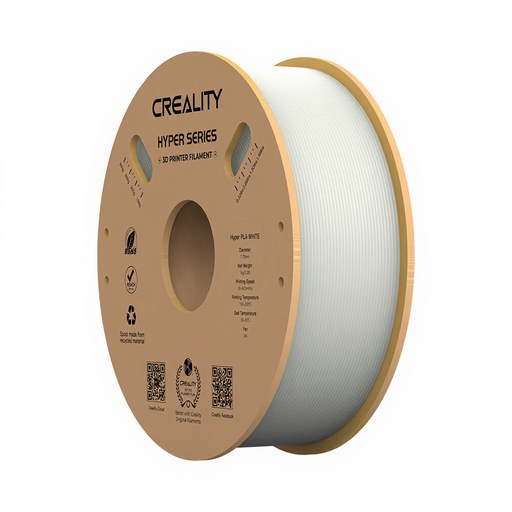
Why we love it?: Creality's Hyper PLA is a formula specially designed for very high-speed printing. It promises stable and smooth extrusion even when your printer is running at full throttle, up to 600?mm/s according to the manufacturer.
Advantages?:
Who is it for?? For owners of high-speed 3D printers (Creality K1, Ender-5 S1, and the like) who want to prototype at lightning speed or print large parts without spending days on them.
See Creality Hyper PLA on Joybuy.fr
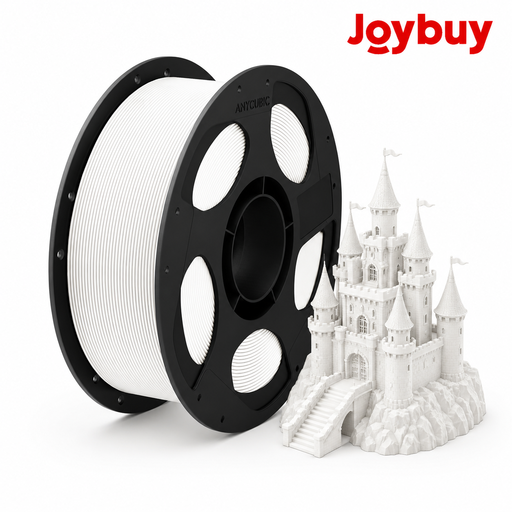
Why we love it?: The result of a collaboration, this filament gets straight to the point: simplicity, reliability, and affordability. It's the ideal companion for everyday prints, ensuring consistent results without the hassle of tweaking settings.
Advantages?:
Who is it for?? For beginners, makers looking for a reliable all-rounder 3D printer filament, and anyone seeking the best value for money for daily use.
See ANYCUBIC x Joybuy PLA Basic on Joybuy.fr
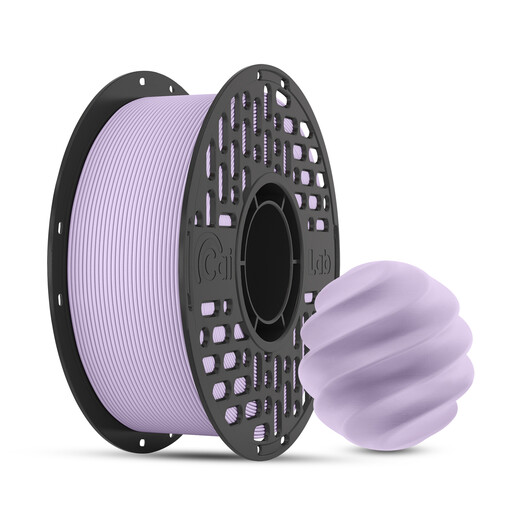
Why we love it?: Here, the focus is on aesthetics with a high-end matte PLA finish. The "Misty Lilac" shade is just a glimpse of a colour palette designed for projects that truly stand out.
Advantages?:
Who is it for?? For designers, artists, figurine creators, and anyone who demands a flawless and elegant finish straight off the print bed, without spending hours on post-processing.
See CaiLab PLA Matte on Joybuy.fr
The world of PLA is a true treasure trove: endless colours, varied textures, special effects (silk, wood, glow-in-the-dark...). If our selection doesn't perfectly match your current project, don't worry, the possibilities are nearly limitless.
An original shade like lavender, for example, can be enough to give your creations a unique touch.
Explore our collection of 3D filaments, including the lavender shade
1. What is the difference between PLA and PLA+ (or PLA Pro)?? PLA+ is an enhanced version of standard PLA. Additives are included to boost some of its properties, such as impact resistance, flexibility, or layer adhesion. It is generally less brittle than classic PLA, a real plus for functional parts that need to withstand light mechanical stress.
2. How should I properly store a spool of PLA?? PLA is hygroscopic: it loves to absorb moisture from the air. A filament that has absorbed moisture is a recipe for failed prints (bubbles, crackling at the nozzle, grainy surface). The best practice is to always store your spools in a dry place, ideally in an airtight bag with a sachet of silica gel (desiccant) to trap any trace of moisture.
3. Is PLA filament really safe and biodegradable?? Made from plant-based resources, PLA is considered non-toxic during printing. However, it is still recommended to print in a well-ventilated room. As for its biodegradability, the term is often misunderstood. PLA only decomposes under industrial composting conditions (high heat and humidity), not in your garden compost or in nature. To dispose of it, check with your local municipality about plastic recycling programmes.