
Livraison le jour même ou le lendemain

Qualité garantie

Débloquez vos offres de bienvenue: Livraison GRATUITE | Jusqu'à -80 % | 30 jours d'essai gratuits à JoyPlus
Téléchargez l'application
Switching to a bento box for your lunches is an excellent way to eat better, save money, and reduce waste. The problem? The market is saturated with models making tempting promises that often don't deliver. A poor seal, degrading materials, or poorly designed compartments can quickly turn your good resolution into frustration.
As a Product Recommendation Manager at Joybuy, my role is to help you cut through the noise. Let's forget the marketing jargon and focus on the criteria that really matter. Here's how to avoid the common pitfalls and choose an adult lunch box or a kid's one that will serve you well, day after day.
To make the right choice, focus on a few key technical points. These are the true guarantees of your future bento box's quality and durability.
The material is the number one criterion. It directly impacts the box's durability, weight, and maintenance.
A good bento box should adapt to your meals, not the other way around.
To help you visualise these criteria, here are a few options suited to different user profiles.

Why we love it: This set of three different-sized boxes (600 ml, 1100 ml, 2200 ml) is perfect for preparing and storing meals for the week. Its 316 stainless steel is a guarantee of hygiene and durability.
It solves the problem of materials that don't age well. The 316 stainless steel resists everything (or almost everything), retains neither stains nor odours, and won't degrade, even after years of use.
A versatile and stackable set for optimised storage. Freezer and dishwasher safe for a simplified daily routine.
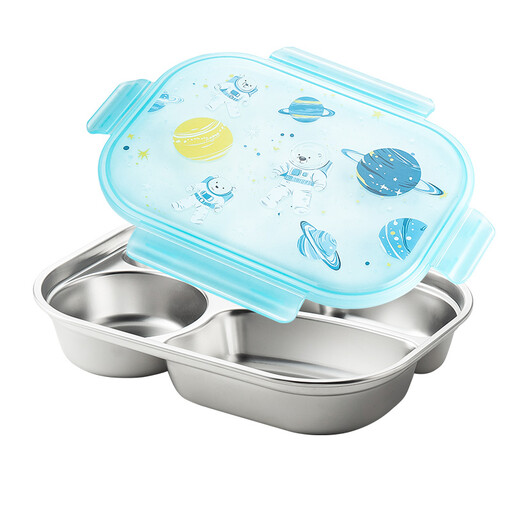
Why we love it: Perfect for bringing a complete and varied meal to the office. Its four compartments allow you to separate the main dish, side, fruit, and dessert, without everything getting mixed up.
It solves the problem of poorly designed compartments. Its structure ensures a clean and effective separation, preserving every flavour until your lunch break.
The combination of a premium material (316 stainless steel) and a compartmentalised design makes it a solution that's as durable as it is functional for daily meals.
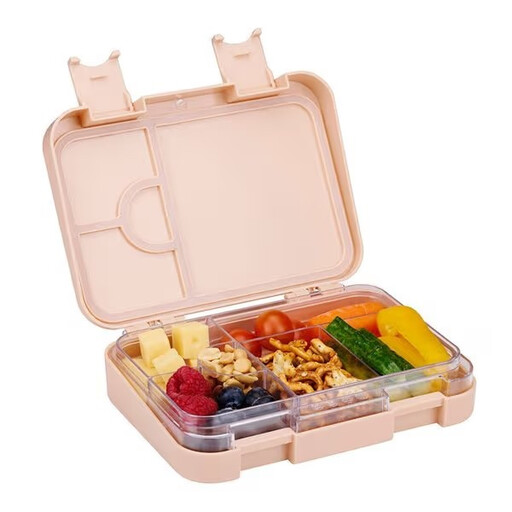
Why we love it: With its 6 small compartments, this box is perfect for creating a varied and balanced snack for school: cut fruit, biscuits, nuts, cheese cubes... Its lightweight and compact format slides easily into a school bag.
It's great for organising snacks, but be aware: this model is designed for solid foods only. It is not leak-proof and therefore not suitable for liquids or sauces.
Top-notch organisation for snacks thanks to its 6 compartments. The inner tray is removable for easy cleaning.
Discover our full selection of products that meet our quality criteria and safety standards.
For a stainless steel bento box, a run through the dishwasher or hand washing with soap is sufficient. For a plastic model, if an odour lingers, let it soak for a few hours in a mixture of warm water and baking soda before rinsing. In any case, dry each component thoroughly, including the gasket, before storing the box.
Absolutely not! You should never put metal in a microwave oven, as it can cause sparks or even a fire. To reheat your meal, simply transfer it to a microwave-safe plate or container.
Both are food-grade steels and safe for your health. The main difference is that 316 stainless steel contains molybdenum. This addition significantly increases its resistance to corrosion, especially from salt and acids (salad dressing, tomato sauce, etc.). It is therefore a more robust and durable material in the long run for a food container.