
Livraison le jour même ou le lendemain

Qualité garantie

Débloquez vos offres de bienvenue: Livraison GRATUITE | Jusqu'à -80 % | 30 jours d'essai gratuits à JoyPlus
Téléchargez l'application
The bento box has it all: it's convenient for office lunches, ideal for kids' meals, and perfect for picnics. It promises a homemade meal that's both budget-friendly and more eco-conscious. However, buying one can quickly turn into a disaster. Faced with an overwhelming selection and tempting marketing claims, we often end up with a leaky lid, plastic stained by the very first tomato sauce, or locking clips that snap without warning.
This guide is here to help you avoid the pitfalls and choose a lunch box that will last for the long haul, without any nasty surprises.
Before we get into the technical details, let's review the most common disappointments that turn a good intention into a daily regret.
To make the right choice, focus on these three essential points.
This is the first question to ask yourself, and the answer determines everything else: the durability, use, and maintenance of your airtight food container.
A compartmentalised lunch box is the key to preventing your fruit salad from mixing with your saucy main dish. For an adult bento as well as a kids' lunch box, compartments help structure the meal: main, side, dessert—everything in its place.
For meal prep enthusiasts, it's also an excellent way to control portions. Some models offer removable dividers for more flexibility, while others, with their fixed compartments, ensure a better seal between sections.
This is the critical point. A good locking system combines solid locking clips with a thick silicone seal that fits perfectly against the lid.
Test the sturdiness of the clips: they should be easy to handle, yet firm enough not to pop open from the first bump in your bag. For a kids' lunch box, check that the opening mechanism is suited to the strength of their small hands.
Here are a few options that cater to different user profiles, taking into account the quality and practicality criteria we've discussed.
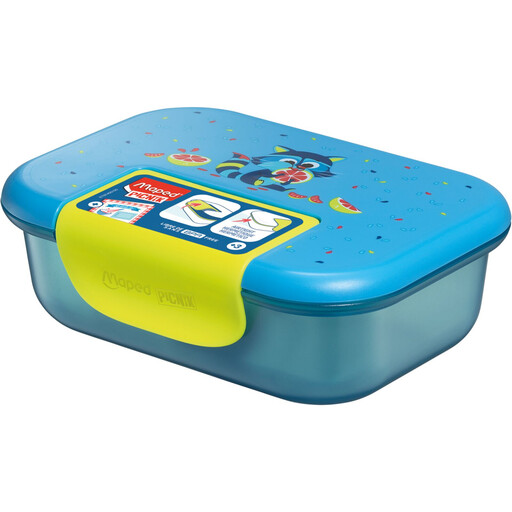
Why we love it: Designed for kids, this model combines a fun design with genuine practicality. The opening clip is easy to handle, and the lid, attached to the base, won't get lost in the cafeteria.
It avoids the pitfall of poor ergonomics with its easy-to-use clip, even for small hands. Its stainless steel base is an insurance against stubborn stains and odours.
The attached lid is a stroke of genius to prevent loss. One run through the dishwasher, and it's ready for the next day.

Why we love it: This set of three containers in different sizes (600 ml, 1100 ml, 2200 ml) is perfect for organising your weekly meals, from snacks to the main course. The ultimate meal prep container.
With its 316 stainless steel, it fears neither corrosion nor acidic foods, avoiding the pitfall of deteriorating materials. The clip-on lids ensure a reliable seal.
The trio of sizes and stackable design are perfect for optimising space in the fridge and cupboards. It's freezer and dishwasher-safe for maximum convenience.
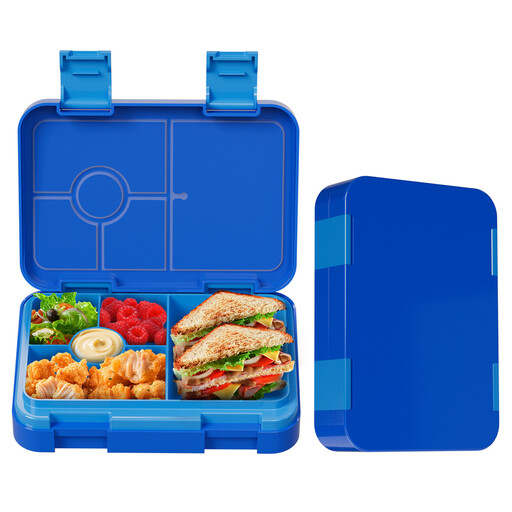
Why we love it: For purists who demand that every food item stays in its place, this compartmentalised lunch box is the solution. Its five fixed sections allow you to create a varied meal where nothing gets mixed up.
Its one-piece design with integrated compartments eliminates the problem of removable dividers that get lost or leak. It's simple, clear, and effective.
The five distinct compartments ensure perfect separation of flavours. The double-latch closure secures everything for stress-free transport.
Discover our full selection of lunch boxes that meet our demanding specifications for quality, convenience, and safety.
Never! That's the golden rule: no metal objects, including a stainless steel bento box, should ever go into a microwave. The metal can create electrical arcs that can damage your oven or even cause a fire. Stainless steel boxes are perfect for storing and transporting food, but reheating should be done on a plate.
The secret is speed: wash your box as soon as possible after use. Most models are dishwasher-safe (always check the instructions). For a stubborn odour (like fish or curry), nothing beats washing it by hand with hot water and a spoonful of baking soda. Let the silicone seal air-dry completely before storing the box.
Both are food-grade stainless steels. 304 stainless steel is the most common and does the job perfectly well for everyday use. 316 stainless steel, however, contains molybdenum. This small addition changes everything: it makes it highly resistant to corrosion caused by salt and acids. If your meals often include vinaigrettes, tomato sauces, or citrus fruits, a stainless steel bento made of 316 is a wiser long-term investment.