
Livraison le jour même ou le lendemain

Qualité garantie

Débloquez vos offres de bienvenue: Livraison GRATUITE | Jusqu'à -80 % | 30 jours d'essai gratuits à JoyPlus
Téléchargez l'application
In an era where our devices, from the iPhone 16 to the Galaxy S24, are more powerful than ever, choosing a simple charging cable has become surprisingly complex. Faced with a sea of options, discerning consumers looking for value prioritise reliability and durability above all. A cable that fails after just a few months is not a sound investment, regardless of its price. This guide is designed to shed light on the key criteria for selecting the right Belkin fast-charging USB-C cable for your needs, without falling for marketing traps.
Before diving into specific models, it's helpful to know the key features that distinguish a high-performance cable from a short-lived gadget.
A non-negotiable criterion is USB-IF (USB Implementers Forum) certification. This logo guarantees that the cable meets strict safety and performance standards. It ensures perfect compatibility with all USB-C certified devices, preventing risks of overheating, short-circuiting, or damage to your precious devices. It's a quality assurance mark recognised across the European Union and beyond.
The term 60W fast charging is often highlighted, but what does it really mean? This wattage, combined with Power Delivery (PD) technology, allows you to charge your devices much faster than a standard cable. A 60W cable is versatile: it can rapidly charge a smartphone (for example, from 0 to 50% in about 25 minutes, according to manufacturer data), a tablet, and even many ultrabook-style laptops. Always check that the cable supports the Power Delivery standard to benefit from this efficiency.
A cable's longevity largely depends on its construction. A braided USB-C cable offers far superior mechanical resistance compared to a standard plastic one. The braided sheath protects it from fraying, tangles, and the twists of daily use. Some manufacturers, like Belkin, provide durability test results, indicating, for example, that it can withstand over 30,000 bends. This is an objective indicator of a durable USB-C cable's sturdiness.
As a Joybuy Product Recommendation Officer, my role is to sift through the market to present you with options that combine performance, safety, and durability. Here is a selection of cables from the Belkin BoostCharge range that meet these criteria.
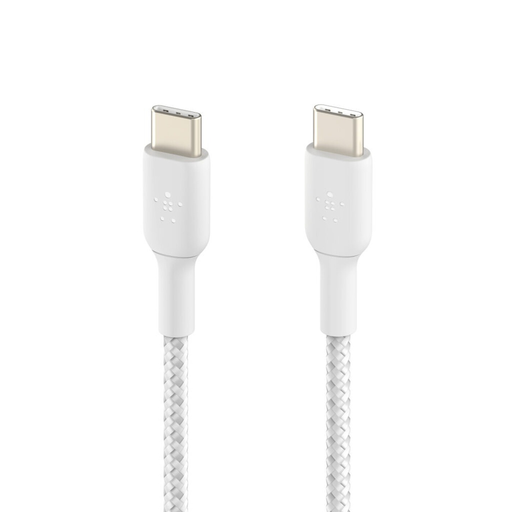
This model stands out for its compact design and eco-conscious focus. Its braided sheath is made with 95% post-consumer recycled (PCR) plastic, an increasingly important factor for environmentally aware consumers. Its short 15 cm length is designed for on-the-go use, ideal for connecting a smartphone to a power bank or laptop without cable clutter.
Mobile professionals, power bank users, and anyone who wants a clean and organised workspace or charging area.
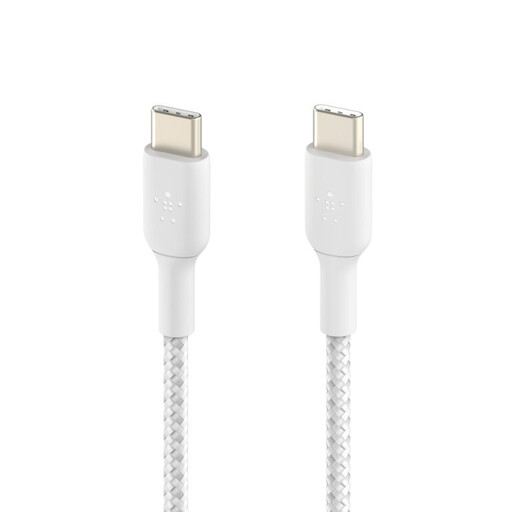
This 2m USB-C cable version offers maximum flexibility. It features all the qualities of the BoostCharge Pro range, including the durable braided sheath and USB-IF certification, but with a length that greatly enhances usability at home or in the office. Gone are the days of huddling by the outlet to use your device while it charges.
For users who charge their devices from a bedside table, sofa, or a desk far from a wall socket. It's the ultimate convenience option.
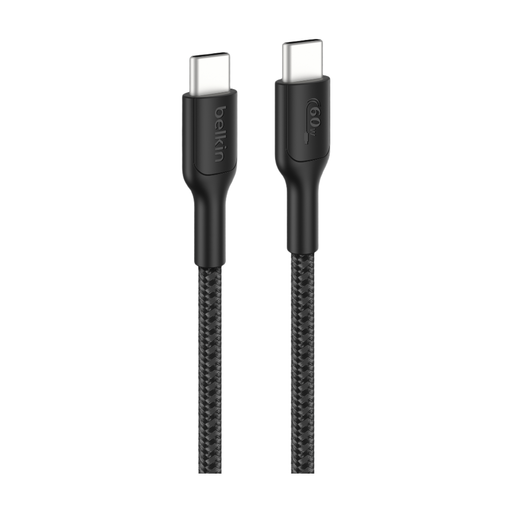
This USB-C gaming cable is specifically designed for the demands of gaming. Its design combines the ruggedness needed for frequent handling with a flexibility that doesn't impede movement. It ensures a stable 60W power supply, allowing you to play on devices like the Nintendo Switch 2 or a gaming smartphone without fear of running out of battery.
For gamers on portable consoles (Nintendo Switch), smartphones, or tablets who need a cable that can withstand intensive use while delivering a fast, reliable charge.
A braided sheath design is a real asset for durability, whether for a charging cable or other types of connectors. If you appreciate this robust and aesthetic construction, you might be interested in exploring other products that share this feature.
? Discover our range of braided accessories
Yes. Since the iPhone 15, Apple has adopted the USB-C port. USB-IF certified Belkin cables, like the ones featured here, are fully compatible. They support Power Delivery technology, which is the protocol Apple uses for fast charging its iPhones. You will therefore be able to charge your iPhone 16 at optimal speed.
The main difference lies in durability and resistance to wear and tear. A standard cable with a plastic sheath (PVC or TPE) is more prone to fraying or breaking at the connectors after repeated bending. A braided USB-C cable, typically made of nylon or composite materials, offers superior mechanical protection, better resistance to twisting, and is less prone to tangling.
For many modern laptops, especially ultrabooks like the MacBook Air, Dell XPS 13, or tablets like the iPad Pro, a 60W output is perfectly suitable for efficient charging. However, for more power-hungry machines, such as a 16-inch MacBook Pro or a mobile workstation, a higher-wattage cable and charger (96W, 100W, or more) will be necessary for charging at full speed. The 60W cable will still charge them, albeit more slowly.