
Livraison le jour même ou le lendemain

Qualité garantie

Débloquez vos offres de bienvenue: Livraison GRATUITE | Jusqu'à -80 % | 30 jours d'essai gratuits à JoyPlus
Téléchargez l'application
Table tennis, or ping-pong, is a fun activity that brings generations together. Whether you're looking to liven up a family afternoon, introduce youngsters to a sport that builds coordination, or simply enjoy a friendly rally, finding the right equipment is the first step. With so many options available, it can be difficult to know where to start. As Joybuy's Product Recommendation Specialist, my role is to provide clear guidelines to help you choose a beginner ping-pong set that truly meets your needs, with a focus on practicality and durability.
Before diving into our top picks, here are a few key criteria to consider for making an informed choice.
For those just starting out, a complete ping-pong kit is often the easiest solution. Make sure it includes at least:
A good 2-paddle ping-pong set with balls and a net ensures you can start playing right out of the box.
For a beginner, ball control is more important than speed. Paddles with a core (the central wooden part) made of softwood offer better shock absorption and, therefore, greater control. The rubber surface should be tacky enough to learn basic spins without being overly technical. The shape and weight of the handle are also important for a comfortable grip, especially in a children's table tennis set.
Think about how you'll primarily use your set. Will you be playing only with family and friends? Or are you looking for an option that allows for solo ping-pong training? Some innovative kits offer systems with a flexible rod for practicing alone—a highly valued feature for developing coordination at your own pace. The ability to use the set both indoors and outdoors is another key aspect of versatility to consider.
Based on practicality, kit contents, and suitability for beginners, here are a few options that caught our eye.
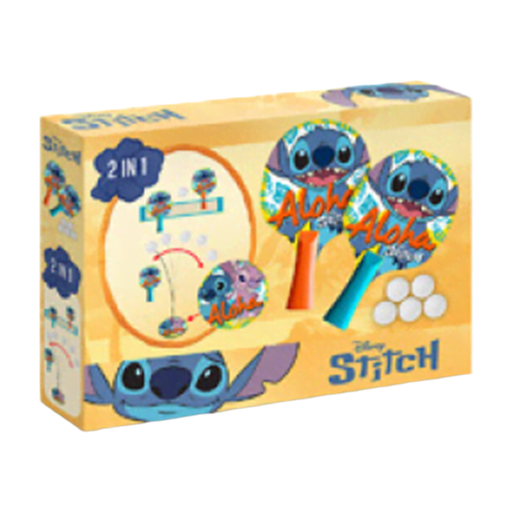
Why We Recommend It This set stands out for its exceptional versatility. It's not just a kit for two-player games, but also a genuine introductory tool thanks to its training stand with a flexible rod. This 2-in-1 feature allows a child to practice solo, developing their hand-eye coordination in a fun way. The foldable net with suction cups adapts to many smooth surfaces, making this kit highly practical for on-the-go use.
Pros
Who is this product for? This children's table tennis set is especially recommended for parents looking for a developmental activity for their kids aged 3 and up, while also offering a way to share fun family moments.

Why We Recommend It This 2-paddle ping-pong set is a smart choice for teens and adults who are just starting out. Its design is based on a high-response pure wood blade, which ensures excellent feedback and stable ball control. The high-elasticity rubber provides consistency in every shot. A notable detail is the reinforced edge tape around the paddle, which increases its impact resistance and extends its lifespan—a key benefit for regular recreational table tennis.
Pros
Who is this product for? This kit is for beginners of all ages looking for reliable and durable equipment to get started in table tennis, whether for casual games or more regular practice.

Why We Recommend It This 236A model from Double Fish is another great option for recreational players. It focuses on game feel, with a wood blade that offers sensitive vibration feedback and balanced flexibility. The brand mentions an "enlarged power zone" on the front of the paddle, designed to enhance hitting power while maintaining control. The finishes are well-crafted, with a smooth surface and a comfortable grip, making it an enjoyable set for getting into the game quickly.
Pros
Who is this product for? This set is a solid option for beginner to intermediate players who enjoy recreational table tennis and are looking for equipment that offers a more dynamic game feel.
A complete ping-pong kit is an excellent starting point. However, during training sessions or lively games, it's common to lose or damage balls. To ensure smooth play and never run short, it's wise to stock up on extras. To complete your setup, you can browse our selection of training balls.
There's no strict age, but children can typically start learning around 3 to 5 years old with suitable equipment, like lightweight mini-paddles or fun training systems. At this age, the main goal is to develop hand-eye coordination and motor skills in an enjoyable way.
Recreational paddles, like the ones featured here, are designed to be versatile and forgiving. They prioritize ball control and durability. Competition paddles are often faster, lighter, and made from advanced materials (carbon, etc.). Their rubber surfaces are also more technical, allowing players to generate significantly more spin. They are less forgiving of placement errors and are intended for experienced players.
To extend the life of your paddles, avoid exposing them to moisture, excessive heat, or direct sunlight. Clean the rubber surfaces from time to time with a soft, dry cloth to remove dust. Store the set in its case or original box after use. Proper maintenance ensures consistent performance and helps the equipment age well.