
Livraison le jour même ou le lendemain

Qualité garantie

Débloquez vos offres de bienvenue: Livraison GRATUITE | Jusqu'à -80 % | 30 jours d'essai gratuits à JoyPlus
Téléchargez l'application
Is your child or teen obsessed with stunts, skateparks, and “tricks”? It’s probably time to look into buying their first beginner freestyle scooter. But with an overwhelming number of options, it's easy to feel lost. How do you find a model that's safe, durable, and suited to their skill level, without falling for marketing hype?
This guide provides clear guidelines and objective criteria to help you make the right choice. As the Head of Product Recommendations at Joybuy, my mission is to steer you towards products that transparently combine safety and fun for your children.
Before comparing models, it's important to understand what sets a kids' freestyle scooter apart from a standard one. Built for impacts and stunts, it must meet very specific requirements. Here are the three key points to check first.
This is the number one criterion. A freestyle scooter endures intense stress during jumps and landings.
The wheels and brakes are key elements not only for safety but also for the overall ride feel.
A stunt scooter must be perfectly suited to the child's size. A model that is too heavy or too large will be difficult to handle and potentially discouraging. For a beginner, a lighter weight makes learning the first jumps (like the "bunny hop") easier. As a general rule, the top of the handlebar should be somewhere between the rider's navel and inseam when they are standing on the deck.
After analysing technical specifications and combing through user reviews, one model stands out for young riders looking to get into the sport.
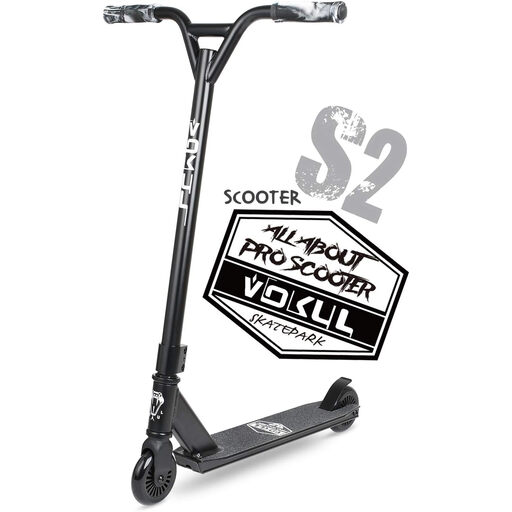
This entry-level pro freestyle scooter is specifically designed for beginners aged 7 to 14. It combines high-quality materials, usually found on more expensive models, with a design that prioritises safety and an easy learning curve. Its 6061 aluminium frame and 4130 chromoly steel handlebar, secured by a three-bolt clamp, provide the essential durability to handle impacts without adding excess weight.
Its main advantage? Effortless assembly. The scooter arrives almost fully assembled: just attach the handlebar to the deck by tightening the three clamp bolts. This is a huge plus for parents who aren't DIY-inclined.
For kids and teens aged 7 to 14 who want to discover the thrill of freestyle riding. It's an excellent choice for a first beginner freestyle scooter, offering the perfect balance of safety, performance, and durability. It also makes a great gift for a 10-year-old boy who loves action sports.
See VOKUL S2 Product Details on Joybuy.fr
If a freestyle scooter isn't quite what you had in mind, or if you're looking for an idea for a younger child, our catalogue is filled with games and toys.
For example, feel free to explore our selection of [gifts for 6-year-old girls] to find some inspiration.
The recommended starting age is generally around 7 or 8 years old. At this age, children typically have the necessary coordination and balance. The most important thing is to choose a model that is suited to their height and weight so they can control it easily and safely.
Classic scooters are designed for commuting. They are often foldable, lighter, and have larger wheels for comfort. A freestyle scooter, on the other hand, is built to withstand impacts. It is not foldable, its handlebar is fixed and wider, and its structure is reinforced to handle the jumps and tricks performed at the skatepark.
Yes, absolutely. Freestyle riding, even at a beginner level, comes with the risk of falling. Wearing a helmet is essential (and mandatory in many places for children under 12). Knee pads, elbow pads, and wrist guards are also highly recommended to protect joints. Safety first