
Livraison le jour même ou le lendemain

Qualité garantie

Débloquez vos offres de bienvenue: Livraison GRATUITE | Jusqu'à -80 % | 30 jours d'essai gratuits à JoyPlus
Téléchargez l'application
Film photography is making a major comeback. The unique aesthetic of grain, the joy of anticipation before seeing your shots, and the charm of a vintage camera are winning over more and more enthusiasts. But where do you start? Which camera should you choose to avoid common beginner mistakes?
Our mission at Joybuy? To help you make sense of it all. This guide is designed to introduce you to specific models and practical tips to find the film camera that fits your creative vision and budget—all without the unnecessary technical jargon.
Before we dive into our top picks, let's review a few key points to help you find the right film camera for you.
Most beginner cameras use 35mm film, the most common format, which makes it the easiest to find and get developed. A standard roll will give you 24 or 36 photos (exposures).
However, there's an alternative that's as creative as it is economical: the half-frame format. A camera like the Kodak Ektar H35 captures two images in the space normally occupied by a single 35mm photo. The result: you get double the shots, with 72 photos on a 36-exposure roll! It's an excellent option to save on costs and experiment with original diptych compositions.
To get started without any hassle, a point and shoot film camera is ideal. These models are designed for ultimate ease of use:
This ultra-simple approach allows you to focus on what matters most: your composition and the decisive moment.
After each photo, you need to advance the film to prepare for the next shot. There are two main approaches:
The choice really depends on the experience you're looking for: the charm of the authentic process or the convenience of automation.
We've selected three models that are perfect for beginners, each with its own distinct personality.
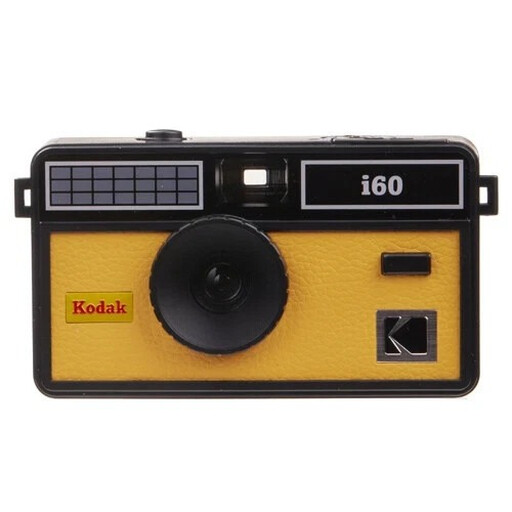
Why it stands out
The Kodak I60 is the quintessential simple and effective 35mm camera. Its colourful design and intuitive operation make it an excellent entry point. It embodies the point and shoot spirit: you load the film, aim, and shoot. The pop-up flash, which is deployed with a simple switch, is a thoughtful detail for dealing with low light.
Key features
Who is it for? Absolute beginners looking for their first Kodak film camera without any fuss, complete with an unapologetically retro look. It's an ideal travel or party companion for capturing memories with the charm of film.
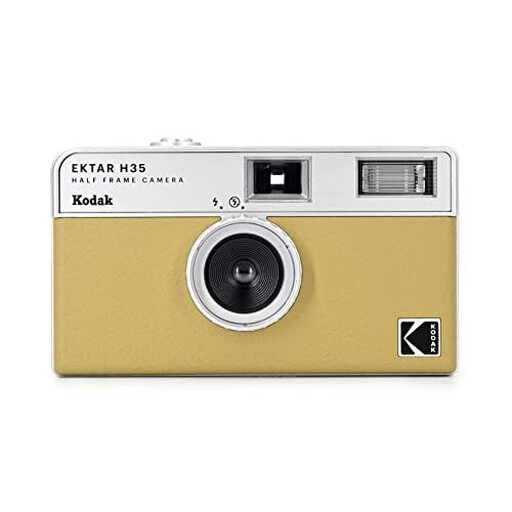
Why it stands out
The key strength of the Kodak Ektar H35? Its half-frame format. It simply allows you to double the number of photos on a roll of film (that's 72 shots on a 36-exposure roll), an undeniable cost-saving benefit when it comes to buying and developing film. This out-of-the-ordinary vertical format is also a fantastic invitation to creativity, perfect for composing diptychs that tell a story.
Key features
Who is it for? Creatives and the budget-conscious. Ideal for those who love to experiment and share their shots on social media, the half-frame format offers an original playground for visual storytelling.
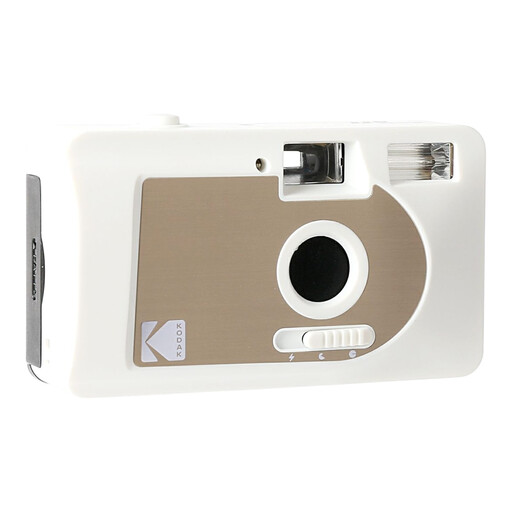
Why it stands out
The Kodak S88 brings a dose of modern convenience to film photography with its motorised film advance. No more winding a thumbwheel after each shot; the camera advances automatically. This makes it faster and more practical, which is perfect for ensuring you never miss a candid moment.
Key features
Who is it for? Those who prioritise convenience and spontaneity. If you're worried about forgetting to advance the film or if you're looking for an experience similar to a digital compact, the S88 is the hassle-free choice.
Film photography involves a degree of patience between taking the shot and seeing the image. If you're drawn to the physical photograph but the wait for development holds you back, another category of camera might be for you.
To hold your memories in your hands just seconds after shooting, take a look at our selection of instant cameras.
Discover our range of instant cameras
To begin, a 400 ISO colour film is the most versatile choice. It adapts well to most lighting situations, whether outdoors on a sunny or cloudy day, or even indoors with a flash. 200 ISO films are a good option for very sunny days, while 800 ISO films are better suited for low-light conditions.
Not at all; film developing has become very accessible again. Many photo labs in towns and cities, as well as online services, offer development for 35mm film (C-41 colour negative, the standard). They can provide you with the negatives, paper prints, and even digitised versions of your photos sent via email.
Yes, it's a much more eco-friendly and cost-effective choice in the long run than disposable cameras. Beyond reducing waste, it's an opportunity to get into a fascinating creative hobby and create images with a unique look that digital often struggles to replicate. It's an investment in a truly different and rewarding photographic experience.