
Livraison le jour même ou le lendemain

Qualité garantie

Débloquez vos offres de bienvenue: Livraison GRATUITE | Jusqu'à -80 % | 30 jours d'essai gratuits à JoyPlus
Téléchargez l'application
Capturing your holidays or family moments from the sky is a dream for many. Yet, the beginner drone market is a marketing minefield where initial enthusiasm can quickly turn to disappointment. As a product expert at Joybuy, my role is to help you cut through the technical jargon and focus on the features that truly matter. Follow this guide to avoid the pitfalls and find the drone that's right for you.
Before you even start comparing models, the first step is to learn how to spot a deal that's too good to be true. Too many beginners regret their first purchase by falling for one of these three traps.
To avoid these traps, focus on a few key technical specifications that make all the difference.
In Europe and many other regions, the weight of your drone is a decisive factor. A lightweight drone under 250g benefits from simplified regulations. These models, often classified as a C0 drone, are exempt from mandatory online training. They allow you to fly more freely, without the hassle of passing an exam. This is a considerable advantage for a beginner who wants to focus on the joy of flying and filming. Always check the exact weight of the device before purchasing.
This is the feature that separates a gadget from a true creative tool. To get smooth, stable videos, a drone with a stabilised camera is essential. Look for models equipped with a 2- or 3-axis mechanical gimbal. This technology physically compensates for the drone's movements to keep the camera steady, even in wind or during turns. A perfectly stable 1080p video will always be more pleasant to watch than a 4K video that makes you seasick.
An easy-to-fly drone isn't a myth. The latest technological advancements truly put piloting within everyone's reach. Here are the features to look for:
Every beginner has different needs. Here are a few options that cater to specific uses, while meeting our criteria for quality and safety.
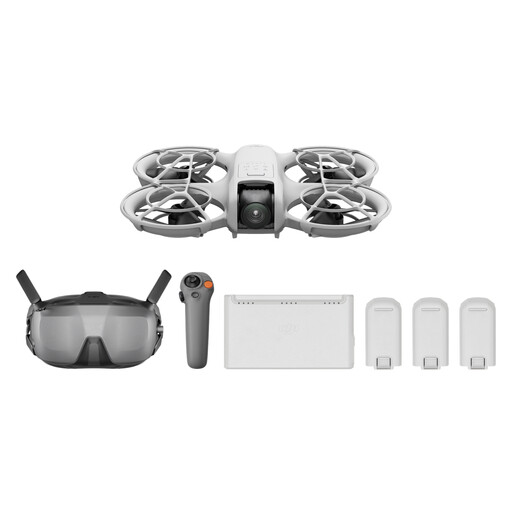
Why we chose it: Ideal for content creators on the go. Its feather-light 135g weight, palm-of-your-hand take-off, and subject tracking make it a discreet and effective travel companion for filming yourself without outside help.
Its 135g weight places it well below the 250g limit, avoiding regulatory headaches. Its advanced stabilisation ensures that 4K videos are perfectly smooth.
Gesture control and hand take-off/landing allow for quick and intuitive use, without even needing a remote controller.
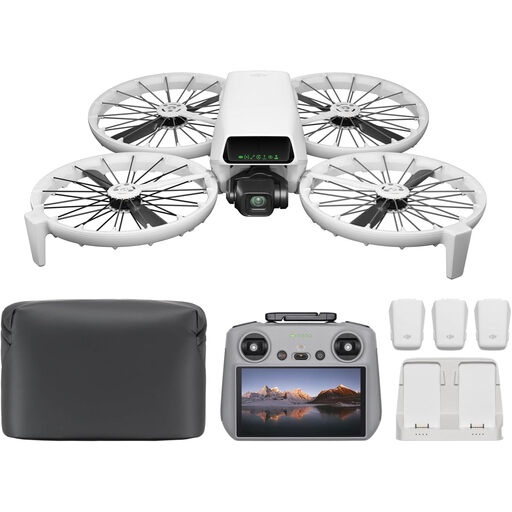
Why we chose it: Designed for safety above all else. It's the choice for peace of mind when capturing family memories, even with children nearby, thanks to its fully integrated propeller guards.
The integrated propeller guards significantly reduce the risk of accidents. Compliant with C0 regulations (< 249g), it's legally simple to use for occasional flights.
Safety is its priority. The integrated guards allow you to fly with more confidence in gardens or parks, where most family events take place.
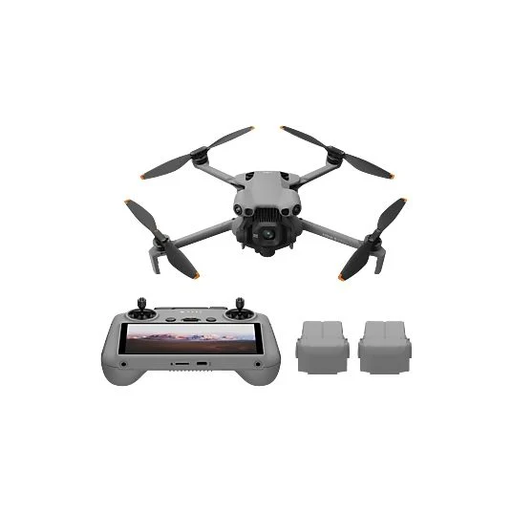
Why we chose it: For the beginner who wants to make no compromises on image quality. Its large 1-inch CMOS sensor and omnidirectional obstacle detection offer near-professional performance in a compact and regulator-friendly package.
It counters the "poor quality 4K" trap with a high-end sensor that captures detailed images, even in low light. The 360° obstacle detection provides maximum safety.
Superior image quality thanks to the 1-inch sensor, a rare feature in the sub-250g drone category. It allows for native vertical shooting for social media.
If these models aren't exactly what you're looking for, or if you want to explore more fun-oriented options, we have other selections for you.
Do I need training or a licence for a drone under 250g? For a C0 class drone (CE marking visible on the product) weighing less than 250g, no online training or exam is required. However, registering as an operator on the official government portal is still mandatory in most regions. Always remember to check the current regulations on the government's website before your first flight.
How can I extend the life of my drone's batteries? Batteries are an expensive consumable. To preserve them, avoid leaving them fully charged or completely empty for long periods. The ideal is to store them at about 50-60% of their capacity. Also, let them cool to room temperature after a flight before recharging them.
Is a beginner drone really easy to fly? Yes, recent models from reputable brands are surprisingly easy to get the hang of. Thanks to GPS, they self-stabilise in a hover as soon as you let go of the controls. Automatic take-off and landing functions, as well as the Return to Home feature, eliminate the most stressful phases for a novice. The learning curve is very fast.