
Livraison le jour même ou le lendemain

Qualité garantie

Débloquez vos offres de bienvenue: Livraison GRATUITE | Jusqu'à -80 % | 30 jours d'essai gratuits à JoyPlus
Téléchargez l'application
Choosing a new bedding set? It seems simple enough. But the market is flooded with marketing promises that too often lead to disappointment. Fabric that starts pilling after three washes, colours that bleed, or a material that feels like an oven in the middle of summer... you're probably familiar with these unpleasant surprises. To avoid being misled on your next purchase, let's review the common pitfalls and the true markers of quality.
The first and most common pitfall lies in the description of materials. Terms like "satin feel" or "cotton softness" can mask a 100% synthetic fabric that will never offer the breathability of a natural fibre. Another trap is focusing solely on thread count, an argument that's often highlighted but guarantees nothing if the fibre itself is of poor quality. Finally, ignoring certifications can expose you to textiles treated with potentially irritating substances.
This guide is here to teach you how to decode labels and focus on what truly matters: a comfortable and restorative night's sleep.
To make the right choice, forget the marketing hype and focus on three objective criteria. These are the true guarantees of quality and longevity for your future bedding set.
It's what defines the feel, breathability, and ease of care for your linen.
Getting the size wrong can make your bedding set unusable. Ensure compatibility between all elements:
For a product that has direct and prolonged contact with the skin, health guarantees are not optional.
The "perfect" product doesn't exist. The important thing is to find the one that matches your needs and your priorities. Here is our selection, designed for different profiles.
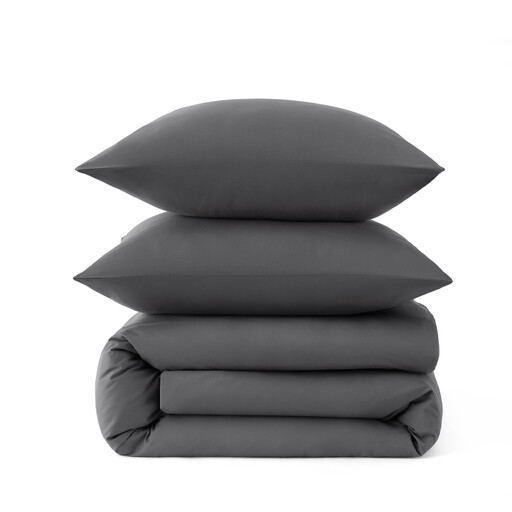
Why this choice: For those looking for an economical and functional solution. This four-piece set (two duvet covers and two pillowcases) offers excellent value for money, ideal for furnishing a guest room or for an easy linen rotation.
The description is clear: it's polyester microfibre, with no ambiguity. The Oeko-Tex Standard 100 certification guarantees that a low price doesn't mean compromising on the textile's health safety.
Excellent value for money: a complete and certified set, easy to care for thanks to its microfibre material and practical zipped closures.
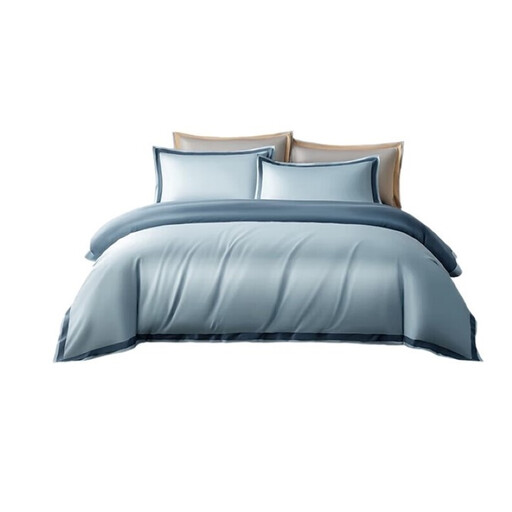
Why this choice: For those who prioritise the on-skin feel above all else. Long-staple cotton offers a softness and suppleness that standard cotton cannot match, for a high-end sleep experience.
It doesn't just mention a high thread count (100s) but specifies that it is long-staple cotton. This is the detail that makes all the difference in terms of durability and softness, avoiding the marketing trap based solely on density.
Superior softness and breathability: the quality of the long fibres ensures exceptional comfort and good temperature regulation throughout the night.
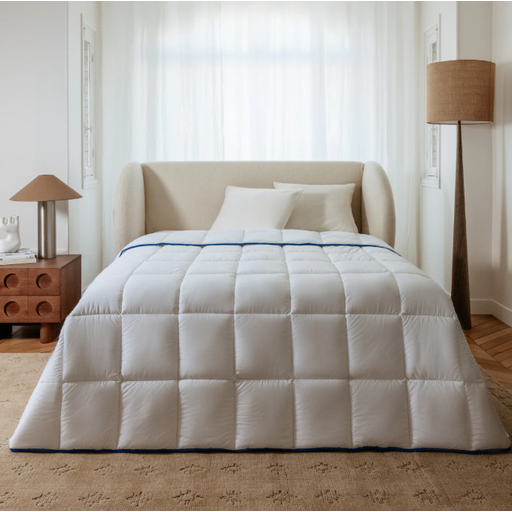
Why this choice: This summer duvet is specifically designed for warm nights. Its lightweight filling and cotton percale cover promote air circulation and moisture wicking.
It doesn't claim to be an "all-season" duvet. Its positioning is clear: it's ideal for rooms where the temperature exceeds 20°C. This prevents you from buying a duvet that's too warm and sleeping poorly.
Optimised summer comfort: the combination of a breathable cotton percale cover and a lightweight filling (250g/m?) makes it the perfect ally for a cool night's sleep.
Explore our full selection of products that meet our quality and safety criteria.
The difference lies in the weaving method. Cotton percale uses a simple one-thread-over, one-thread-under weave, which gives it a matte finish and a cool, crisp feel. Cotton sateen has a more complex one-thread-under, several-threads-over weave, creating a smoother, silkier surface with a slight sheen. The choice is a matter of personal preference: the crisp coolness of percale or the silky softness of sateen.
To preserve the colours and fibres, wash your bed linen at 40°C with similar colours. A 60°C wash is possible for white cotton linen if the label permits, to eliminate dust mites and bacteria. Avoid excessive use of fabric softener, which can clog the fibres over time and reduce their absorbency. Air-drying is always preferable to maintain the fabric's softness.
Absolutely. It's an essential criterion for trust. We spend about a third of our lives in bed, with our skin in direct contact with the sheets. The Oeko-Tex Standard 100 label assures you that the textile has been tested at every stage of its production and contains no chemical substances considered harmful. This is an indispensable safeguard, particularly for people with allergies, sensitive skin, and children.