
Livraison le jour même ou le lendemain

Qualité garantie

Débloquez vos offres de bienvenue: Livraison GRATUITE | Jusqu'à -80 % | 30 jours d'essai gratuits à JoyPlus
Téléchargez l'application
Choosing bedding isn’t just about picking a colour at random. Between a duvet cover that’s the wrong size, a fabric that lacks breathability, and a duvet that’s too warm, some purchases can quickly turn into disappointments. Couples, those who feel the cold easily, and people who sweat at night would all do well to check a few criteria before ordering.
Here are the essential points to consider when choosing a bedding set, a duvet cover, or a duvet suitable for a double bedroom.
Choosing a duvet depends on the size of the mattress, but also on how much overhang you want on the sides. For a double bed, 200 x 200 cm duvet and 220 x 240 cm duvet sizes are very common. A duvet that is too short risks leaving your feet uncovered or slipping off during the night.
The cover must match the duvet size. A 240 x 260 cm duvet cover is not suitable for a 200 x 200 cm duvet, unless you are happy with a very loose fit and less even hold.
Cotton appeals with its natural feel and ability to let air circulate. Often made from polyester, microfibre offers a soft touch, dries quickly, and generally withstands washing well. However, no single fabric suits everyone.
If you get hot at night, a lightweight duvet with a breathable cover will generally be more comfortable than a thick model. Conversely, those who feel the cold can turn to a warm duvet for winter, while checking the filling composition and care instructions.
Buttons give a more traditional look, while a zip fastening makes it easier to put the duvet in. Internal ties limit filling movement and are particularly handy for couples who move around a lot in their sleep.
Before ordering, also check the type of pillowcases supplied. A 3-piece bedding set usually includes one duvet cover and two pillowcases, but their dimensions can vary from one model to another.
For a double bedroom, measure your mattress and note its dimensions before looking at product pages. The most common sizes include:
Read the product page carefully to see whether pillows and the duvet are included. Some offers only cover the duvet cover.
Expressed in g/m², the weight gives an indication of the amount of filling, but it is not enough to determine the warmth you will feel. The cover fabric, the type of fibres, and the room temperature also come into play.
Terms like “cooling” or “thermoregulating” should be seen as design features, not as a promise of identical comfort for everyone.
A microfibre duvet is generally easy to care for and dries quickly. A duck feather and down duvet offers a pleasant loft and good insulation, but requires more care when washing and drying.
For bedding, the OEKO-TEX STANDARD 100 certification means the textile has been tested against a standard covering certain undesirable substances. It does not replace the need to check the composition, washing instructions, and information provided by the manufacturer. Also make sure the product page clearly mentions OEKO-TEX bedding.
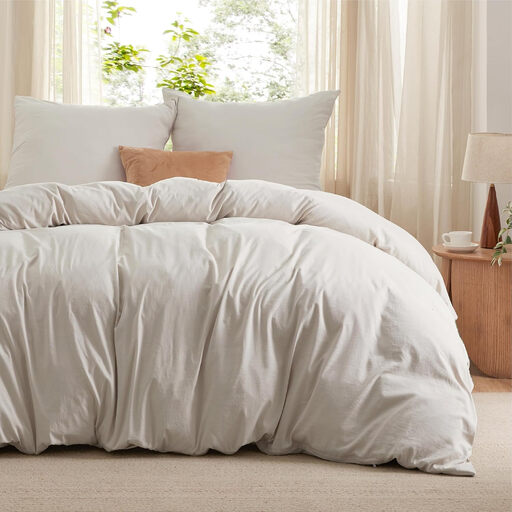
Why this choice suits this profile: This set includes a 200 x 200 cm duvet cover and two 80 x 80 cm pillowcases. Its polyester microfibre and zip fastening make everyday use simple.
The dimensions and contents of the set are clearly stated, reducing the risk of error on a first purchase. Eight internal ties help keep the duvet in place.
The product page mentions an OEKO-TEX STANDARD 100 certification, a handy zip, and machine washing at under 40 °C.
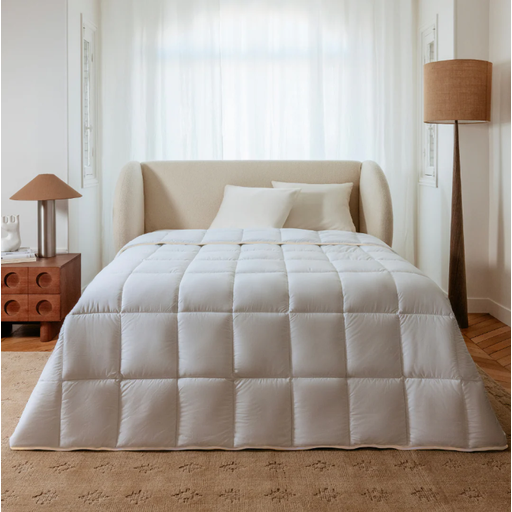
Why this choice suits this profile: With a filling stated as 90% duck feathers and 10% down, plus an organic cotton satin cover, this duvet is aimed at sleepers looking for a warm model for winter.
The filling composition and the 220 x 240 cm size are specified. However, plan for particularly careful drying, or even professional cleaning.
Natural filling, box-stitch quilting, and certifications mentioned on the page, including OEKO-TEX STANDARD 100 and CertiPUR.
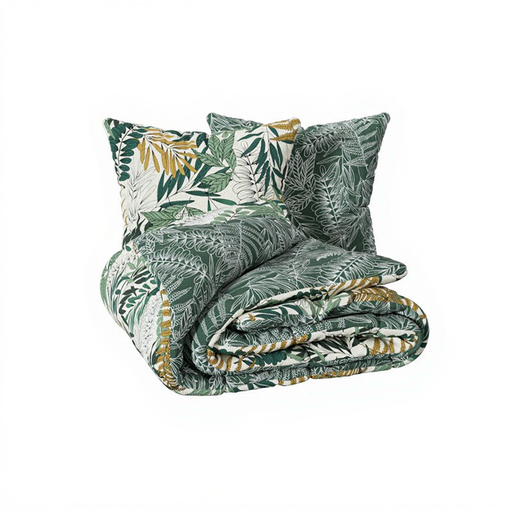
Why this choice suits this profile: This 100% cotton set includes a reversible 260 x 240 cm duvet cover and two square pillowcases. With its tropical pattern, it makes refreshing the décor of a double bedroom easy.
The size, fabric, reversibility, and button fastening are all detailed separately, making it easy to compare with other sets.
100% cotton, reversible cover, machine washable, and OEKO-TEX certification mentioned on the product page.
We have compiled a complete selection, updated in real time, of products that meet these demanding criteria as well as European safety standards.
The lifespan of bedding depends on how often it is washed, the temperature used, and the drying method. Close zips before putting a load in the machine, follow the label instructions, and avoid bleach when it is not recommended. The duvet cover should be large enough to be turned inside out and washed properly.
For a duvet filled with down or feathers, thorough drying is essential to prevent the filling from staying damp. A microfibre duvet is often simpler to wash, but it too must be dried according to the manufacturer’s recommendations. Bedding should be replaced when the fabric thins, the seams start to give way, or the filling permanently loses its loft.
Choose a cover that is exactly 200 x 200 cm. A different size can cause creases, make the filling shift, and reduce sleeping comfort.
Go for a summer duvet or a lightweight model, with a moderate weight and a cover that promotes air circulation. A dual-sided quilt can also let you adjust the feel during the night. Always check the detailed features rather than relying solely on the term “cooling”.
The temperature depends on the fabric and the instructions on the label. The models shown generally recommend washing between 30 °C and 60 °C. Following this guidance helps preserve the colours, fibres, and fastenings.