
Livraison le jour même ou le lendemain

Qualité garantie

Débloquez vos offres de bienvenue: Livraison GRATUITE | Jusqu'à -80 % | 30 jours d'essai gratuits à JoyPlus
Téléchargez l'application
Buying bed linen seems simple… until the first night. A sheet that comes off the corners, a duvet cover that’s too big, fabric that creases at the slightest movement or feels too warm – these details can quickly ruin everyday comfort.
Before choosing a colour or pattern, it’s worth checking three points that are often overlooked in product descriptions:
Here are the criteria to consider when choosing comfortable, breathable bedding that suits the habits of a British household.
For a 140 × 190 cm mattress, you need a 140x190 fitted sheet. But this measurement alone isn’t always enough. You also need to know the thickness of your mattress, including any mattress topper that stays in place, so you can choose a deep enough fitted sheet.
A pocket that’s too shallow may slip off the corners during the night. One that’s too deep can create uncomfortable creases. So always compare the stated size with your mattress’s actual dimensions, rather than relying on the product name alone.
Softness depends on the fibre, weave, finish and sometimes any treatments applied to the fabric. A microfibre duvet cover can feel smooth and dry quickly, while a 100% cotton fitted sheet offers a more natural feel and good air circulation.
The fabric you choose should really depend on your habits: night-time perspiration, how often you wash, whether you prefer a fabric that creases less, or if you want a more enveloping feel.
Without a zip or ties, a duvet cover can let the duvet slip around inside. For everyday use, check the product details for a zip closure and corner ties.
For a standard double bed, the 140 × 190 cm size is very common. Next, check the fitted sheet depth. A 23 cm deep fitted sheet works for a mattress whose total thickness doesn’t exceed this measurement, taking into account any sinking into the bed base.
Ideally, take three measurements:
Cotton is a natural fibre valued for its breathability and feel. However, 100% cotton doesn’t guarantee the same sensation from one model to the next – the weave and thread density also play an important role.
Usually made from polyester, microfibre dries quickly and is easy to care for. It can be a good choice for families who wash their bed linen often or who have limited space for drying.
Machine-washable bed linen makes changing sheets easier. However, always check the maximum temperature on the care label. Some fitted sheets can be washed at 60 °C, while others need a gentler cycle.
The OEKO-TEX bed linen label indicates a certification for the control of certain substances, according to the relevant standard’s criteria. It is not a medical promise and doesn’t replace checking the composition, care instructions and information provided by the manufacturer.
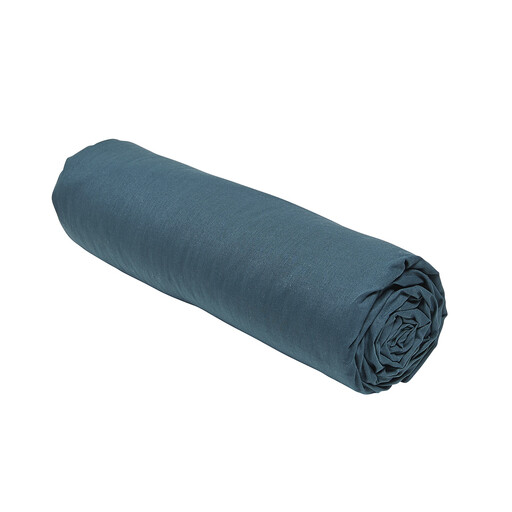
Why this choice suits this profile: with its 140 × 190 cm size, this fitted sheet is ideal for anyone wanting to replace an essential without getting lost in a multitude of criteria. Its cotton composition and peacock colour coordinate easily with different bedroom styles.
The fitted sheet depth is clearly stated at 23 cm, making it easy to compare with your mattress thickness before ordering.
100% cotton, 140 × 190 cm size, 23 cm fitted sheet depth and machine washable at 60 °C.
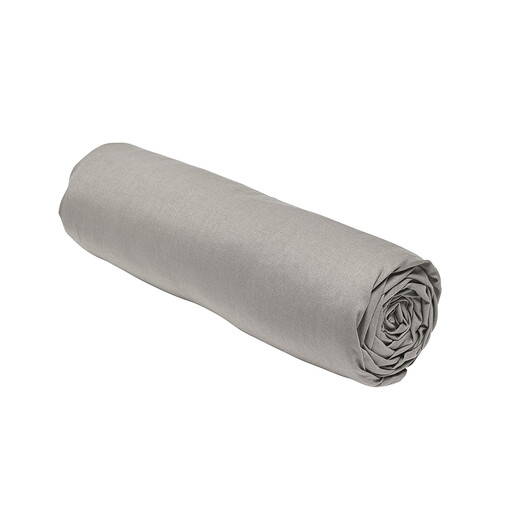
Why this choice suits this profile: its plain dune colour coordinates easily with a matching set. It’s aimed at buyers who pay attention to composition and prefer a bedroom with a minimalist look.
The fabric, stated density of 57 threads/cm² and fitted sheet depth are all specified. The listing doesn’t rely on a vague promise of softness.
100% cotton, 23 cm fitted sheet depth, plain colour and machine washable at 60 °C according to the information provided.
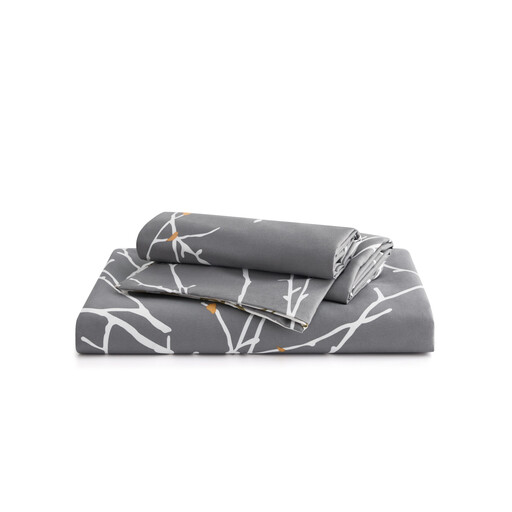
Why this choice suits this profile: this 155 × 220 cm bed linen set is ideal for anyone looking for a complete set that’s easy to wash and quick to dry. It includes a duvet cover and two 80 × 80 cm pillowcases.
Corner ties and a zip closure keep the duvet in place. The composition and washing instructions are also detailed.
90% polyester microfibre, reversible pattern, fast drying, OEKO-TEX Standard 100 certification stated and machine washable.
We’ve put together a comprehensive, real-time selection of products that meet these criteria as well as European safety requirements.
To keep your bed linen soft, always follow the maximum temperature recommended by the manufacturer and avoid overusing detergent. Too much product can leave fabric feeling rough and reduce fibre flexibility.
Wash sheets separately from items with zips or hooks. With a microfibre set, fast drying reduces tumble dryer time. For cotton, drying at a moderate temperature and folding as soon as it comes out of the machine helps minimise creases.
The lifespan of bed linen depends on how often it’s washed, the quality of the fabric, exposure to sunlight and drying habits. Replace a piece when the elastic no longer holds the sheet in place, the fabric becomes very thin, or tears appear.
Choose a model stated as 140 × 190 cm, then compare the fitted sheet depth with your mattress’s total thickness. A 23 cm deep sheet only works if this measurement properly covers the mattress and any mattress topper.
Cotton is suitable for those who prefer a natural fibre and breathable fabric. Microfibre can be practical for families looking for a lightweight textile that creases less and dries quickly. The right choice depends on the care you want and the feel you’re after.
A weekly rotation is often a good rhythm for keeping bedding clean. However, adjust this based on the season, perspiration and the care label recommendations. Having several sets of sheets means you always have a spare set while washing and drying.