
Livraison le jour même ou le lendemain

Qualité garantie

Débloquez vos offres de bienvenue: Livraison GRATUITE | Jusqu'à -80 % | 30 jours d'essai gratuits à JoyPlus
Téléchargez l'application
Pleasant bed linen is about more than just colour or pattern. A duvet cover that’s the wrong size can slip all night, a fabric that’s too warm can make summer nights uncomfortable, and improper care can quickly damage the fibres. So before you buy a bedding set, it’s worth checking a few practical criteria rather than relying solely on marketing claims.
Terms like “ultra-soft”, “sateen” or “natural look” evoke a feel or appearance, but they don’t always tell you about the composition. A soft microfiber can be lightweight and easy to wash, while a sateen fabric offers a smoother surface. However, these materials won’t have the same drape, breathability or care requirements.
Always check the composition, the thread count or weight when stated, and the washing instructions.
A duvet cover measuring 135 x 200 cm won’t fit all single beds, while a 200 x 200 cm model is generally intended for a double bed of compatible dimensions. Also check the pillowcase size: 80 x 80 cm pillowcases are common in some sets, but others use 65 x 65 cm formats.
Measure your duvet and mattress before ordering. Even a few centimetres’ difference can create excess fabric or prevent the duvet from sitting properly.
A bedding set may include a duvet cover and one or more pillowcases, but not the duvet itself. Conversely, a warm duvet or a cooling summer blanket is a separate bedding item usually sold on its own. So check exactly what’s included in the package before you place your order.
Internal ties, flaps and closures play a very practical role day to day. A cover with several corner ties can help stop the filling from shifting. A concealed zip also makes it easier to put on and avoids exposing the duvet unnecessarily.
For a child’s room or a single bed, a 135 x 200 cm duvet cover is a very common size. For a double bed, dimensions like 200 x 200 cm, 200 x 220 cm or 200 x 240 cm are chosen based on the bed size and how much overhang you want.
A thick duvet is better for cooler nights, while a lightweight model or a cooling cover works well in warmer periods. If you sweat at night, pay close attention to the weight, the stated breathability and the washing conditions. A thin blanket doesn’t replace good bedroom ventilation.
Also check the maximum washing temperature. Some items can be machine-washed at 30 °C, others at 40 °C. Tumble drying on a low setting or air drying can help preserve the colours and fabric structure.
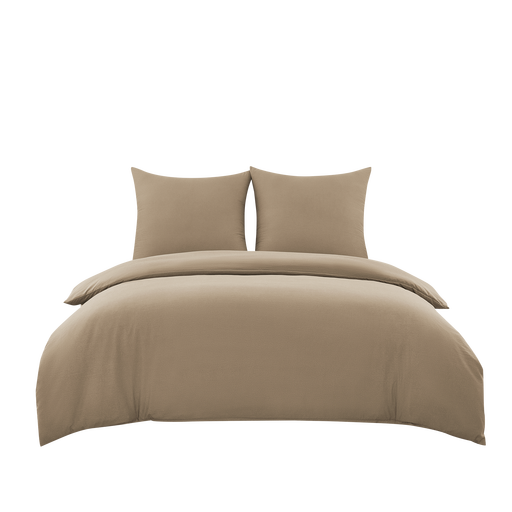
Why this choice suits this profile: this set includes a cover and matching pillowcases in lightweight microfiber, with a zip closure and several sizes available.
The composition, available sizes and what’s included in the set are all stated, which limits unpleasant surprises with dimensions or missing items.
Microfiber, internal corner ties, zip closure and machine washable as per the label.
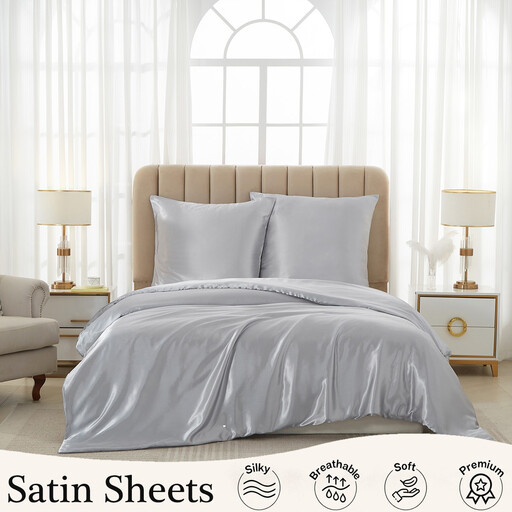
Why this choice suits this profile: its 100% sateen fabric offers a smooth surface, a light drape and a polished look for a bedroom with a particularly refined décor.
The product page states the composition and low-temperature washing instructions, so the buyer can adapt care to the fabric.
Sateen fabric, 135 x 200 cm size, 80 x 80 cm pillowcase and care on a gentle cycle with low-temperature drying.
We’ve put together a comprehensive, real-time updated list of products that meet these demanding selection criteria and European safety regulations.
A duck feather pillow can suit people looking for firm support and a natural filling. The Soft Duck Feather Pillow, in a 50 x 70 cm size, has a composition of 90% duck feathers and 10% down, with a 100% cotton cover and a stated thickness of 20 cm. Its product page indicates washing up to 40 °C, air drying and regular fluffing.
Before buying, check that its width matches your pillowcases, then consider your sleeping position and whether you prefer a firm hold or a softer feel. Certifications mentioned on the product page, such as OEKO-TEX Standard 100 or CertiPUR-US, should be reviewed against their exact scope and any available documentation.
Measure your duvet, then compare its dimensions with those stated on the product page. For a single bed, the 135 x 200 cm size is common. For a double bed, 200 x 200 cm and 200 x 220 cm are frequent, but the choice depends on the mattress size and how much overhang you want.
Close the cover before washing, follow the stated temperature, avoid bleach when it’s not recommended, and don’t overload the machine. Rotating several sets also reduces how often each one is used. Gentle drying helps preserve the fibres and colours.
A lightweight blanket with a cooling side can work for spring, summer and some autumn nights, but it won’t replace a warm duvet when the room is cold. Check the size and washing instructions, and avoid using it with an electric blanket if the manufacturer advises against it.