
Livraison le jour même ou le lendemain

Qualité garantie

Débloquez vos offres de bienvenue: Livraison GRATUITE | Jusqu'à -80 % | 30 jours d'essai gratuits à JoyPlus
Téléchargez l'application
Changing your bed linen is an instant way to freshen up your bedroom. However, that initial excitement can quickly turn to disappointment. A duvet cover that’s too small, a fabric that turns scratchy after a few washes, or a colour that bleeds are all common mishaps. To help you navigate the options and make the right choice, we've broken down the pitfalls to avoid and the essential criteria to check before you buy.
Before you get carried away by a pretty picture, pay close attention to these details that make all the difference in daily use.
To ensure you make the right choice, focus on these three fundamental points.
The choice of fabric is primarily a matter of personal preference, budget, and intended use.
To avoid any disappointment, grab a tape measure.
To put theory into practice, here are a few models that meet different needs and budgets.
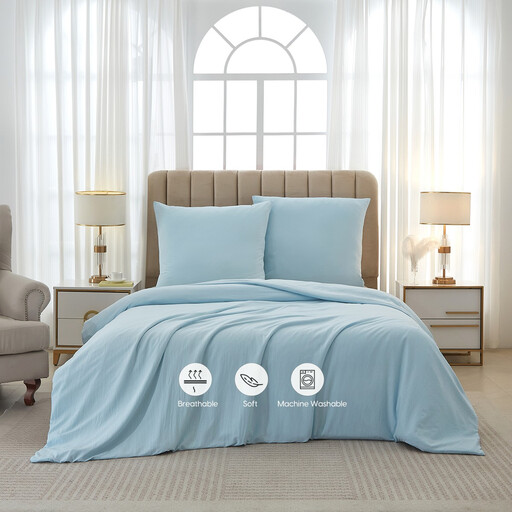
Why it's a great match: Ideal for those looking for a complete, low-maintenance, and budget-friendly solution. The brushed microfibre offers great softness without the drawbacks of natural fibres.
This set uses a quality polyester microfibre (OEKO-TEX certified) with a colour-fixing treatment, which prevents the rapid pilling and fading common in budget options.
Ultra-easy care (quick-drying, no ironing needed) and a practical zip closure, complete with internal ties to keep the duvet in place.
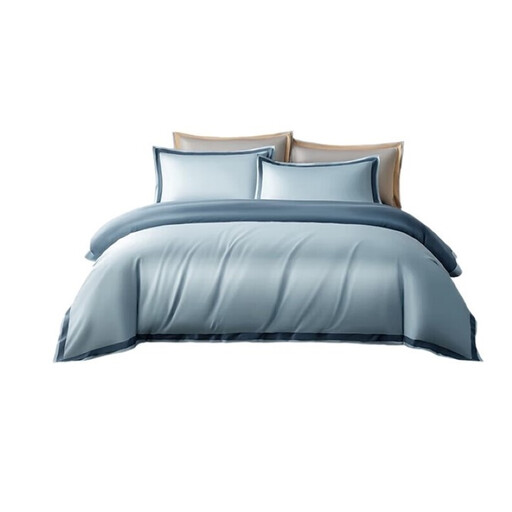
Why it's a great match: Perfect for discerning sleepers who make no compromises on fabric quality and are looking for a high-end sleep experience.
This model avoids the "basic cotton" trap by using 100s long-staple cotton, a premium quality that guarantees softness, suppleness, and breathability far superior to standard cottons.
Exceptional breathable comfort and enhanced durability. The set is complete (duvet cover, sheet, pillowcases), ensuring perfect visual and tactile harmony.
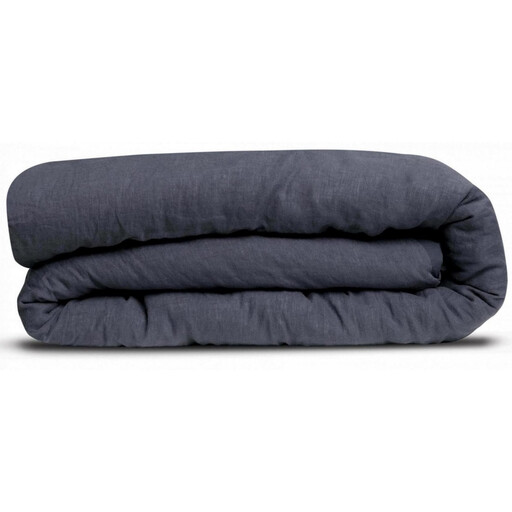
Why it's a great match: For those who see their bed linen as a centrepiece of their decor. This navy blue bed linen makes a bold statement with its strong aesthetic and tactile refinement.
Far from a basic product, its dual-material design (100% linen front for style and thermoregulation, 100% cotton back for softness) is a deliberate design choice that brilliantly combines aesthetics and comfort.
Versatility and a bold style. The linen side offers an authentic, textured look, while the cotton side ensures a soft feel against the skin for the night.
We have compiled a complete selection of products that meet our quality criteria and current safety standards.
The difference lies primarily in the weaving technique. Cotton percale uses a simple one-thread-over, one-thread-under weave, which gives it a matte, cool, and slightly crisp finish. Cotton sateen has a more complex weave (one thread under for every three or four over), creating a smoother, silkier, and slightly warmer surface. The choice depends on whether you prefer a cool, crisp feel (percale) or a soft, luxurious one (sateen).
Linen bed linen naturally softens with every wash. To speed up the process and preserve its quality, machine wash it at a low temperature (40°C maximum) with a mild detergent. Avoid chemical fabric softeners, which can clog the fibres. Air-drying is ideal, but if you use a tumble dryer, select a low-heat setting and remove the set before it's completely dry to minimise wrinkles.
Microfibre is an excellent insulator, making it very comfortable during the colder months. However, its breathability is lower than that of natural fibres like cotton or linen. In the summer, or for people who tend to sweat at night, a cotton bed linen or linen set will often be more comfortable as it allows for better air circulation and moisture-wicking.