A bean-to-cup espresso machine is worth considering if you often make individual coffees, want to choose your own beans and are happy to rinse, clean and descale the machine. Capsules or pods offer pre-portioned coffee, while a portafilter machine involves more hands-on preparation. A filter coffee machine is better suited to making several long coffees at once.
Who are these machines for?
Households that often make espresso
If you regularly make individual coffees and want to choose your own beans, a bean-to-cup espresso machine could suit you, as long as you’re prepared to keep on top of its maintenance. Que Choisir recommends this category in particular for coffee lovers and heavy coffee drinkers.
Fans of milk-based drinks
If you switch between espresso and milk-based drinks, check the recipes available on the specific model, how its milk system works and what cleaning is needed after use. The number of drinks advertised doesn’t, by itself, tell you how much day-to-day effort is involved.
Households looking for pre-portioned coffee
Capsules and pods save you from choosing and measuring out beans for every cup. Check which format the machine accepts, its dimensions and the disposal guidance for the portions you use.
What are the key differences between the options?
Start with the drinks you actually make, then compare the preparation steps, maintenance requirements and space available.
| Criteria |
What to check |
What I need |
| Type of coffee |
A bean-to-cup machine makes coffee from whole beans; capsule and pod machines use compatible pre-portioned coffee. A portafilter machine requires you to prepare ground coffee, while a filter coffee machine makes coffee in a jug. |
Do I mostly make individual espressos, or several large coffees to serve together? |
| Preparation steps |
Compare how you fill the machine, measure out the coffee and use the controls on the specific model. With a portafilter machine, you need to add and tamp the ground coffee before brewing, as De’Longhi explains for its manual machines. |
Would I prefer pre-portioned coffee, or do I want to be involved in making each espresso? |
| Milk-based drinks |
Check which recipes are available on your chosen model, then find out whether it has a manual frother or an automated milk system. Also check what needs cleaning after using milk. |
I switch between black coffee and milk-based drinks: do the recipes on offer match what I’ll really make? |
| Maintenance |
Check the manual for trays to empty, parts to rinse and descaling cycles. According to De’Longhi, how often you need to descale depends in part on water hardness. |
I can set aside time for regular cleaning and follow the machine’s maintenance alerts. |
| Space available |
Measure the available width and depth, as well as the clearance needed to fill the water tank, add coffee and remove the trays. |
Is there enough room on my worktop to set up and maintain the machine without moving it every time I use it? |
| Portions and disposal |
For capsules or pods, check the material, the packaging instructions and what collection options are available locally. Que Choisir highlights the difference between home composting and industrial composting schemes. |
If I choose individual portions, their format and disposal method need to fit my habits. |
What mistakes should you avoid?
-
Choosing milk-based drinks without checking the cleaning requirements
A milk system adds extra steps compared with making black coffee. Que Choisir includes cleaning among the criteria in its test protocol for bean-to-cup espresso machines.
Check the manual for the model you’re considering. Find out what needs rinsing after making a milk-based drink, what needs periodic cleaning and which parts need to be removed.
Allow time for cleaning and for any products specified for the milk system.
-
Confusing recyclable with home compostable
A recycling label doesn’t mean that something can be composted. Que Choisir found that the paper pods in its sample were not suitable for home composting.
Read the instructions for the portions you choose and check what disposal options are available in your local area before throwing them away or composting them.
-
Comparing machines using just one figure
The advertised pressure or number of recipes won’t tell you everything about everyday use. Que Choisir’s test protocol for bean-to-cup espresso machines also looks at ease of use, cleaning, descaling and noise.
When choosing between two models, compare their drinks and dimensions, as well as these practical details, rather than focusing on a single feature.
Which brands should you compare?
These brands offer different types of coffee machine. Compare features and maintenance requirements for each individual model, rather than making assumptions about an entire brand.
De’Longhi
De’Longhi offers bean-to-cup espresso machines, including models in its Magnifica range, as well as manual espresso machines.
- The brand describes different ways of preparing coffee across its ranges, from an automatic grinder to hands-on use of a portafilter.
- Drinks and settings vary by model. According to De’Longhi support, how often you need to descale depends in part on water hardness.
Philips
Philips offers bean-to-cup machines, filter coffee machines and SENSEO pod machines.
- For the 3000 Series HD8827/01, Philips lists four drinks and settings for coffee length, strength and grind. These details apply to this model.
- Maintenance supplies depend on the machine. Philips offers, for example, a kit with filters, tablets and milk circuit cleaner. Check which items are suitable for your chosen model.
Krups
Krups features in Que Choisir’s French comparison of bean-to-cup espresso machines, including the Intuition Essential EA870810.
- This model can be compared with other bean-to-cup espresso machines using Que Choisir’s chosen criteria.
- Being included in a comparison doesn’t tell you about the features or ease of maintenance of the entire Krups range.
Bean-to-cup machines and alternatives on Joybuy
This selection includes bean-to-cup espresso machines for whole beans, as well as machines that involve more hands-on preparation. The right choice depends in part on the coffee you use, the drinks you want to make and how involved you want to be.
 Image unavailable
Philips Series 2200 EP2230/10 LatteGo, bean-to-cup espresso machine
A bean-to-cup option to consider if your household also wants to make milk-based drinks using the LatteGo system. Check the exact recipes available on the EP2230/10 and what cleaning is involved for the way you use it.
View on Joybuy
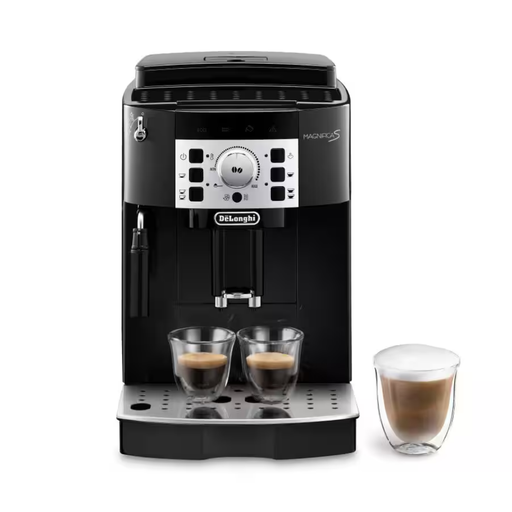 Image unavailable
De’Longhi Magnifica S ECAM22.140.B, bean-to-cup espresso machine
This bean-to-cup machine is for anyone who wants to make espresso from whole beans. For milk-based drinks, bear in mind that you’ll need to use the steam wand manually. Also check the machine’s dimensions and maintenance instructions.
View on Joybuy
 Image unavailable
HiBREW H16, bean-to-cup espresso machine with milk system
The H16 combines a grinder and milk system, making it an option for households that enjoy a variety of drinks. Its product description lists six types of coffee; compare these recipes with your usual choices and check the manual for milk system cleaning instructions.
View on Joybuy
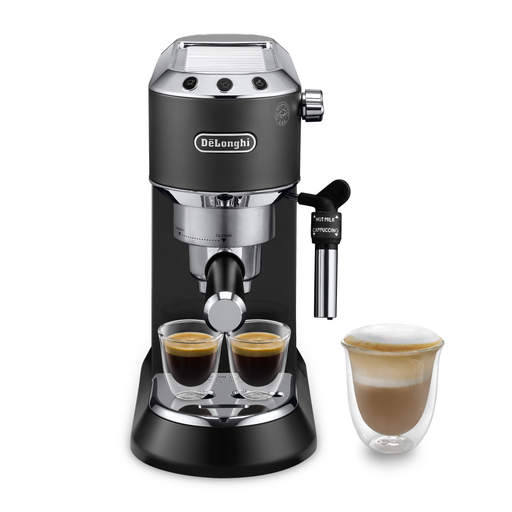 Image unavailable
De’Longhi Dedica Style EC685.BK, manual espresso machine
This is a good alternative if you’d like to make espresso with ground coffee or compatible ESE pods using a portafilter, rather than a built-in grinder. Check the water tank capacity and available space before making room for it on your worktop.
View on Joybuy
 Image unavailable
HiBREW H13A, 3-in-1 semi-automatic espresso machine
The H13A offers another way to make drinks from ground coffee, with some hands-on preparation. Before choosing this machine, check its brewing setup and the maintenance steps described in the H13A manual.
View on Joybuy
Frequently asked questions
What maintenance should you check before buying a bean-to-cup espresso machine?
Check the manual for the exact model to find out about rinsing, trays to empty, parts to clean and the descaling cycle. If you make milk-based drinks, add milk system cleaning to the list. Que Choisir’s test protocol for bean-to-cup espresso machines assesses both automatic and manual maintenance tasks.
Can all paper pods go in the home compost?
No. Que Choisir found that the paper pods in its sample were not suitable for home composting. Follow the product instructions and distinguish any industrial composting scheme from home composting.
Where can you dispose of aluminium capsules in France?
ADEME advises putting aluminium capsules in the recycling bin, bag or container for packaging. Check your local guidance and, if you use a separate collection scheme, make sure it’s available near you.


