If you want to move on from capsules but still make espresso regularly with minimal effort, a bean-to-cup machine could be a good fit, as long as you’re happy to maintain it and have checked how much space it will take up. A portafilter machine is better suited to hands-on preparation, while soft pods keep the convenience of individual portions but won’t help you move away from pre-portioned coffee.
Which option suits you?
A regular coffee drinker ready to switch to beans
You often make espresso at home and want to choose your coffee without being tied to a capsule format. A bean-to-cup machine automates the process, but you’ll need to empty and clean its trays. Que Choisir highlights the importance of regular maintenance.
A fan of hands-on coffee making
You want to measure out the coffee, get involved in the brewing process and clean the portafilter after use. This option is a good fit if these steps are part of the routine you’re looking for, rather than a chore you’d prefer to avoid.
A fan of individual portions
You prefer pre-portioned coffee that involves very little handling. Capsules and soft pods suit this preference, provided you check that the coffee is compatible with your chosen machine. They don’t, however, mean switching to whole beans or ground coffee.
What sets the machines apart?
First, decide whether moving away from individual portions is essential for you. Then consider which preparation and cleaning steps you’re happy to do every day.
| Criteria |
What to check |
Who it suits |
| Moving on from capsules |
Check whether the machine uses whole beans, ground coffee or portions designed for a specific system. If you’re starting with whole beans, a portafilter machine may require a separate grinder. |
I often make espresso and want to choose my coffee without buying more capsules; around 33% of consumers would make moving away from capsules their top priority. |
| Everyday convenience |
Look at the controls, how easy it is to access the trays and how much worktop space you have. Automatic brewing doesn’t mean there’s no cleaning to do. |
When I’m making cup after cup, I want to keep preparation simple without forgetting the steps that come afterwards; around 25% of consumers would prioritise this convenience. |
| Control over preparation |
For a bean-to-cup machine, check which settings the model actually offers. For a portafilter machine, check which accessories are included and what the instructions say about each step. |
I prefer to be involved in measuring and extracting the coffee, even if it takes longer to make each cup; around 25% of consumers would put this level of control at the top of their list. |
| Pre-portioned coffee |
Check exactly which pods or capsules are compatible, as well as which drinks are available for that system. |
I want to keep making coffee one portion at a time, but choose from the drinks offered by a different system; around 17% of consumers would put this ahead of switching to whole beans or ground coffee. |
Mistakes to avoid
-
Assuming a bean-to-cup machine needs no maintenance
The brewing process may be automated, but the grounds and drip trays need rinsing regularly, as Que Choisir points out. How often you need to descale the machine depends in part on water hardness and how often you use it.
Before choosing a model, check the instructions to see how to access the parts that need cleaning and run the descaling cycle.
-
Confusing soft pods with giving up individual portions
A pod machine saves you from grinding or tamping coffee, but it still uses portions designed for its system. It won’t meet the same needs as a bean-to-cup machine or a portafilter machine filled with ground coffee.
If you want to stop relying on pre-portioned coffee, check which types of coffee the machine accepts before comparing its drinks.
-
Assuming recyclable capsules mean no packaging
In France, ADEME says aluminium or plastic capsules should go in the recycling bin, bag or container for packaging. Recycling them doesn’t get rid of the individual packaging.
If you want to avoid this packaging, consider the type of coffee the machine uses, not just whether its capsules can be recycled.
Brands to know
There are no brands to feature in this section.
Bean-to-cup machines on Joybuy
These bean-to-cup machines let you use whole beans to make espresso at home without capsules. If you’d rather measure and extract the coffee with a portafilter, or stick with pre-portioned coffee, you’ll need to consider different criteria.
 Image unavailable
Philips Series 2200 EP2230/10 LatteGo, black
Worth considering if you want to switch from capsules to whole beans with an automated brewing process.
Espresso machine with grinder; Series 2200 LatteGo variant. Check the instructions for maintenance steps and the parts you’ll need for your chosen way of using it.
View on Joybuy
 Image unavailable
HiBREW H16 espresso machine with grinder
Worth a look if you want to use whole beans without grinding them separately and have several drinks to choose from.
The product name lists six coffee varieties, a milk-drink system and a touchscreen. Check the instructions for cleaning and descaling guidance.
View on Joybuy
 Image unavailable
DE'LONGHI Magnifica Start ECAM220.21.WW, white
A whole-bean option for those who want an automated brewing process rather than a manual portafilter.
Check how much space you’ll need to install it, along with the cleaning and descaling instructions for this specific model.
View on Joybuy
 Image unavailable
DE'LONGHI Magnifica S ECAM22.140.B, black
Worth comparing if you want to move on from capsules while keeping the convenience of automatic espresso preparation.
The product name indicates an integrated grinder. Check the instructions for this model to plan its maintenance, and make sure you have room for it before installation.
View on Joybuy
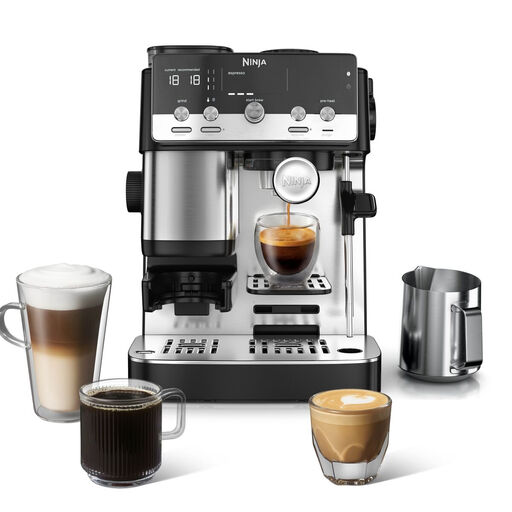 Image unavailable
Ninja Luxe Café Mini ES301EU, espresso and filter coffee
Worth a look if you want to grind beans for espresso and also have the option to make filter coffee.
A 2-in-1 model with an integrated grinder. If milk-based drinks are important to you, check the type of frother included with the ES301EU variant before buying.
View on Joybuy
Frequently asked questions
Which machine should I choose to really move on from capsules?
Choose a bean-to-cup machine if you want to use whole beans with an automated brewing process, or a portafilter machine if you prefer to make espresso by hand. Soft pods are still individual portions: they use a different system, but the same basic approach.
How often should I descale an espresso machine?
Follow the schedule and instructions for your model. De’Longhi says that how often you need to descale depends in part on water hardness and how often you make coffee. Check the manual and take note of any alerts from your machine.
What maintenance does a bean-to-cup machine need?
You’ll need to rinse the grounds and drip trays regularly, for example. Que Choisir also recommends cleaning the brewing unit, but less often. How to access this part and the exact cleaning procedure depend on the model.
Where can I recycle coffee capsules in France?
According to ADEME, aluminium or plastic capsules should go in the recycling bin, bag or container for packaging. If avoiding individual packaging is your priority, choosing a machine that uses whole beans or ground coffee is a more direct way to meet that goal.


