Households that make coffee regularly
If you make several cups each day, choosing between beans and pods also affects how you shop: you’ll need to choose your coffee and maintain the grinder, or keep a supply of pre-portioned pods to hand.


If you regularly make espresso at home, a bean-to-cup machine is a good choice if you want to choose your own coffee and don’t mind the grinding noise, the space it takes up and regular maintenance. Pod machines offer pre-portioned coffee in a more compact appliance; a portafilter machine involves more hands-on preparation, while a filter coffee machine suits a different kind of coffee.
If you make several cups each day, choosing between beans and pods also affects how you shop: you’ll need to choose your coffee and maintain the grinder, or keep a supply of pre-portioned pods to hand.
If you have a small kitchen or household members keep different hours, check how much space you’ll need to use the machine and how noisy the model you’re considering is. UFC-Que Choisir describes bean-to-cup espresso machines as bulkier and noisier than pod systems or filter coffee machines.
For a machine you’ll use every day, check how easy it is to access the trays, clean the milk system and descale the machine. De’Longhi notes that how often you need to descale depends, among other things, on water hardness and usage.
Start by choosing the type of coffee you want to make, then consider how each system fits your space and the steps you’re happy to repeat.
Worth considering: if you make espresso regularly and want to choose your own beans.
What to bear in mind: grinding noise, the space it takes up and regular maintenance.
Worth considering: if you prefer pre-portioned coffee and a compact appliance.
What to bear in mind: you’ll need compatible pods and a way to sort them for recycling after use.
Worth considering: if you want to control the dose and extraction.
What to bear in mind: more hands-on preparation and cleaning than with an automatic machine.
Worth considering: if your household prefers filter coffee, particularly when making several cups.
What to bear in mind: it doesn’t make the same kind of drink as an espresso machine.
| Criteria | What to check | Who it matters to |
|---|---|---|
| Regular supplies | The coffee or pods you’ll need, and how often you’ll need to replenish your stock. | When we’re making cup after cup at home, I want to be able to keep the machine stocked without changing my routine. Around 33% of consumers put a reliable supply first. |
| Choice of coffee | The beans or compatible formats available, as well as the grind and drink settings on the specific model. | If I want to try different beans rather than use pre-portioned coffee, being able to choose my own coffee matters more than convenience. This is the top priority for around 27% of consumers. |
| Space and noise | The dimensions, access to the reservoirs and noise levels for the model you’re considering. | In a small kitchen or when household members keep different hours, I need to be able to position and use the appliance without disturbing anyone. For around 20% of consumers, space and noise are the main considerations. |
| Maintenance | Daily tasks, cleaning the milk system and the descaling schedule in the instructions. | If I use the machine every day, I want a cleaning routine I can realistically stick to. Around 20% of consumers put maintenance first. |
A household that makes coffee often will need to replenish its beans, ground coffee, pods or filters regularly, depending on the system.
Think about a typical week of making coffee and check what you’ll need to keep close at hand, as well as the steps involved after each use.
According to UFC-Que Choisir, a bean-to-cup espresso machine can take up more space and make more noise than a pod system or filter coffee machine. The machine’s dimensions alone don’t tell you how much room you’ll need to access its trays.
Measure your worktop and the clearance beneath your cupboards, then check how the reservoir and coffee grounds container are removed. If noise is a major concern, look for a test of the specific model.
Alerts and built-in programmes won’t necessarily replace emptying the trays, rinsing the parts or descaling the machine. De’Longhi says that how often you need to descale depends, among other things, on water hardness and how often you use the machine.
Read the instructions for the model you choose, especially if you plan to make milk-based drinks, and check which parts need cleaning every day.
In France, ADEME says that aluminium and plastic pods should go in the recycling system for paper and packaging.
Set aside a place to store them before recycling and check the guidance where you live; some brands also offer collection points.
The brand makes bean-to-cup espresso machines and manual models. The Magnifica S ECAM22.140.B is an example of its range for making black coffee, with a traditional steam wand.
The 2200 Series includes bean-to-cup espresso machines, with milk-related features varying by model.
JURA’s home range includes automatic bean-to-cup machines; the brand describes the C3 as a machine focused on black coffee.
Nespresso represents the pod option here, for households that prefer pre-portioned coffee to choosing their own beans.
These models are designed for making coffee from beans at home. Compare their listed features with the drinks you usually make, then check the space and maintenance requirements for each model.
 Image unavailable
Worth considering if you want to make coffee from beans and would like the LatteGo version. Check the cleaning steps for the milk system and the clearance needed to install it.
 Image unavailable
Worth a look if you want an automatic machine with milk-based drinks: the name of this version mentions a milk system, a touchscreen and six types of coffee. Check the instructions for daily cleaning tasks.
 Image unavailable
This bean-to-cup machine is suited to households that want to make espresso at home. Before setting aside space for it, check its dimensions and make sure you can access the parts that need removing for maintenance.
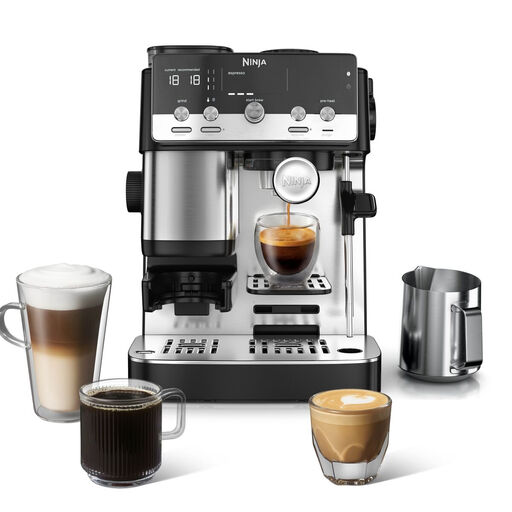 Image unavailable
Worth a look if your household switches between espresso and filter coffee: this 2-in-1 version is listed with an integrated grinder. Check the milk frother set-up on the ES301EU before choosing it for the drinks you usually make.
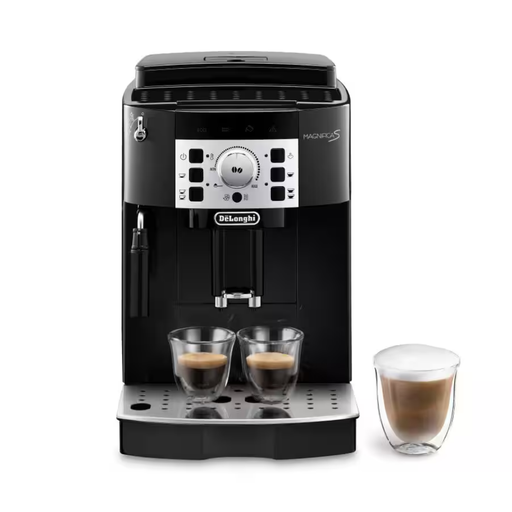 Image unavailable
Worth considering if you’re looking for a bean-to-cup espresso machine for making coffee regularly at home. De’Longhi lists a 1,8 L reservoir and dimensions of 236 × 429 × 348 mm (height × depth × width) for the ECAM22.140.B; also allow room to access the trays.
Follow the emptying and rinsing steps in the instructions for your model, as well as its cleaning and descaling cycles. De’Longhi says that how often you need to descale depends, among other things, on water hardness and how often you use the machine; milk system parts may need extra attention.
It can be, as long as its size, access to the trays and noise levels work for your space and schedule. However, UFC-Que Choisir describes bean-to-cup espresso machines as bulkier and noisier than pod systems or filter coffee machines. Measure the space and look for a test of the specific model if noise is a deciding factor.
ADEME says aluminium and plastic pods should go in the recycling bin, bag or container for paper and packaging. You can also look into collection schemes offered by some brands and follow your local council’s guidance.
No. Choose this feature if you regularly drink milk-based coffees. Otherwise, focus first on the coffee functions you want and the maintenance routine for the model, as milk system parts also need cleaning.