People who often drink espresso and like choosing their beans
A bean-to-cup machine lets you start with whole beans rather than capsules. It’s a good fit if you like to switch between coffees and can work machine care into your routine.


If you make espresso regularly, choose a bean-to-cup machine if you want to use your preferred beans and are happy to rinse, clean and descale it. Capsules or pods are a better fit if you prefer pre-portioned coffee, provided you check they’re compatible. A portafilter machine means dosing the coffee and pulling the shot yourself, while a filter coffee machine is better suited to making several long coffees. If you opt for a bean-to-cup machine, noise and cleaning the milk system could help you choose between models.
How often you make coffee matters, but your choice also depends on the steps you want to take each day and the drinks you actually make.
A bean-to-cup machine lets you start with whole beans rather than capsules. It’s a good fit if you like to switch between coffees and can work machine care into your routine.
Capsules and soft coffee pods save you from grinding and measuring beans. Check which system the machine accepts and what kind of coffee it can make.
Compare the drinks on offer and how the milk is prepared. A manual steam wand and an integrated milk system involve different steps and cleaning routines.
Start with the drinks you make most often, then consider the steps each system involves every day. UFC-Que Choisir identifies capsule, soft-pod, portafilter and bean-to-cup machines as some of the options for making espresso.
| Factor | What to check | What I need |
|---|---|---|
| Type of coffee | Check whether you mainly make espresso or several long coffees, and compare the drinks each machine is designed to make. Filter coffee serves a different purpose from espresso extraction. | I mainly make espresso, so I’ll compare bean-to-cup, capsule and portafilter machines. If I want several long coffees, a filter coffee machine is also worth considering. |
| Preparation steps | Compare automatic coffee preparation from whole beans, pre-portioned drinks in capsules or pods, and measuring and extracting coffee manually with a portafilter. | Some mornings, I’d rather pop in a capsule or pod. If I want to measure my coffee and pull the shot myself, a portafilter machine is a better fit. |
| Choice of coffee | Check which whole beans or ground coffee the machine accepts. For capsules and pods, identify the compatible system before choosing your coffee. | I like switching between beans without relying on a capsule format, so a bean-to-cup machine suits me. If I choose a pre-portioned system, I’ll check which one it uses first. |
| Maintenance | Check the manual for rinsing, emptying the trays, access to parts that need cleaning and descaling. According to De’Longhi, how often you need to descale depends in particular on your water hardness. | I can make time for these tasks regularly, or I’d rather keep handling to a minimum after each coffee. If I make milk-based drinks, I’ll also need to clean the equipment I use. |
| Noise | If you’re considering a grinder, look for a sound test of the exact model, carried out in comparable conditions. UFC-Que Choisir includes grinder noise in its testing criteria. | In a shared home, I want to know whether the grinder will be too noisy at the times I make coffee. |
| Milk-based drinks | Check the recipes available on the model, whether it has a steam wand or milk system, and the cleaning instructions in the manual. | I regularly make cappuccinos, so the milk system matters to me. If I mainly drink espresso without milk, it won’t be my top priority. |
| Recycling capsules | Check your local council’s guidance and the collection points you can access. ADEME says capsules put in household waste are sent for incineration or landfill. | If I choose capsules, I want to know which recycling route I can actually use at home. |
Milk-based drinks mean extra steps after use. If you overlook this routine, the machine may be less convenient day to day.
Choose between a manual steam wand and an integrated milk system based on the drinks you’ll actually make, then check the cleaning instructions for the model.
Grinding noise can be disruptive in a shared home, even if the manufacturer highlights noise-reduction technology.
Compare sound tests of the specific models rather than assuming how noisy they are based on a marketing claim.
According to ADEME, capsules put in household waste may be incinerated or sent to landfill.
Check local guidance and the collection schemes you can actually access before making this a deciding factor when choosing your machine.
A range can help you identify a type of coffee preparation, but always check the recipes and parts that need cleaning on the model you’re considering.
The Magnifica range includes bean-to-cup machines for making coffee from whole beans, with features that vary by model.
Philips offers bean-to-cup machines with a range of recipes and milk system configurations.
Nespresso offers pre-portioned coffee in capsules, including its Original and Vertuo systems.
Senseo offers soft coffee pods for pre-portioned brewing, including longer coffees.
These models are bean-to-cup options for making coffee regularly at home. If you’d prefer a capsule machine, pod machine, portafilter or filter coffee maker, compare the steps and drinks associated with those systems instead.
 Image unavailable
Worth considering if you also make milk-based drinks: this bean-to-cup machine features LatteGo. Check the manual for the drinks available and how to clean the milk system.
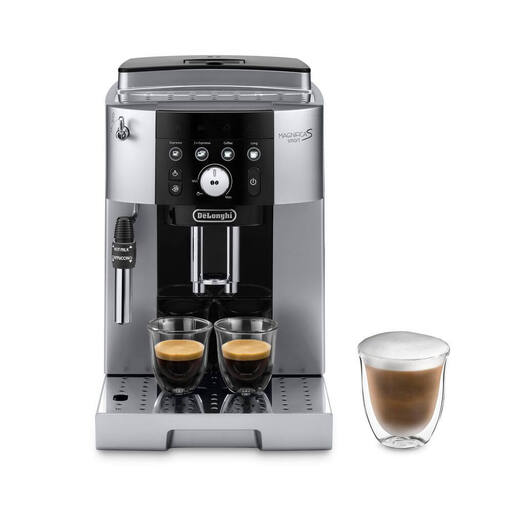 Image unavailable
This automatic espresso machine with grinder is designed for making espresso from whole beans. If you also plan to froth milk, check the steps involved and how to clean this model.
 Image unavailable
This bean-to-cup machine is for households that want to make espresso from whole beans. Check the manual for the drinks available and how to care for its components.
 Image unavailable
This automatic machine with grinder is an option for making espresso regularly from whole beans. Check that this model has the settings you need and that the parts you’ll need to clean are easy to access.
 Image unavailable
This automatic machine with grinder offers six varieties of coffee and a milk system. If you switch between espresso and milk-based drinks, check the exact recipes and cleaning routine in the manual.
It’s a good fit if you make espresso often, want to choose your beans and are happy to maintain the machine regularly. UFC-Que Choisir describes this type of machine as particularly suited to coffee lovers and people who drink a lot of coffee. Your decision also depends on the drinks you actually make and the tasks you’re willing to take on.
Rinse and empty the machine, clean the parts listed in the manual and descale it when prompted. De’Longhi says that how often you need to descale depends on your water hardness. A milk system also needs to be cleaned properly after use.
They can be, particularly in a shared home, but noise levels vary by model. UFC-Que Choisir includes grinder noise in its tests, so compare results for the models you’re interested in rather than relying only on a “quiet” claim.
No. According to ADEME, capsules put in household waste are sent for incineration or landfill. Check your local council’s guidance and the collection schemes available before choosing a capsule machine on this basis.