Buying priorities
Start by comparing the coffee format that suits your consumption, then check the everyday considerations: maintenance, available space, noise and the drinks the machine can actually prepare.
| Priority |
What to check |
Your needs |
| Total running cost |
Compare the price of the machine, the coffee used, descaling, any filters and consumables over the same period. Check the current French price per serving rather than relying on an outdated cost per cup. |
I want to know what my coffees will really cost over the months, not simply choose the cheapest machine to buy. |
| Daily maintenance |
Check access to the coffee-grounds container, drip tray and water tank. Consult the manual for descaling, the coffee unit and cleaning the milk system. |
The routine must fit the time I am prepared to spend rinsing, cleaning and descaling. |
| Noise and space |
Measure the width, depth, height and clearance needed for refilling. For noise and vibration, compare tests carried out using a similar method. |
In a small kitchen or with irregular working hours, I need to be able to install the machine without putting up with excessively disruptive grinding. |
| Drinks and automation |
Check the recipes available on the exact model, the type of milk system and the volume or strength settings. Only choose user profiles if several people will actually use them. |
I distinguish between occasional milk-based drinks and a daily need for automatic recipes, because cleaning requirements vary greatly depending on the system chosen. |
Bean-to-cup coffee machines on Joybuy
Joybuy options for automatic espresso machines with built-in grinders, suitable for households that regularly prepare espressos and, depending on the model, milk-based drinks.
 Image unavailable
Philips EP2230/10 Series 2200 LatteGo
For frequent espressos and milk-based drinks with a detachable two-part LatteGo carafe.
12 grind settings, 275 g hopper, 1.8 L tank and preparation of two coffees indicated.
Stated dimensions: 246 × 371 × 433 mm. Check the required clearance and consult comparable measurements if noise is important.
Joybuy
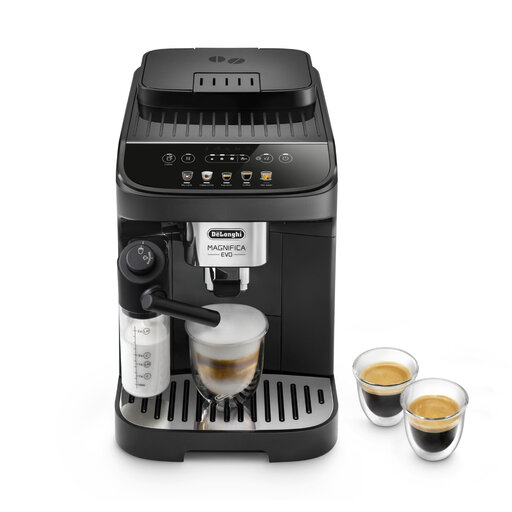 Image unavailable
De’Longhi Magnifica Evo ECAM290.61.B LatteCrema
Worth considering if you want to alternate between espressos and milk-based drinks with one-touch recipes.
13-level grinder, 250 g hopper, 1.8 L tank and stated strength, temperature and quantity settings.
Stated dimensions: 240 × 440 × 360 mm. Check the manual for instructions on dismantling and cleaning the carafe.
Joybuy
 Image unavailable
HiBREW H7A dual-boiler bean-to-cup espresso machine
An option for households that want to adjust the grind and prepare successive drinks with frothed milk.
30-level conical grinder, touchscreen, temperature and volume settings, dual boiler and stated 2.8 L tank.
Stated dimensions: 331 × 332 × 347 mm. Check how to clean the steam circuit and the space required for the tank.
Joybuy
 Image unavailable
HiBREW H16 automatic espresso machine with built-in grinder
For households looking for several automatic recipes and saved coffee and milk settings.
Six drinks, 15-level conical grinder, 4.3-inch touchscreen, dual heating and stated 1.5 L tank.
Check the dimensions, container capacities and the cleaning programme before installation.
Joybuy
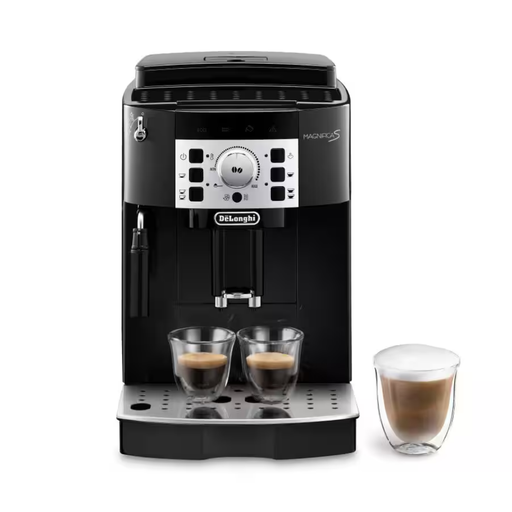 Image unavailable
De’Longhi Magnifica S ECAM22.140.B
For regular espressos made with beans or ground coffee, plus milk-based drinks prepared with a manual steam wand.
Built-in grinder, two-cup preparation, 1.8 L tank, water filter, Thermoblock and descaling alerts indicated.
The steam wand requires cleaning after use. Check the dimensions, weight and noise level if space is limited.
Joybuy
Frequently asked questions
Are old cost-per-cup comparisons enough to buy today?
No. UFC-Que Choisir publications support the view that a grinder can reduce running costs compared with capsules, but prices for beans, capsules and cleaning products change. Recalculate using the current French price of your chosen coffee, the dose per drink and the number of coffees made by your household.
Does a bean-to-cup machine require more maintenance than a capsule machine?
Yes, a machine with a grinder includes components such as containers, a water circuit, descaling and sometimes a coffee unit or milk system. However, the level of upkeep depends on the model: check the manual tasks and alerts provided before buying.
Can you compare grinder noise using a product listing alone?
No, a product listing is not enough to compare noise and vibration. UFC-Que Choisir assesses these during rinsing, grinding and dispensing using a measurement protocol, so prioritise comparable tests when this is a deciding factor.
What should you do with used coffee capsules in France?
According to ADEME, aluminium or plastic capsules should be sorted into the bin, bag or container for paper and packaging. Check local instructions if your local authority provides different guidance.
What rights apply to a faulty new machine bought from a professional seller?
The legal guarantee of conformity is exercised through the professional seller. The French Ministry of the Economy states that repair or replacement must take place no later than 30 days after your request; keep the receipt, exact model reference and your correspondence with the seller. A commercial warranty is in addition to, and does not replace, your statutory guarantees.


