What sets the machines apart?
Que Choisir distinguishes between grinder, capsule, soft pod and portafilter machines. For regular use, your choice mainly depends on whether you want to use beans, how much preparation you’re happy to do and how much space you have available.
Bean-to-cup
Worth considering: if you often make espresso and want to choose your own beans.
The trade-off: allow for more space, noise while the beans are ground and cleaning the parts you use.
Capsules
Worth considering: if pre-measured portions and a compact machine matter more than choosing your own beans.
The trade-off: your options depend on the compatible capsule format, and you’ll pay for capsules with every cup.
Soft pods
Worth considering: if you want portion-based brewing without an integrated grinder.
The trade-off: compare the compatible pods and their running costs with the beans you’re considering.
Portafilter
Worth considering: if you want to be hands-on with preparing your espresso.
The trade-off: dosing, tamping and cleaning involve more steps; if you use beans, you’ll also need a grinder.
| Factor | What to check | Who it matters to |
|---|
| Running costs and choice of coffee |
Compare your usual consumption with the coffee compatible with each system. For a grinder machine, check which grind settings you need. |
I make espresso often and want to choose my own beans without overlooking the cost of each cup; around 36% of consumers would make this their top priority. |
| Everyday maintenance |
Check how easy it is to reach the trays, the descaling process and, where applicable, how to clean the milk system. |
I’d rather keep the steps after each coffee to a minimum and find it easy to maintain the machine; this would be the priority for around 29% of consumers. |
| Milk-based drinks |
Check the recipes on the specific model, the type of milk system and what you’ll need to do after use. |
We regularly make cappuccinos or lattes, and how the milk system works matters more to us than recipes we won’t use; around 21% of consumers would put this need first. |
| Space and noise |
Measure the space where you’ll put the machine, then check how much room you’ll need to fill the water tank and remove the trays. Bear in mind the noise from grinding. |
My kitchen has limited space, or the grinder would disturb others at home; this would be the main consideration for around 14% of consumers. |
Bean-to-cup machines available on Joybuy
These models feature an integrated grinder. Compare their variations and the steps involved before choosing: capsule, pod and portafilter systems are other possible answers to the same question.
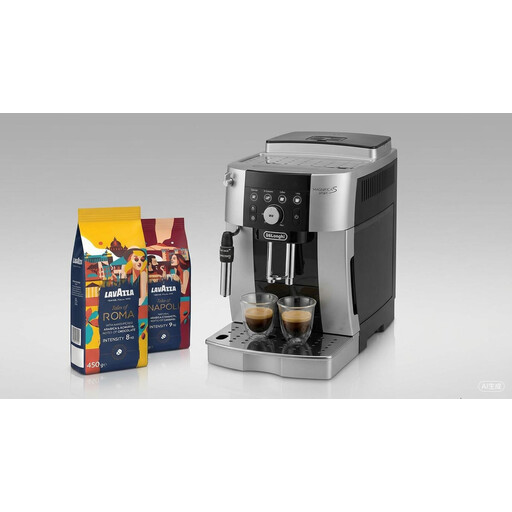 Image unavailable
De’Longhi ECAM250.23.SB Magnifica Automatic with Lavazza Tales of Napoli & Roma 450 g (2 packs)
Worth considering if you want an automatic machine for making espresso regularly from beans. The listed bundle also includes Lavazza Tales of Napoli & Roma coffee, 450 g (2 packs); check the exact bundle contents before ordering.
View on Joybuy
 Image unavailable
Philips EP2230/10 Series 2200 LatteGo, glossy black
Worth a look if you want to use beans and make milk-based drinks too: this model is listed as having LatteGo. Check the recipes available on the EP2230/10 and whether its milk-cleaning routine suits you.
View on Joybuy
 Image unavailable
HiBREW H7A with grinder, dual boiler and 2.8 L water tank
Worth comparing if you want to grind beans in the machine and have a listed 2.8 L water tank. The model name specifies a dual boiler and a 20-bar pump, but the stated pressure alone isn’t enough to judge the coffee in the cup; also check the maintenance instructions.
View on Joybuy
 Image unavailable
De’Longhi Magnifica Start ECAM220.21.WW, white
This bean-to-cup machine is an option to compare if you regularly make espresso. Check the space needed to open the lids and remove the trays; follow the model’s instructions for maintenance and descaling.
View on Joybuy
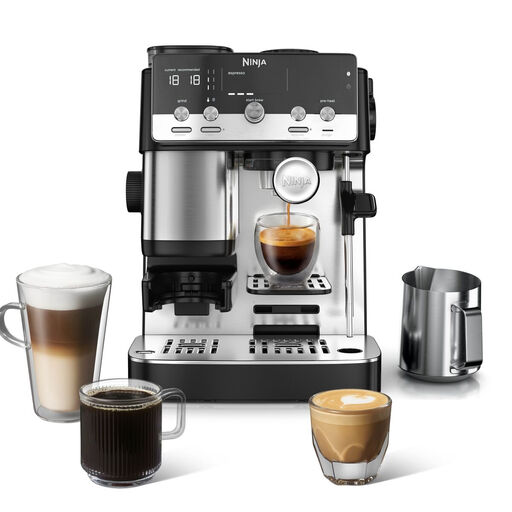 Image unavailable
Ninja Luxe Café Mini ES301EU, espresso and filter coffee with grinder
Worth considering for making espresso from beans; the model also has a filter coffee function, which is separate from choosing an espresso system. Check which milk frother is included, as well as the space it takes up and the maintenance steps that suit your needs.
View on Joybuy
Frequently asked questions
How many coffees does it take for a bean-to-cup machine to be worthwhile compared with portion-based systems?
There’s no single threshold that works for every household: it depends on how much coffee you drink and what you’d choose to buy. Que Choisir says a bean-to-cup espresso costs two to three times less per cup than pod espresso; compare this guidance with your usual purchases and the maintenance required by the machines you’re considering.
How often should you descale an espresso machine?
Follow the instructions and alerts for your model, taking the hardness of your water into account. De’Longhi highlights the latter factor for its bean-to-cup machines; for its own machines, Nespresso recommends descaling every 3 months or after around 300 capsules. This schedule doesn’t apply to all grinder machines.
Does an automatic milk carafe mean you don’t need to clean the machine after making a cappuccino?
No. A carafe can make some steps easier, but the milk system still needs to be maintained according to the instructions. Before buying, check what rinsing is required after use, which parts can be removed and how they should be washed for the model you’re considering.
What should you do with used coffee capsules in France?
For aluminium or plastic capsules, ADEME says to put them in the sorting bin, bag or container for paper and packaging. If what happens to used portions matters to you, also check the disposal guidance for the material of the capsules you plan to use.


