If you regularly make espressos and want the freedom to choose your own beans, an automatic coffee machine with a grinder could be a good fit, provided you’re happy with the cleaning, counter space and grinding noise. Capsules or pods keep things simple, while a portafilter leaves more of the preparation to you. A filter coffee machine is better suited to making several cups at a time than to preparing espressos.
Which option is right for you?
Households that regularly make espresso from beans
You want to switch between different coffee beans and customise your drinks without preparing each cup using a portafilter. An automatic grinder can meet those needs if you have the space and are happy to clean it regularly. Que Choisir highlights its size and the noise made while grinding.
Those who value convenience
You’d rather keep handling to a minimum and make the most of your kitchen space. A capsule or pod machine is worth considering, as long as you’re happy to use compatible coffee formats instead of choosing your own beans.
Coffee lovers who want to control the extraction
You want to measure, tamp and make your own espresso with a portafilter. This gives you more control over the preparation, but it doesn’t offer the same level of automation as a machine with a built-in grinder.
What should you look for in a coffee machine?
If espresso made from beans is your priority, first consider how much space you have and how much time you can spend on cleaning. Then look at the settings you’ll actually use. If you mainly want to make several cups of longer coffee, a filter coffee machine may be a better fit. If you want to control the extraction yourself, consider a portafilter machine instead.
| Criteria |
What to check |
Who it suits |
| Choice of beans |
Check that the machine has a built-in grinder and see which settings are available on the specific model. |
I want to switch between coffee beans without relying on a capsule format. Around 36% of consumers would put this freedom of choice first. |
| Space and convenience |
Measure the space available, including room to fill the water tank and empty the trays. Find out how noisy the grinder is. |
In a kitchen where space is limited, I’d prefer a machine that requires little handling. Convenience and size would be the main priorities for around 29% of consumers. |
| Cleaning and maintenance |
Check the manual for cleaning and descaling instructions, and find out how easy it is to access the parts. |
Before using a grinder every day, I want to know what tasks I’ll need to carry out and what support will be available. Around 21% of consumers would make maintenance their priority. |
| Settings and milk |
Compare the drink settings and, if you use milk, check the type of system and how to clean it after use. |
I make a variety of drinks and want to customise my cup without paying for features I won’t use. Settings and milk-based drinks would be the priority for around 14% of consumers. |
Mistakes to avoid before choosing
-
Choosing a milk system for the occasional drink
A steam wand or milk system means extra cleaning after use, even if you only make a cappuccino now and then.
Think about which drinks your household actually makes, and check the cleaning instructions for the milk system on the model you’re considering.
-
Assuming automatic rinsing means no maintenance
Built-in cycles don’t replace emptying the trays, rinsing the machine and descaling it as required. Que Choisir notes that maintenance is part of owning a bean-to-cup espresso machine.
Read the manual for the specific model. Check which parts you can access, how to descale it and what needs to be done after making a milk-based drink.
-
Choosing based on the number of drinks listed
A wide choice of drinks won’t make up for a machine that takes up too much space in your kitchen or has features you’ll never use.
Start with the espressos and other drinks you usually make, then check the dimensions, access to the trays and settings your household will find useful.
Brands to consider across different ranges
A product range can help you identify features and support resources worth looking into, but these may not be available on every model.
De’Longhi
De’Longhi offers the Magnifica range, among other bean-to-cup espresso machines, with drink options that vary by model.
- De’Longhi highlights customisation features in some ranges and provides descaling guidance through its French support service.
- Check the settings and maintenance requirements for the model you choose. Features available across a range may not be included on every model.
Philips
Philips offers several series of bean-to-cup espresso machines, with different drink options.
- The Philips support pages for the 2200 and 5400 series include manuals and sections on parts and accessories.
- Check the page for the specific variant being sold to find out which parts are available and what cleaning it requires.
Melitta
Melitta offers both automatic bean-to-cup machines and filter coffee machines, designed for different needs.
- Melitta provides original spare parts and resources on cleaning and after-sales service for its automatic machines.
- Check which parts and procedures apply to the model you’re considering, rather than assuming they’re available based on the brand’s wider offering.
Bean-to-cup machines available on Joybuy
These models are designed for making espresso at home from coffee beans. Check their listed features, then consult the manual for the model you’re interested in to find out about cleaning and how much space you’ll need.
 Image unavailable
Philips 2200 Series EP2230/10 LatteGo, black
This model combines a grinder with the LatteGo system, so you can make espresso from beans as well as milk-based drinks. Check the manual for the available settings and maintenance requirements for this model.
View on Joybuy
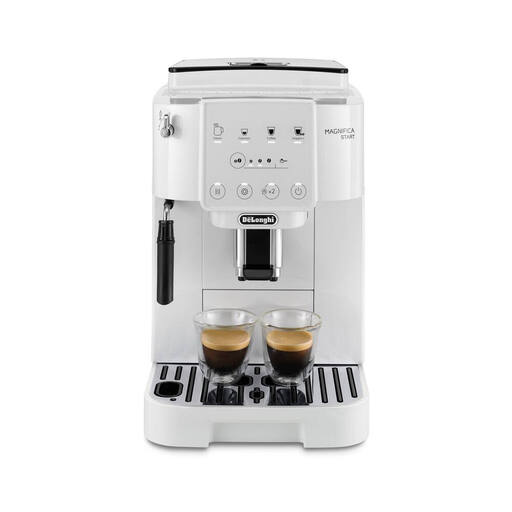 Image unavailable
De’Longhi Magnifica Start ECAM220.21.WW, white
This bean-to-cup machine is designed for households that want to make espresso from beans. If you’re also planning to make milk-based drinks, check the exact features and cleaning instructions for the ECAM220.21.WW variant in the manual.
View on Joybuy
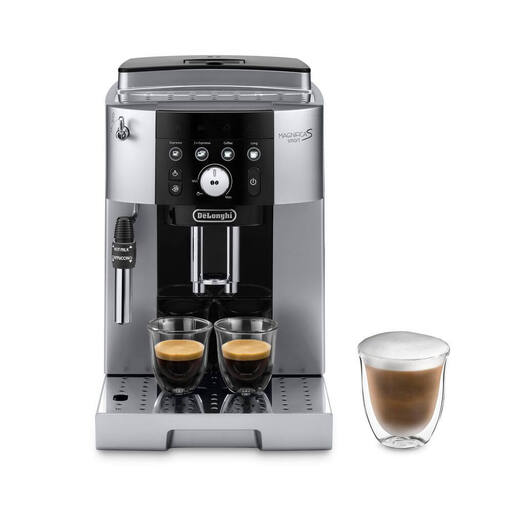 Image unavailable
De’Longhi Magnifica S Smart ECAM250.23.SB, silver
This model has a built-in grinder for making espresso from beans whenever you fancy a cup. Check the ECAM250.23.SB manual for the settings you’re interested in and the cleaning steps.
View on Joybuy
 Image unavailable
HiBREW H16, automatic bean-to-cup espresso machine
If you want to make different drinks from beans, the H16 combines a grinder and touchscreen with six coffee options listed in its product title. Check that these options suit your habits, and find out how to clean the machine.
View on Joybuy
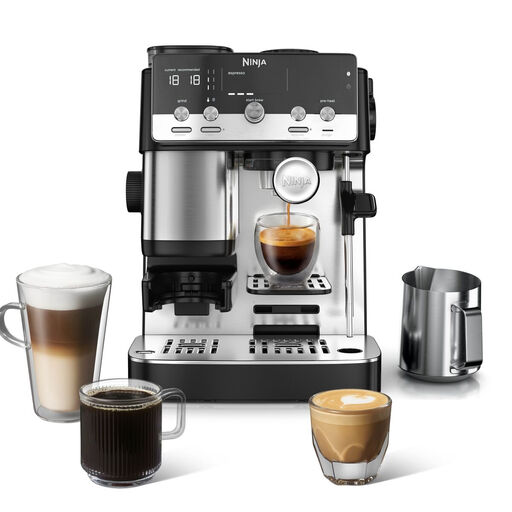 Image unavailable
Ninja Luxe Café Mini ES301EU, espresso and filter coffee
If your household enjoys both espresso and filter coffee, the ES301EU combines both functions with a built-in grinder. Check the exact milk system configuration before choosing it, as the information about how it works is inconsistent.
View on Joybuy
Frequently asked questions
Is regular use enough to justify buying a machine with a grinder?
Not on its own. A machine with a grinder is best suited to people who want to choose their own beans and are happy to make room for it, put up with the grinding noise and keep it clean. If you’d rather keep handling to a minimum, compare capsule and pod machines too.
What maintenance does a bean-to-cup espresso machine need?
You’ll need to empty and rinse the trays, as well as descale the machine as required. The parts that need cleaning vary by model. De’Longhi says that how often you need to descale depends, among other things, on water hardness. If you make milk-based drinks, follow the manual to clean the steam wand or milk system after use.
Where should aluminium or plastic coffee capsules be recycled?
In France, ADEME advises putting aluminium or plastic capsules in the recycling bin, bag or container for paper and packaging. If recycling individual portions is important to you, consider this regular task when comparing capsules with coffee beans.


