For regular espressos at home, an automatic bean-to-cup machine is a good choice if you want to choose your coffee and don’t mind the extra space it takes up or the regular upkeep. Capsule machines prioritise simplicity and a compact design; a portafilter machine takes more hands-on effort, while a filter coffee maker is better suited to those who prefer a longer coffee. Before switching systems, think about the drinks you actually make, the consumables you’ll need and how much time cleaning will take.
Who is each option for?
Households that make espresso every day
If you make several cups regularly, the cost of the coffee you use matters just as much as the machine itself. UFC-Que Choisir recommends weighing the cost per cup against the initial purchase price and upkeep of a bean-to-cup espresso machine.
Households that switch between espresso and milk-based drinks
If cappuccinos and other milk-based drinks are part of your routine, check the recipes available on the model you’re considering and how its milk system is cleaned. A manual steam wand and an integrated milk preparation system involve different steps.
People who want to keep things simple
If you prioritise a compact machine and straightforward preparation, it’s worth comparing capsules with a grinder. However, UFC-Que Choisir notes that the ongoing cost and format of the consumables should also factor into your decision.
What sets the machines apart?
For your everyday coffee, start with the type of drink you want: a long filter coffee serves a different purpose from an espresso. Then compare the running costs and the steps you’re happy to repeat.
Automatic bean-to-cup
Worth considering: if you regularly make espressos and want to choose your beans without having to measure and tamp each cup by hand.
Bear in mind: it takes up more space than a capsule machine and needs regular maintenance, as UFC-Que Choisir points out.
Capsule machines
Worth considering: if a compact design and minimal preparation matter more to you than choosing your beans.
Bear in mind: compare the cost of consumables against how often you’ll use the machine, and remember that your capsule choice depends on the system you buy.
Portafilter machines
Worth considering: if you want to be hands-on with the preparation of every espresso.
Bear in mind: you’ll need time to measure, tamp and extract the coffee, then clean the machine, depending on your equipment.
Filter coffee makers
Worth considering: if you mostly make longer coffees rather than espressos.
Bear in mind: it won’t replace espresso preparation if that’s the main drink your household wants.
| Criteria |
What to check before buying |
Who it matters to |
| Running costs and choice of coffee |
Compare the cost per cup of the coffee you’d actually buy, then check the maintenance consumables required for each machine. UFC-Que Choisir distinguishes the cost per cup of a bean-to-cup machine from its initial purchase price. |
When I make espressos almost every day, I want to choose my beans without losing sight of my ongoing costs. Around 31% of consumers rank running costs as their main concern. |
| Drinks and milk |
Check the recipes available on the exact model and distinguish between an integrated milk system and a manual steam wand; also check what cleaning is involved. |
If my family switches between espressos and cappuccinos, I want to know who’ll prepare the milk and what needs cleaning afterwards. For around 25% of consumers, drink variety is the top priority. |
| Maintenance |
Check the instructions for the trays, the brew unit if it’s accessible, and descaling; make sure any cleaning products you use are compatible, as stated in the manual. |
I’d rather understand the cleaning routine before choosing a bean-to-cup machine I plan to use often. Ease of maintenance comes first for around 25% of consumers. |
| Space and simplicity |
Check the dimensions and the space needed to open or remove the trays. If noise matters to you, look for a measurement or test of the exact model you’re considering. |
In a kitchen where space is tight, I want to make my coffee without moving the machine or adding extra steps. Around 19% of consumers prioritise a compact design and simplicity. |
Mistakes to avoid before buying
-
Comparing only the cost of the machine
A bean-to-cup machine may require a larger initial outlay, while coffee and maintenance add to your ongoing costs. UFC-Que Choisir reports a lower cost per cup than espresso made with pods, but that doesn’t determine the total cost of your own usage.
Compare your usual consumption and check the consumables listed in the manual for each model, rather than assuming that the maintenance costs of one machine apply to them all.
Depending on the machine and its features, you may also need filters, descaler, tablets or products to clean the milk system.
-
Choosing a milk function without checking how it’s cleaned
Making a milk-based drink adds extra cleaning steps afterwards. JURA, for example, provides dedicated instructions for its milk system; these don’t describe how to maintain every other machine.
If you rarely make cappuccinos, compare a machine focused on espresso with a separate milk frothing solution. If the model you’re considering has a jug or tube, check its rinsing and cleaning routine.
-
Allowing space for the machine, but not for maintenance
UFC-Que Choisir says that a bean-to-cup espresso machine takes up more space and makes more noise than a capsule system or a filter coffee maker. A machine that fits on your worktop also needs to be accessible so you can remove its parts.
Measure the space available and check how the reservoir and trays open on the exact model you’re considering.
-
Assuming all capsules are recycled in the same way
What happens to a capsule depends on its material and the collection scheme available. ADEME distinguishes between capsules thrown away with household rubbish and those taken to a suitable collection point.
Before sticking with or choosing a capsule system, check your local recycling guidance and find out where you can take your used capsules.
Brands to consider, model by model
Features and maintenance requirements vary from model to model. Check the manual for the one you’re interested in rather than assuming a feature applies across an entire brand.
De’Longhi
The brand offers bean-to-cup espresso machines and manual machines for home use, with features for milk-based drinks depending on the model.
- De’Longhi’s guide for the Eletta Explore describes a guided descaling programme that takes around 40 minutes on this model.
- This timing doesn’t apply to the whole range. Any filters and regular cleaning requirements should also be considered for the model you choose.
Philips
Its automatic machine series include different configurations for recipes, milk and settings.
- Philips lists the 2200 Series EP2235/47 as offering three drinks, the LatteGo system and 12 grind settings; the 5500 Series EP5543/90 is listed as offering 22 drinks and four profiles.
- These features apply to the models mentioned. Check what’s included with the variant you’re buying and what cleaning it requires.
JURA
The brand provides guidance on maintenance procedures and products for its automatic machines, including milk systems.
- JURA lists filters, tablets, descalers and products for cleaning milk systems, making it easier to identify what to check before buying.
- Check that these products are compatible with your chosen machine, that they’re available and that they meet the maintenance requirements in its manual.
Bean-to-cup machines and related models on Joybuy
These models let you explore using coffee beans to make espresso at home. The Ninja Luxe Café Mini also combines espresso and filter coffee; compare the features and maintenance requirements of each model with the drinks you usually make.
 Image unavailable
Philips 2200 Series EP2230/10 with LatteGo
Worth considering if you regularly make espressos and also want to compare options for milk-based drinks.
This variant is model EP2230/10 and features LatteGo. Before choosing, check which drinks this model offers and what consumables are needed for its maintenance.
View on Joybuy
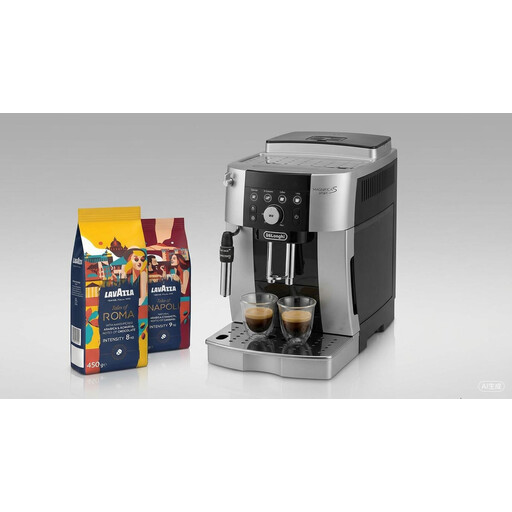 Image unavailable
DeLonghi Magnifica ECAM250.23.SB with two 450 g packs of Lavazza coffee
Worth considering if you want to make espresso with beans and have coffee delivered with the machine.
The set includes Lavazza Tales of Napoli and Roma coffee, in two 450 g packs. If you plan to make milk-based drinks, check what’s involved in using the steam wand and cleaning it after use.
View on Joybuy
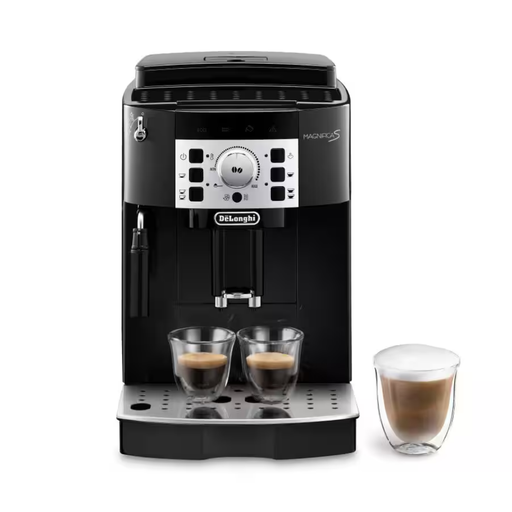 Image unavailable
De’Longhi Magnifica S ECAM22.140.B, black
Worth considering if your priority is making espresso from beans rather than using capsules.
The name of this variant identifies it as an automatic machine with a grinder. Before installation and planning its maintenance, check its dimensions and which consumables are compatible with model ECAM22.140.B.
View on Joybuy
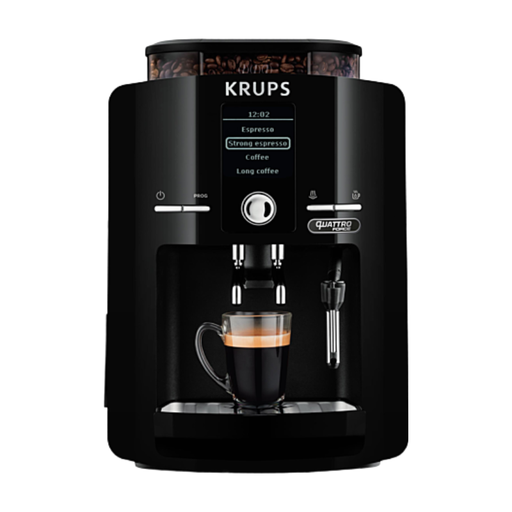 Image unavailable
Krups EA82F0, 1.7 L, 1450 W, black
Worth comparing if you regularly make espresso from beans, particularly if reservoir capacity is a factor in your choice.
The model name lists a 1.7 L capacity and 1450 W power; these figures alone don’t tell you how noisy or easy to maintain it is. Check the manual for the settings and suitable cleaning products.
View on Joybuy
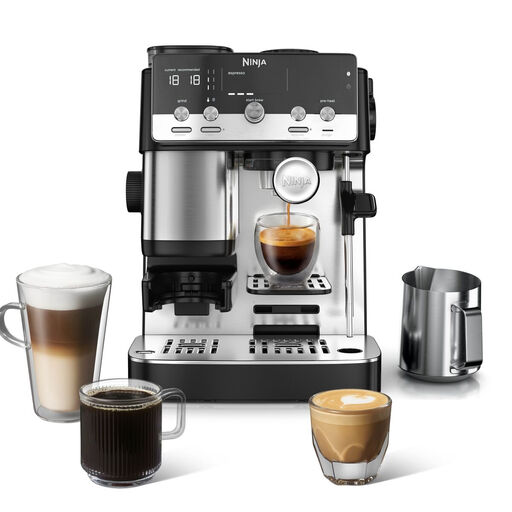 Image unavailable
Ninja Luxe Café Mini ES301EU, espresso and filter coffee
Worth considering if your household makes both espresso and filter coffee from beans.
The ES301EU model name identifies it as a 2-in-1 machine with a built-in grinder. If milk-based drinks matter to you, check how the frother works on this variant before buying, then make sure you have enough space and know what cleaning it requires.
View on Joybuy
Frequently asked questions
Is a bean-to-cup machine always cheaper to run than a capsule machine?
No. An automatic machine with a grinder may cost more upfront. UFC-Que Choisir says the cost per cup is two to three times lower than for espresso made with pods, but your comparison should also take into account how much coffee you drink and the cleaning products required for the model you choose.
What maintenance does a bean-to-cup espresso machine need?
Clean the trays and descale the machine as instructed in its manual. Also check the guidance for the brew unit if it’s accessible and, for milk-based drinks, how to rinse and clean the milk circuit. A guided programme doesn’t necessarily mean you can skip these steps.
Are coffee capsules always recycled?
No. How they’re treated depends on the material and the collection scheme available. ADEME distinguishes between capsules taken to a suitable collection scheme and those thrown away with household rubbish; check local guidance and the instructions for the capsule system you use.
What warranty applies to a machine bought from a retailer in France?
According to the French Ministry of the Economy, the legal guarantee of conformity applies to new, second-hand and refurbished goods sold by a trader to a private individual in France. If the machine doesn’t match the product description or the use it would normally be expected to serve, keep your proof of purchase and the sales information so you can assert your rights with the seller.


