A bean-to-cup machine is a good fit for a household that makes espresso regularly and wants to grind coffee on demand, provided you’re happy to accommodate the noise, space and grinder maintenance. Capsules or pods require fewer steps; a portafilter gives you more hands-on control, while a filter coffee machine is better suited to a preference for longer coffees.
Who are these options for?
Households looking to move on from capsules
If you make espresso regularly, freshly ground beans can replace individual portions. However, you’ll need to get used to a different filling and cleaning routine. Que Choisir covers these formats in its guide to automatic coffee machines.
Fans of milk-based drinks
If cappuccinos and other milk-based drinks are regular favourites, check the recipes available on the model you’re considering, its milk-frothing system and how it needs to be cleaned. A manually operated steam wand and an automatic milk system involve different steps.
Households mindful of maintenance
Check the manual, parts availability and support for the exact model before you choose. Philips and Melitta’s support pages, for example, show that the maintenance required depends on the machine and its features.
What should you look for?
If you regularly make espresso at home, start with the drink you actually enjoy, then consider each machine alongside the maintenance involved and the space you have available.
Bean-to-cup machine
Worth considering: if you want to grind beans on demand and make espresso regularly, with few steps during extraction.
Bear in mind: the noise and space taken up by the grinder, as noted by Que Choisir, as well as cleaning and descaling.
Capsules or soft pods
Worth considering: if making coffee with individual portions fits your routine better.
Bear in mind: disposing of used portions and their packaging in line with local recycling guidance.
Portafilter espresso machine
Worth considering: if you want to choose your own ground coffee and take a hands-on approach to making it.
Bear in mind: measuring the coffee, tamping it and emptying the portafilter after use.
Filter coffee machine
Worth considering: if your household mainly drinks longer coffees or makes several cups at a time.
Bear in mind: this type of machine doesn’t make the same kind of drink as a short espresso.
| What to consider |
What to check |
Who is it for? |
| Your everyday coffee format |
Compare the steps involved in filling a bean-to-cup machine with those needed to dispose of individual portions after use. |
I make espresso regularly and want to move away from individually packaged portions without making every cup more complicated; around 36% of consumers would prioritise this change in format. |
| Maintenance |
Read the manual for the exact model: check how to clean the trays, descale the machine and, where relevant, maintain the milk system. |
I’m only happy with a simple brewing process if cleaning fits into my routine. Maintenance would be the top priority for around 29% of consumers. |
| Drinks and settings |
Check which drinks are available, and find out whether the machine has a manual frother or an automatic milk system. |
I switch between espresso and milk-based drinks, and want to know what’s involved in making each one; around 21% of consumers would put this variety first. |
| Space and noise |
Measure the space under your cupboards and check that you can access the water tanks; look into the model’s noise level if this information is available. |
In a cramped kitchen, or if I make coffee early in the morning, I want to know where the grinder will fit first; this would be the priority for around 14% of consumers. |
Easy-to-overlook points
-
Assuming automatic brewing means no maintenance
The machine may make coffee at the touch of a button, but the trays, internal circuit and sometimes the brew group still need regular attention. De'Longhi says how often you need to descale depends, among other things, on your water hardness.
Check the manual for the exact model to find out what routine maintenance is needed and which tasks the machine will alert you to.
Remember to allow time for rinsing and, if you use a milk system, cleaning its dedicated parts.
-
Choosing a milk system without checking what using it involves
A cappuccino function means extra parts to clean, even when the milk is prepared automatically.
If you mainly drink espresso, compare the routine for a straightforward model with that of a machine designed for milk-based drinks.
-
Underestimating how much space a grinder needs
Que Choisir notes that a bean-to-cup espresso machine takes up more space and makes more noise than a capsule machine or filter coffee machine.
Measure your worktop and make sure you can remove the trays and fill the water tank once the machine is in place.
Brands to consider, model by model
De'Longhi
De'Longhi’s range spans the Magnifica, Dinamica, Eletta and PrimaDonna lines, with features varying by model.
- You can compare the recipes, controls and milk features of the specific model you’re interested in.
- Don’t assume that every model in the range has the same profiles or frothing options; De'Longhi also notes that descaling is still required.
Philips
Philips offers bean-to-cup espresso machines, with LatteGo available on some models. Check the features of each model individually.
- The support pages for the 5400 Series include sections on the manual, cleaning and troubleshooting for this series.
- This information doesn’t, on its own, tell you what maintenance is involved for every Philips bean-to-cup espresso machine.
Melitta
Melitta offers automatic bean-to-cup machines, as well as spare parts and after-sales support for this category.
- The brand states that its automatic espresso machines are repairable for 10 years; check the terms that apply to the model you’re considering.
- For models with a milk system, read the manual carefully to understand how to take it apart and clean it.
Bean-to-cup machines available on Joybuy
These five automatic machines are suited to anyone looking for a bean-to-cup espresso machine for home. Compare the exact model and check whether it has a milk system suited to the drinks you make.
 Image unavailable
Philips 2200 Series EP2230/10 LatteGo
Worth considering if you want to make espresso with a bean-to-cup machine and use the LatteGo system for milk-based drinks.
Glossy black finish. Check which drinks the EP2230/10 makes and what’s involved in cleaning the milk system.
View on Joybuy
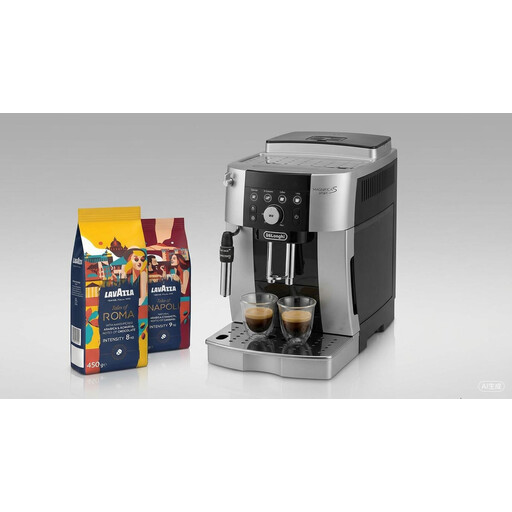 Image unavailable
DeLonghi Magnifica ECAM250.23.SB with Lavazza beans
This bundle may suit a household looking to start making espresso with an automatic machine and included coffee beans.
The bundle name lists two 450 g packs: Lavazza Tales of Napoli and Tales of Roma. Check the maintenance requirements for the ECAM250.23.SB machine.
View on Joybuy
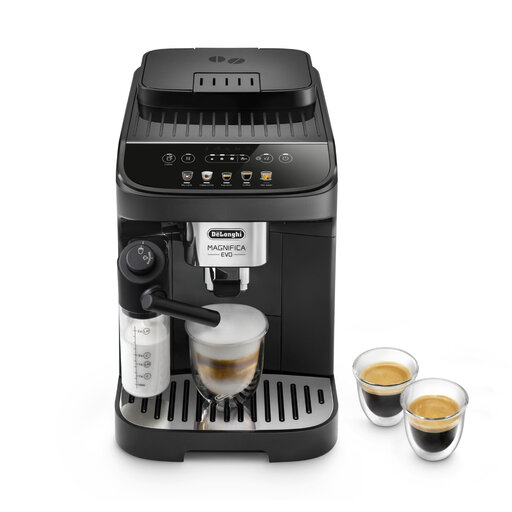 Image unavailable
De'Longhi Magnifica Evo ECAM290.61.B LatteCrema
Worth considering if milk-based drinks feature regularly in your routine and you’re looking for a bean-to-cup machine.
The model name specifies a black finish and LatteCrema system. Check the recipes available on the exact model and how to maintain the milk system.
View on Joybuy
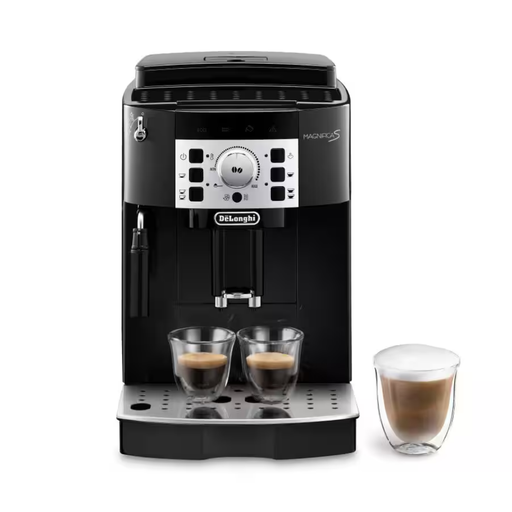 Image unavailable
De'Longhi Magnifica S ECAM22.140.B
This automatic machine with a grinder is suited to households that make espresso from beans.
Black finish. Before finding a spot for it in your kitchen, check the dimensions and access to the tanks on the ECAM22.140.B.
View on Joybuy
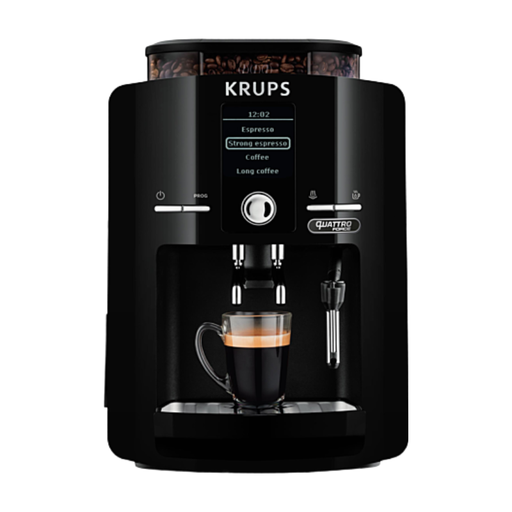 Image unavailable
Krups EA82F0 automatic coffee machine, 1.7 l
Worth considering for automatic coffee making at home; check that its controls suit the drinks you want to make.
The product name lists a 1.7 l capacity and a rated power of 1,450 W. Check the EA82F0 manual for settings and maintenance.
View on Joybuy
Frequently asked questions
Does a water filter mean you don’t need to descale a bean-to-cup machine?
No. A water filter doesn’t mean you’ll never need to descale the machine. De'Longhi says the frequency depends on water hardness, while Philips notes that a machine using AquaClean may still need descaling after several filter cycles. Follow the guidance for your specific model.
What should you clean after making a milk-based drink?
Clean the milk system according to the machine’s manual, even if the drink is made automatically. For the documented Barista T Smart model, Melitta describes parts that need to be removed and cleaned with the brush provided.
Can a filter coffee machine replace an espresso machine?
A filter coffee machine is better suited to longer coffees or making several cups in a row than to short espresso. If espresso is what your household usually drinks, keep this difference in mind when choosing.
Where can you dispose of used coffee capsules in France?
Follow the recycling guidance on the capsule and your local instructions, as the right disposal route depends partly on its material and the collection options available. ADEME says capsules taken to a collection point may be sent for specialist processing.


