Priorities before buying
Start with the drinks you usually make and the amount of time you are prepared to spend on maintenance. Then check the coffee format, available space and consumables required for the exact model.
| Priority |
What to check |
Your needs |
| Running costs |
Compare the machine price with how often you will actually use it. Check the compatible format, along with any filters, descaling products and cleaning products required. |
I want to separate the purchase price from the daily cost of coffee and maintenance. UFC-Que Choisir states that a bean-to-cup machine involves a higher initial investment but may reduce the cost per cup compared with pods. |
| Maintenance |
Check how often the trays need emptying, how to clean the brewing unit when it is removable, the descaling schedule and the milk-system procedure. Consult the manual for the exact model. |
I am looking for a routine the household will genuinely follow, rather than an automatic machine that adds tasks which are ignored day after day. |
| Drinks |
Identify the black coffee, milk-based and customised drinks you genuinely expect to make. Check whether it has a steam wand or milk system, and how it should be cleaned after use. |
We mainly drink espressos or long coffees, or we regularly enjoy milk-based drinks. Features that are rarely used can make maintenance more complicated without meeting our needs. |
| Space and waste |
Measure the worktop and the clearance needed for trays and tanks. Take grinding noise and the management of packaging or coffee grounds into account. |
The machine needs to remain practical in the morning and fit in the kitchen. In France, ADEME states that aluminium or plastic capsules can be sorted with paper and packaging. |
Machines available on Joybuy
These Joybuy options mainly cover automatic bean-to-cup machines for regular coffee at home, along with a portafilter machine for a more hands-on preparation.
 Image unavailable
Philips EP2230/10 Series 2200 LatteGo
For a household alternating between black coffee and milk-based drinks, with an integrated grinder.
12 grinder settings, a 275 g bean container, a 1.8 L water tank, LatteGo system and two-coffee preparation. The AquaClean filter is compatible but not included; also check the space required for its dimensions of 246 × 371 × 433 mm.
Joybuy
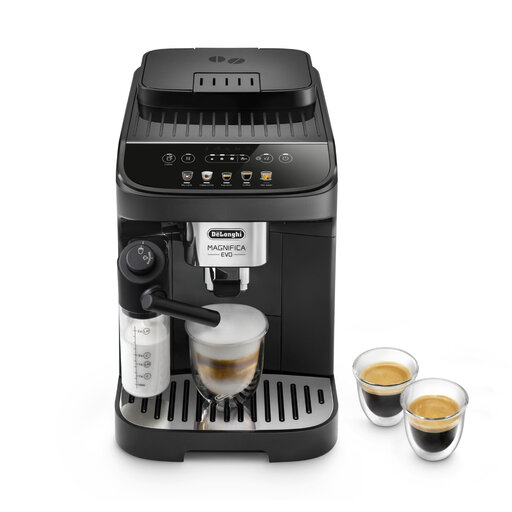 Image unavailable
De'Longhi Magnifica Evo ECAM290.61.B LatteCrema
For households that often make cappuccinos and want to adjust their coffee.
Grinder with 13 settings, LatteCrema system, 1.8 L water tank and 250 g bean container. Check the recipes available for this variant, along with its footprint of 240 × 440 × 360 mm and the maintenance required for the milk system.
Joybuy
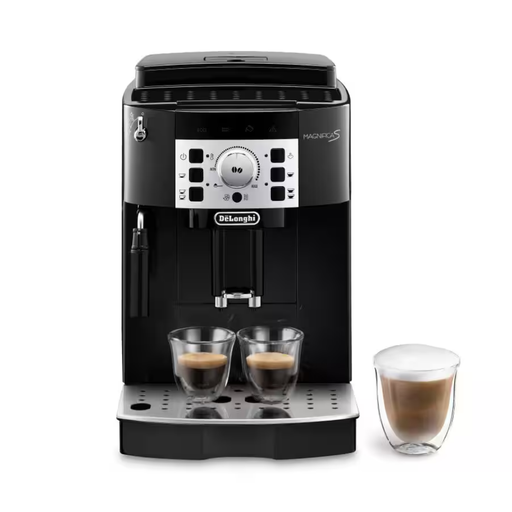 Image unavailable
De'Longhi Magnifica S ECAM22.140.B
For a household that alternates between coffee beans and ground coffee, with manual milk frothing.
Adjustable grinder, hatch for pre-ground coffee, 1.8 L water tank, two-coffee preparation and steam wand. Check the dimensions, weight and one-touch recipes available before deciding where to place it.
Joybuy
 Image unavailable
De'Longhi Magnifica Start ECAM220.21.WW
For households that prioritise espresso, coffee or doppio, with occasional milk-based drinks.
13 grind settings, adjustable strength, temperature and quantity, a 250 g bean container and 1.8 L water tank. The steam wand requires manual handling and cleaning after use; dimensions: 240 × 440 × 350 mm.
Joybuy
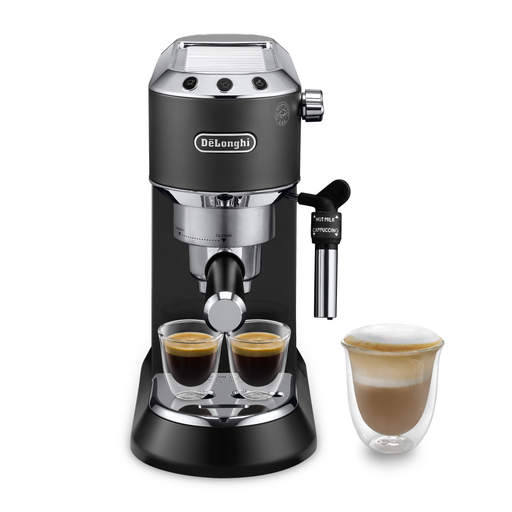 Image unavailable
De'Longhi Dedica Style EC685.BK
A portafilter alternative for preparing ground coffee with more hands-on steps.
Filters for one cup, two cups and ESE, three temperature settings, adjustable volume and a width of 149 mm. You need to fill, empty and rinse the portafilter; check the exact tank capacity for this variant.
Joybuy
Frequently asked questions
Is a bean-to-cup machine necessarily cheaper over time than a capsule machine?
No, not automatically. You need to consider the exact machine price, the number of coffees prepared, the cost of beans or capsules and maintenance consumables; UFC-Que Choisir states that a bean-to-cup espresso can cost two to three times less per cup than a pod espresso, but the payback period depends on actual usage.
What maintenance does an automatic bean-to-cup machine actually require?
Maintenance depends on the model and the water used, but generally includes rinsing the trays, cleaning the brewing unit when it is removable, descaling and cleaning the milk system after use. De'Longhi notably recommends daily rinsing and weekly cleaning of the brewing unit for its relevant machines; follow the manual for the exact model.
Can coffee capsules be recycled in France?
Yes, for aluminium or plastic capsules. ADEME states that they should go in the recycling bin, bag or container for paper and packaging.
Should you choose a machine with a milk system if the household mainly drinks espressos?
No, not by default. A milk system is useful if cappuccinos, lattes or other milk-based drinks are genuinely prepared; it also adds components that need cleaning. For mainly espresso or long-coffee use, a machine focused on these drinks may be simpler for everyday use.
Can the warranty on a bean-to-cup machine depend on the number of coffees prepared?
This can happen with some models. Check the warranty terms for the specific product, particularly if the intended domestic use is intensive, without assuming that this condition applies to every brand or machine.


