Households that make coffee regularly
You want to choose your beans for your daily coffees and are happy to make grinder care part of your routine. UFC-Que Choisir presents whole beans as an option for coffee enthusiasts and regular drinkers.


A bean-to-cup machine is a good choice for households that make coffee regularly, want to choose their beans and are happy to clean the machine regularly. If a compact design and brewing without a grinder matter more, capsule or pod machines are worth considering. A traditional espresso machine and a filter coffee machine suit different brewing preferences.
You want to choose your beans for your daily coffees and are happy to make grinder care part of your routine. UFC-Que Choisir presents whole beans as an option for coffee enthusiasts and regular drinkers.
Speed matters to you, but so do cleaning the containers, descaling, the space the machine takes up and the noise it makes while brewing. An automatic machine doesn’t eliminate these considerations.
You’re deciding between black coffee, strength and cup-size settings, or milk-based drinks. Check the recipes available on the model you’re considering: De’Longhi and Philips offer different features across their ranges.
For regular coffees at home, first choose the brewing method you want to use. Then consider whether it suits the space you have and the amount of cleaning you’re happy to do.
Worth considering: if you regularly want to make coffee from beans using the settings provided by the machine.
Bear in mind: grinding, rinsing and caring for the parts you use, especially those for milk drinks.
Worth considering: if you prefer pre-portioned servings and a compact machine.
Bear in mind: your choice of capsules is limited to those compatible with the machine.
Worth considering: if you want pre-portioned servings but don’t necessarily need espresso.
Bear in mind: the brewing method differs from that of a bean-to-cup machine. Les Numériques describes some systems as being better suited to filter-style coffee.
Worth considering: if you want to take a more hands-on approach to making espresso.
Bear in mind: the steps involved vary depending on the model you choose.
Worth considering: if you prefer filter coffee to espresso made to order.
Bear in mind: this brewing method doesn’t offer the same recipes as a bean-to-cup machine.
| Consideration | What to check | Who it matters to |
|---|---|---|
| Frequency and supplies | Think about how many coffees you make and choose between measured amounts of beans and pre-portioned servings. | If I make coffee often, I want to know which way of buying coffee best suits my habits. Around 29% of consumers put this first. |
| Cleaning and space | Check the dimensions, access to the reservoirs, cleaning steps and noise level of the specific model. | In a small kitchen or in the morning, I want to use and clean the machine without too much hassle. This is the priority for around 36% of consumers. |
| Drinks and settings | Compare the recipes actually available, the settings you’ll use and how to clean the milk system. | If my household alternates between black coffee and milk-based drinks, I’m looking for features we’ll genuinely use. Around 21% of consumers prioritise this variety. |
| Hands-on preparation | Decide whether you prefer to start an automatic recipe or get more involved in making your coffee. | I’d rather have a say in how my coffee is made than leave every step to the machine. This comes ahead of the other considerations for around 14% of consumers. |
A milk system means extra parts to look after. UFC-Que Choisir recommends rinsing the steam wand after use, for example; the exact instructions depend on the machine.
If you rarely make milk-based drinks, compare the cleaning steps in the manuals before choosing between a steam wand and a more elaborate milk system.
Rinsing the milk circuit takes time after making drinks that use it.
According to UFC-Que Choisir, a bean-to-cup machine takes up more space and makes more noise than a capsule machine or a filter coffee machine. You may also need extra clearance to fill a reservoir beneath a cupboard.
Measure your worktop and check how much room you’ll need to access the parts on the model you’re considering. If noise is a deciding factor, look for a noise measurement for that specific model.
De’Longhi’s bean-to-cup machines range from Magnifica models focused on straightforward coffees to series offering other drinks, depending on the model.
Philips machines can be compared by their programmed drinks and the care instructions for each individual model.
JURA offers home machines focused on black coffee, among other options. Available recipes vary by model.
These Joybuy models let you compare four bean-to-cup coffee machines with a Senseo soft pod machine. Compare their brewing methods and listed features with your daily routine.
 Image unavailable
Worth considering if you make coffee from beans and would also like milk-based drinks.
The product name lists six coffee varieties and a touch control panel. Check how much space you’ll need and what’s involved in cleaning the milk system before choosing this model.
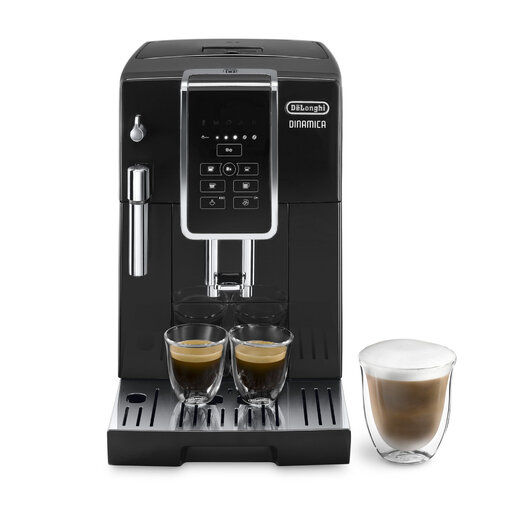 Image unavailable
An option to compare for making coffee regularly with an automatic machine. If you’d like to froth milk, check which accessories are included with this model and what the cleaning routine involves.
 Image unavailable
Worth considering if you’re looking for an espresso machine with a grinder and a dual boiler.
The product name lists a 20 bar pump and a 2,8 L water tank. Check the manual for care instructions, and make sure the dimensions will fit if space is limited.
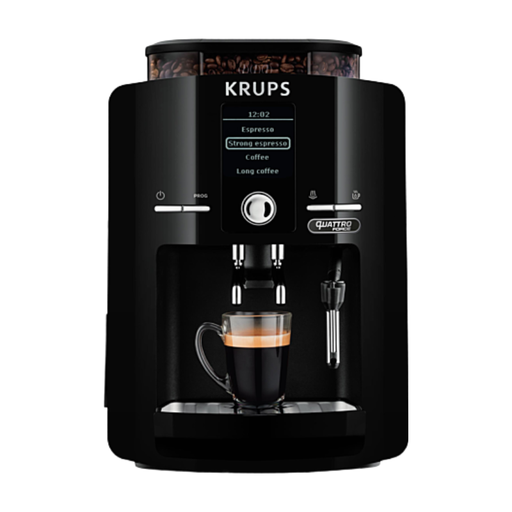 Image unavailable
Worth considering for making coffee regularly with an automatic machine.
The product name lists a 1,7 L tank and a power rating of 1 450 W. Check the manual for the care routine for this specific model.
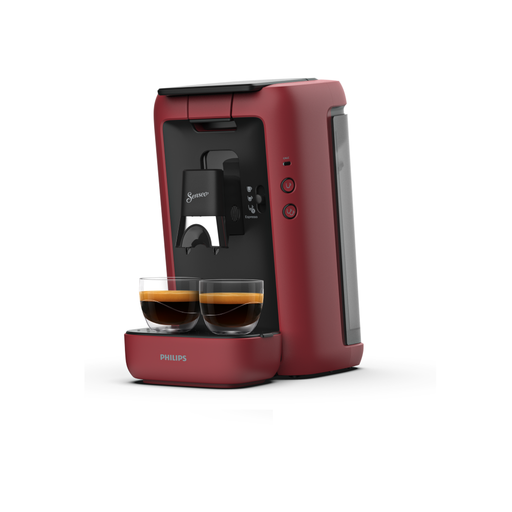 Image unavailable
Compare it with a bean-to-cup machine if you’d rather make coffee with soft pods than grind beans.
Check that Senseo pods and the drinks on offer suit your habits; this machine doesn’t make coffee from beans.
There’s no number of cups that makes a bean-to-cup machine the right choice for every household. Your decision also depends on whether you want to use beans, adjust your drinks and keep up with the regular cleaning required.
Check the manual for instructions on cleaning the trays, tank, removable brewing unit, if there is one, and milk circuit, if fitted. UFC-Que Choisir recommends rinsing the steam wand after making milk-based drinks and following the machine’s descaling instructions.
UFC-Que Choisir says a bean-to-cup machine makes more noise and takes up more space than a capsule machine. When choosing a specific model, check its dimensions and look for an assessment of the noise it makes while grinding.
You can take it to a collection point for electrical equipment rather than putting it in your general waste. The French ministry responsible for ecology lists collection points, household waste recycling centres and retailers. You could also consider repairing the machine before getting rid of it.