A bean-to-cup machine is a good choice if you make espressos often, want to choose your own beans and don’t mind cleaning the machine regularly. If you’d like to keep hands-on steps to a minimum, consider capsules; choose a portafilter machine if you want more control over the brewing process, or a filter coffee machine if you mainly drink longer coffees. Que Choisir also highlights the importance of available space and grinder noise.
Which option is right for you?
Households that often make espressos
If you want to choose your own beans and make an espresso without handling a portafilter for every cup, a bean-to-cup machine is well worth considering. However, Que Choisir points out that it takes up space and needs regular maintenance.
Households that enjoy milk-based drinks
If cappuccinos and lattes are regular favourites, compare a steam wand with an automatic milk carafe, depending on how hands-on you want to be. Also check how to clean the milk system after use.
People who are sensitive to noise and maintenance
If you make coffee early or in a living area, check how noisy the machine is while grinding and rinsing, as well as which parts need cleaning. Que Choisir assesses these different stages in its bean-to-cup machine testing process.
What should you look for?
If you make espressos often, first choose the brewing method that suits you. Then compare the daily tasks involved and the drinks each machine can make.
Bean-to-cup machine
Worth considering: you make espressos often and want to use your choice of beans without handling a portafilter.
Bear in mind: according to Que Choisir, the grinder adds noise and the machine needs regular cleaning.
Portafilter machine
Worth considering: you want to make an espresso and control the dose and tamping yourself.
Bear in mind: making coffee and cleaning the portafilter involve more steps than with an automatic machine.
Capsule or pod machine
Worth considering: you prefer pre-portioned coffee and have limited space.
Bear in mind: your choice of coffee depends on the capsule or pod system you use.
Filter coffee machine
Worth considering: you mainly make longer coffees or several cups at a time.
Bear in mind: it won’t give you the same kind of drink as a short espresso or an automatically prepared milk-based coffee.
| What to consider |
What to check |
Who is it for? |
| Coffee choice and preparation |
Decide whether you want to choose your own beans, dose a portafilter yourself or use pre-portioned coffee. |
I make espressos often and want to choose my coffee without repeating every step for each cup. Around 34% of consumers reportedly put this brewing method first. |
| Maintenance and noise |
Check the manual for regular cleaning requirements and look for a sound test of the exact model, particularly during grinding. |
When I make coffee early, I want to know what noises and tasks come with everyday use. This is reportedly a priority for around 33% of consumers. |
| Milk-based drinks |
Compare the steam wand with the automatic milk system, and check their cleaning instructions. |
If I make cappuccinos regularly, the steps involved in preparing the milk matter more than the total number of recipes. Around 33% of consumers reportedly make this their priority. |
Mistakes to avoid
-
Assuming automatic rinsing means the machine is fully maintained
The bins and drip tray, as well as the brewing unit or milk system on some machines, also need to be cleaned by hand.
Check the manual for the model you’re considering to find out which parts need removing and how often each task is required, including descaling.
-
Choosing a complex milk system when you mainly drink espressos
An automatic carafe can make milk-based drinks easier to prepare, but it adds parts that need cleaning after use.
Start with the drinks you actually make. If you only have a cappuccino now and then, compare the steps involved in using a steam wand too.
-
Relying on the word “quiet” alone
A claim about a specific model doesn’t necessarily tell you how noisy it is at every stage. Que Choisir’s testing process, for example, assesses rinsing, grinding and coffee dispensing separately.
Look for an assessment of the exact model and consider where you plan to put the machine.
Brands to know when comparing formats
De’Longhi
De’Longhi offers several bean-to-cup ranges, including Magnifica, Dinamica, Eletta Explore and PrimaDonna, with different approaches to milk-based drinks.
- Compare models based on whether you’d rather use a steam wand or automate milk preparation.
- Check the features and maintenance requirements of the specific model rather than assuming they’re the same across the brand.
Philips
Philips LatteGo bean-to-cup machines are designed in particular for households that want to make milk-based drinks using a carafe.
- Philips describes the carafe on its EP2339/40 and EP3347/90 models as having two parts and no tubes. Check the specifications of the model you choose.
- Cleaning the carafe doesn’t remove the need to maintain the machine’s other parts.
Nespresso
Nespresso Original capsules offer another way to make pre-portioned coffee, without grinding beans in the machine.
- Nespresso recommends its Original Scuro capsule for recipes with milk.
- Check which capsule system the machine you’re considering accepts: an Original product reference doesn’t cover every Nespresso format.
Bean-to-cup machines available on Joybuy
These bean-to-cup machines are intended for making espressos regularly at home. To choose between them, consider whether you’d like milk preparation to be automatic or are happy to do it by hand. Then check the maintenance requirements and noise levels of the specific model.
 Image unavailable
Philips 2200 Series LatteGo EP2230/10, glossy black
Consider this if you make espressos and would also like a LatteGo system for milk-based drinks. Check the manual for cleaning requirements and look for a sound test of the EP2230/10 specifically.
View on Joybuy
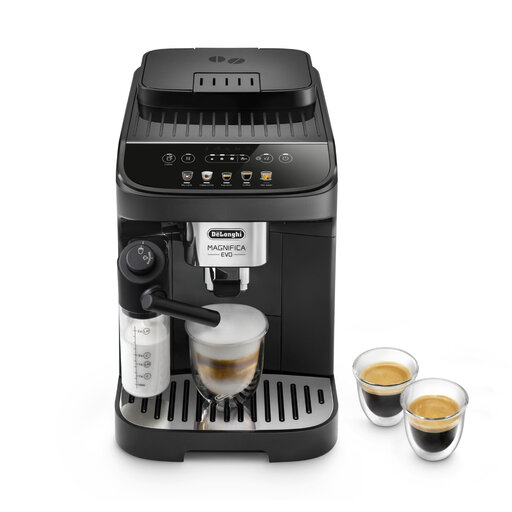 Image unavailable
De’Longhi Magnifica Evo LatteCrema ECAM290.61.B, black
Worth considering if you want to make espressos and milk-based drinks with an automatic system. Check which maintenance tasks are still required after cleaning the milk system, and look for noise information on the exact model.
View on Joybuy
 Image unavailable
HiBREW H16, automatic bean-to-cup machine with touchscreen
Worth a look if your household enjoys a variety of drinks: the product name lists six types of coffee and a milk system. Check the manual to understand how it works, how to clean it and what steps are involved in making each drink.
View on Joybuy
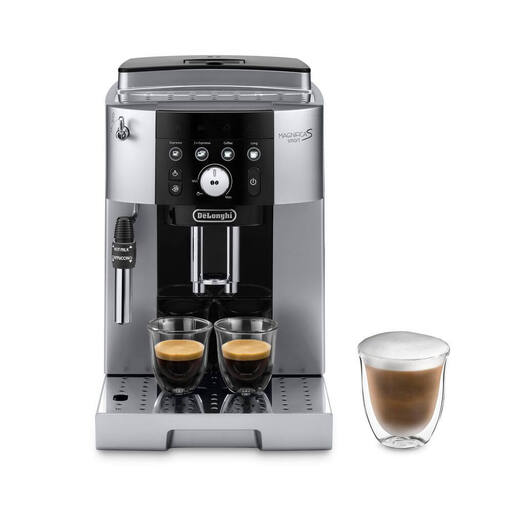 Image unavailable
De’Longhi Magnifica S Smart ECAM250.23.SB, silver
Consider this for regular espressos if you’re happy to froth the milk yourself for the occasional milk-based drink. Remember to clean the steam wand after use, and check the noise levels of the ECAM250.23.SB.
View on Joybuy
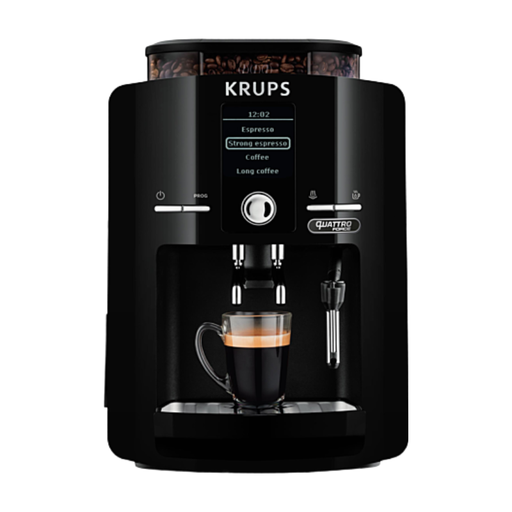 Image unavailable
Krups EA82F0, automatic machine, 1,7 L, 1 450 W, black
Worth considering for making espressos and, if you like, frothing milk by hand for the occasional cappuccino. Check the manual for maintenance instructions and look for a sound assessment of the EA82F0.
View on Joybuy
Frequently asked questions
What maintenance does a bean-to-cup machine need?
You’ll need to empty and clean the bins and drip tray regularly, then maintain the other parts according to the model. Descaling is a separate task: check the manual for instructions and how often to do it.
Is a bean-to-cup machine quiet enough to use early in the morning?
Not necessarily: grinding adds noise, so it’s worth bearing that in mind. Que Choisir also assesses rinsing and coffee dispensing. Look for a test of the exact model rather than relying on a general claim that it operates quietly.
What should I check if I often make cappuccinos?
Check whether the machine uses a steam wand or an automatic milk system, and find out what cleaning is involved. Recipes and settings vary between models, and a carafe doesn’t mean all maintenance is automatic.
What should I do with a coffee machine at the end of its life in France?
First, look into repair or reuse. If the machine can no longer be used, find out how to dispose of it through a suitable collection scheme for electrical and electronic equipment. France’s Ministry for Ecological Transition outlines these options for individuals in France.


