Regular espresso drinkers who choose their own beans
You often prepare short or long coffees at home and want to vary the beans you use without relying on a capsule format. This choice means accepting a bulkier appliance and regular maintenance.


Choose an automatic bean-to-cup machine if you regularly prepare espressos, want to choose your coffee beans and are happy with a larger appliance that needs regular maintenance. Capsules prioritise compactness and simplicity, while a portafilter requires more hands-on preparation. Filter coffee machines are mainly suited to making longer coffees.
You often prepare short or long coffees at home and want to vary the beans you use without relying on a capsule format. This choice means accepting a bulkier appliance and regular maintenance.
For frequent cappuccinos or lattes, compare the milk system first, along with rinsing after use and thoroughly cleaning the wand, circuit or carafe. UFC-Que Choisir recommends rinsing a steam wand after every use.
If you are hesitating between a bean-to-cup machine, capsules, a portafilter and a filter machine, start with how often you drink coffee, the coffee you actually buy and the amount of daily hands-on preparation you are comfortable with.
Start with the type of drink you prepare most often, then compare maintenance, available space and the consumables required for the model you are considering.
| Priority | What to check | Your needs |
|---|---|---|
| Running costs | Compare the price of the machine, coffee, any filters, descaler and milk-cleaning products separately. UFC-Que Choisir reports a per-cup cost two to three times lower for a bean-to-cup machine than for a pod espresso machine, although this does not calculate your total cost. | I want to know what my drinks will really cost over time, rather than choosing based solely on the appliance price. |
| Maintenance | Check the descaling alerts, access to the coffee-grounds container and drip tray, as well as the availability of compatible filters and cleaning products. Follow the cycles specified in the manual for the exact model. | I prefer a maintenance routine that fits the amount of time I can devote to it each week. |
| Milk system | For a steam wand, plan to rinse it after every milk-based drink. For a carafe or internal circuit, compare washable parts, cleaning programmes and any detergent required. | If I often prepare cappuccinos or lattes, cleaning matters just as much as the number of recipes available. |
| Size and preparation | Measure the width, depth and height, allowing room to remove the water tank and empty the containers. Also compare one-touch preparation with the dosing and cleaning involved when using a portafilter. | I want a machine that genuinely fits on my worktop and whose everyday handling suits me. |
UFC-Que Choisir compares the per-cup cost of a bean-to-cup machine favourably with pods, but this comparison does not cover your drink volume, the price of your beans, water or all consumables.
Calculate the cost over a realistic period using the number of coffees prepared, the price of the coffee, any filters, cleaning products and the price of the machine.
Include any water filters, descaler, cleaning tablets and products intended for the milk system in your calculation.
Milk residue requires a suitable routine: a wand must be rinsed after use, and some circuits require a dedicated cleaning programme.
Read the manual before buying and compare the steps required after each drink, periodic cycles, removable parts and the products needed.
Rinsing time, any dismantling and cleaning products are all part of using a milk system.
An automatic bean-to-cup machine may require more room than a capsule machine or filter coffee machine, and access to the tank or containers is just as important as its external dimensions.
Measure the space, then allow room to fill the beans, remove the tank and empty the containers. Always check the dimensions of the exact model.
A commercial warranty is optional and comes in addition to the legal guarantee of conformity; it does not replace it.
Compare its duration, exclusions and cover for labour and transport in writing, then distinguish these terms from your statutory rights. The French Ministry of the Economy reminds shoppers that the legal guarantee of conformity applies for two years to new and second-hand goods bought from a professional seller.
A French range of bean-to-cup espresso machines, from straightforward models to appliances with automated milk recipes. The choice between a steam wand, carafe and integrated milk system depends on the exact model.
An option to consider for households looking for automated milk-based drinks with a LatteGo carafe rather than a traditional steam wand.
A brand to consider if you are happy to use dedicated consumables and guided cleaning procedures, particularly for milk-based drinks.
A relevant brand to include when comparing bean-to-cup espresso machines in France, with the Intuition Essential EA870810 among the models recently tested by UFC-Que Choisir.
A brand to include if you are comparing automatic machines offering a range of drinks, with CI Touch and Barista SE models appearing in UFC-Que Choisir’s recent comparison.
This selection brings together Joybuy options for preparing regular espressos at home with a bean-to-cup machine, along with portafilter alternatives for people who prefer a more hands-on approach.
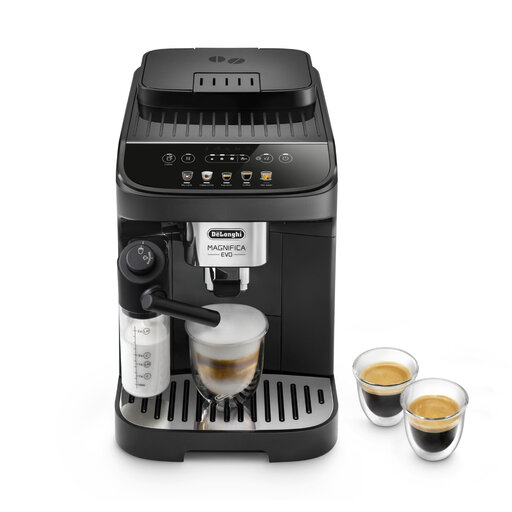 Image unavailable
For a household that alternates between espressos and cappuccinos made with coffee beans.
The machine features a conical grinder, a 250 g hopper, a LatteCrema carafe and settings for aroma, temperature and quantity.
Allow at least 240 × 440 × 360 mm, with room for the tanks and containers, then check the manual for cleaning and descaling intervals.
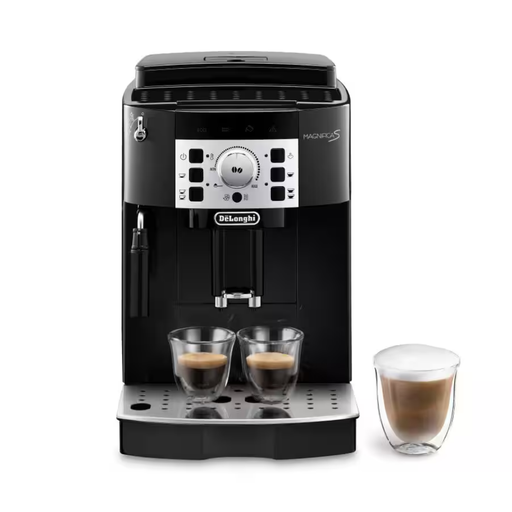 Image unavailable
It is suitable for regular espressos without capsules, with the option of using whole beans or ground coffee.
The model features a 1.8 l tank, adjustable grinding, a two-cup function and a steam wand for milk-based drinks.
The steam wand must be rinsed after milk-based drinks. Also check the actual footprint, consumables and availability of a compatible filter.
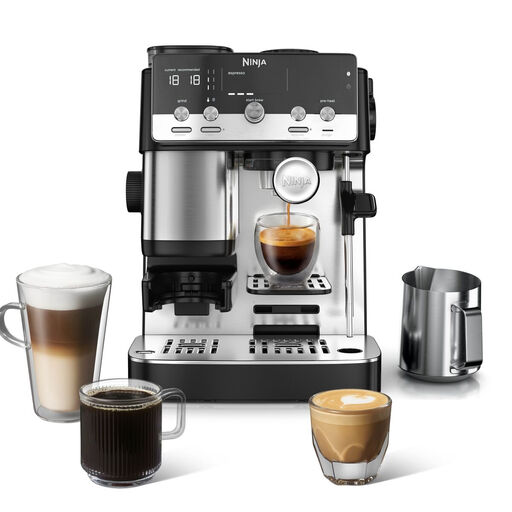 Image unavailable
An option for alternating between espresso, Americano and filter coffee using coffee beans and guided preparation.
The model features an integrated conical grinder, weight-based dosing and Barista Assist.
The title mentions a manual milk frother, while the description refers to an automatic system: confirm the milk configuration, dimensions, tank and descaling cycles before buying.
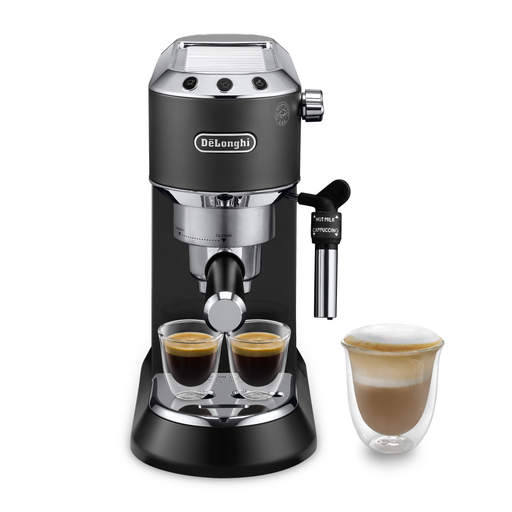 Image unavailable
This portafilter machine is aimed at people who want to prepare espresso manually in a slim format.
It accepts ground coffee and ESE pods, prepares one or two cups, and its stated dimensions are 149 × 330 × 305 mm.
It does not have an integrated grinder: allow for ground coffee or ESE pods, as well as cleaning the steam wand after use.
 Image unavailable
A portafilter alternative for manually preparing espressos, cappuccinos and lattes with ground coffee.
The model features a dual heating system, three temperature levels, a removable 1.3 l tank and a 23 × 23 × 32 cm format.
It does not have an integrated grinder; check the manual for instructions on cleaning the milk tank and the maintenance products required.
Yes, maintenance is generally more involved: rinse the containers regularly, descale the machine when prompted and follow the instructions for milk-based drinks. UFC-Que Choisir also points out that automatic bean-to-cup machines are more complex, bulkier and noisier than capsule systems or filter coffee machines.
After making a drink with a steam wand, UFC-Que Choisir recommends rinsing the wand after every use. For an integrated milk circuit, consult the manual to identify the daily rinsing routine, cleaning programme and any detergent required.
ADEME states that aluminium or plastic capsules should be placed in the recycling bin, bag or container for paper and packaging. However, check the recycling information on the packaging and the local guidance that applies in your area.
In France, the Ministry of the Economy states that you have two years to request enforcement of the legal guarantee of conformity for both new and second-hand goods. A commercial warranty may be added, but it does not replace this statutory protection.