Pod machine users short on worktop space
If there’s little room between appliances, compare the width of bean-to-cup machines as well as their depth with the portafilter in place and the clearance needed to remove the parts.


Switching from pods to beans can work well in a small kitchen, as long as the machine fits in its space while you make coffee and its cleaning routine suits you. A slim hybrid machine may mean emptying its portafilter after every coffee; if you regularly make milk-based drinks, compare the milk systems and how they need cleaning. If space or upkeep is still a concern, sticking with pods or choosing a filter coffee machine are both options.
If there’s little room between appliances, compare the width of bean-to-cup machines as well as their depth with the portafilter in place and the clearance needed to remove the parts.
A slim hybrid machine could suit you if you don’t mind emptying and cleaning the portafilter after every coffee. Les Numériques notes that this is required with the Krups Coffee Crush Experience.
Choose between a steam wand, which means preparing the milk by hand, and an automatic system, whose milk-contact parts will also need cleaning.
First, measure the space available for making and cleaning your coffee. Then check that the steps involved suit the drinks you usually make.
| Priority | What to check | Your needs |
|---|---|---|
| Space in use | Measure the width, depth and height of the spot you have in mind. Allow room for the portafilter and for removing the trays: Les Numériques gives the Philips Baristina’s depth as 45 cm with the portafilter in place. | I want to be able to make coffee and access removable parts without moving the appliances next to the machine. |
| Cleaning | Check where the coffee grounds go and which parts need rinsing after each coffee. According to Les Numériques’ review, the Krups Coffee Crush Experience’s portafilter needs to be emptied and cleaned after every coffee. | Am I happy to do something after every cup, or would I prefer a grounds container that I can empty as needed? |
| Drinks | Compare the recipes available on the exact model. For milk drinks, distinguish between a manual steam wand and an automatic system, then check which parts need cleaning. | Do I mainly drink espresso or lungo, or are cappuccinos part of my usual routine? |
| Changing systems | If you’re moving on from pods, compare the steps involved in making and cleaning the coffee with what you’re happy to do now. A filter coffee machine may also suit you if you want coffee without having to make room for a grinder. | I’m interested in whole beans, but not if making coffee every day becomes too much hassle in my kitchen. |
A slim machine can take up more depth when it’s ready to use. For example, Les Numériques gives the Philips Baristina’s depth as 45 cm with the portafilter in place.
Measure the space it will occupy while in use, the clearance beneath your cupboards and the room needed to remove its parts.
Les Numériques notes that the Krups Coffee Crush Experience’s portafilter needs to be emptied and cleaned after every coffee. If several people use the machine, this routine matters just as much as its dimensions.
Decide whether you’re happy to do this after every cup. If not, compare machines with a grounds container and check what cleaning they involve.
An automatic system can make a cappuccino without you having to froth the milk by hand, but the parts that come into contact with milk still need cleaning. A steam wand, on the other hand, means preparing the milk manually.
Think about how often you make milk-based drinks, then check the model’s instructions to see which parts need removing and what to do after use.
These models show different ways to manage space, coffee grounds and milk. Check the specifications of the version you’re considering.
The Coffee Crush Experience SA403BE0 is an example of an especially slim hybrid bean-to-cup machine.
The Baristina and Series 2200 LatteGo suit different needs: espresso made with a portafilter in the former, and cappuccino prepared by an automatic milk system in the latter.
The Magnifica Start ECAM222.20.B is an automatic machine with a grounds container and a traditional steam wand.
These options include bean-to-cup machines for espresso, milk-based drinks or switching between coffee and filter coffee. Before choosing one for a small kitchen, check that it fits your space and that you’re happy with the cleaning routine.
 Image unavailable
This bean-to-cup espresso machine is a good choice if coffee is your priority rather than automatic milk preparation. If you use the steam wand, you’ll need to prepare the milk by hand. Also measure the space needed to remove the trays.
 Image unavailable
The product name lists six types of coffee and a milk system, so compare these with the drinks you regularly make. Check the instructions for cleaning the milk system and the space needed to remove its parts.
 Image unavailable
This espresso machine with a grinder may suit you if you’re happy to prepare milk with a steam wand and clean it after use. Check its dimensions and the clearance it needs before deciding where to put it.
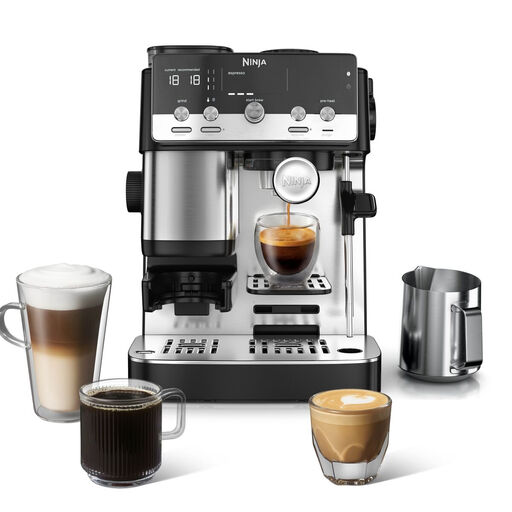 Image unavailable
The product name combines an integrated grinder, espresso and filter coffee, making it worth considering if you want to switch between these drinks. Check the frother type on the exact model and measure the space needed to use and clean it.
Measure the width, depth and height where you’ll make your coffee, then allow room for the machine’s parts in position and for removing them. Les Numériques says the Philips Baristina is 45 cm deep with the portafilter in place, so its width alone won’t tell you how much space it needs.
Not necessarily: the grounds may collect in a portafilter rather than an internal container. Les Numériques notes that the Krups Coffee Crush Experience’s portafilter needs emptying and cleaning after every coffee; Philips also says to remove and rinse the Baristina’s portafilter.
An automatic system is worth comparing if you’d rather not froth milk by hand. Philips says the Series 2200 EP2235/47 with LatteGo can make a cappuccino at the touch of a button. A steam wand is a good option if you’re happy to prepare the milk manually. Either way, check the cleaning instructions for the model you choose.
No. Switching only makes sense for your kitchen if the bean-to-cup machine fits in the space you have and you’re happy with the preparation and cleaning routine. If removing parts or daily cleaning is a problem, you can keep using pods or compare filter coffee machines before deciding.