A bean-to-cup espresso machine is worth considering if your household regularly makes espressos and wants to choose its own beans. However, compared with capsules, you’ll need to allow for more space, noise while the beans are being ground and more regular maintenance, as Que Choisir points out. To decide, compare the machine’s price and running costs based on the number of cups you actually make, rather than assuming there’s one break-even point for every household.
Which households might this suit?
Households that make espresso regularly
You often make short or long coffees and would like to choose your own beans rather than stick to one capsule format. Consider the cost based on what you actually drink, as well as how much space the machine will take up.
Fans of milk-based drinks
If cappuccinos and latte macchiatos are regular favourites, check how the milk is prepared and which parts need rinsing. The number of recipes alone doesn’t tell you how much work maintenance will involve.
Households mindful of noise and maintenance
Noise and vibration matter in an open-plan kitchen or when you’re making coffee early in the morning. Que Choisir assesses these aspects in its testing; for each model, also check how easy it is to access the containers and follow the descaling process.
How do the different systems compare?
Start with the drinks your household actually makes: a regular espresso, filter coffee and frequent cappuccinos all call for different routines. Then compare running costs, available space and the level of maintenance you’re prepared to take on.
Bean-to-cup espresso machine
Worth considering: if you regularly make espressos from beans chosen by your household.
Things to bear in mind: Que Choisir notes that these machines are noisier and take up more space than capsule machines. You’ll also need to manage the containers and descaling.
Capsules
Stick with these: if convenience and a compact machine matter more than choosing your own beans.
Check: that the capsules are compatible with your machine, and how much the ones you buy cost.
Soft coffee pods
Worth considering: if you prefer individual portions to making coffee from beans.
Check: which pods the machine accepts and how much they cost for the drinks you usually make.
Espresso machine with portafilter
Worth considering: if you want to measure and make your own espresso using ground coffee or a separate grinder.
Things to bear in mind: you’ll need to do more by hand to prepare and clean the portafilter.
Filter coffee machine
Worth considering: if your household mainly drinks filter coffee rather than espresso.
Bear in mind: it won’t replace an espresso machine if espresso is what you’re after.
| Criteria |
What to check before buying |
Who this matters to |
| Long-term cost |
Compare the cost of the machine, the coffee you’ll actually use and, depending on the model, filters and maintenance products over the same period and for the same number of cups. |
If I make espressos often, I want to know whether switching systems suits my consumption without assuming I’m guaranteed to save money. Around 33% of consumers would make the total cost their priority. |
| Maintenance, noise and space |
Measure the space available and check access to the containers. Read the manual for cleaning and descaling instructions, and look for noise data for the specific model. |
In a small kitchen or early in the morning, I’d prefer a routine I can manage without disturbing the household. Around 27% of consumers would put ease of use at home first. |
| Milk-based drinks |
Check which drinks the machine makes automatically and how the milk carafe or steam wand needs rinsing after use. |
If I make cappuccinos often, I want a milk-preparation process that’s still easy enough to clean day to day. About 20% of consumers would prioritise this. |
| Coffee choice and control |
Look at the machine’s settings, whether it can use pre-ground coffee and, for capsules and pods, which formats are compatible. |
If I’m switching from capsules so I can choose my own beans, I also need to decide how much hands-on preparation I’m happy to do. Around 20% of consumers would prioritise having this choice of coffee. |
What not to overlook
-
Relying on a universal break-even point
The result depends on the number of cups you make, the coffee you choose and the maintenance each machine needs. A figure calculated for another household won’t settle your decision.
Compare the systems over the same period, using your usual purchases.
-
Measuring only the front of the machine
A grinder takes up space and makes noise while grinding the beans. You’ll also need room to reach the water tank and remove the containers; Que Choisir highlights these drawbacks compared with capsules.
Measure the space and access you’ll need, then look for noise data for the exact model.
-
Choosing a milk carafe without checking how to clean it
Making milk-based drinks adds parts or a system that needs maintaining. Having a recipe available at the touch of a button doesn’t remove the extra steps.
Read the manual to find out about rinsing, dismantling and what to do after use.
-
Treating all capsules as the same type of waste
How they should be disposed of depends on the material and the available recycling scheme. ADEME recommends limiting individual packaging, but that alone isn’t enough to compare the environmental impact of two machines.
Check your local council’s recycling guidance and whether the system you’re considering has any collection arrangements.
Brands and ranges to know
Philips
In its LatteGo bean-to-cup range, Philips offers the Series 3300 EP3341/50, which has a milk carafe and is advertised as making six drinks.
- For the EP3341/50, Philips highlights the LatteGo system for households that make milk-based drinks.
- The features listed for this model don’t apply to every Philips machine; also check what’s involved in maintaining the carafe you choose.
De'Longhi
De'Longhi offers several types of coffee machine. Its Autentica ETAM29.510.B is a bean-to-cup model with a traditional steam wand.
- De'Longhi lists the ETAM29.510.B as 195 mm wide, which is useful to compare with the space you have available.
- The steam wand requires you to prepare the milk and clean it by hand; these features apply to this specific model.
Krups
The Krups manual for the EA815–EA817 automatic series explains how to make espresso, coffee and ristretto using a bean-to-cup machine.
- This series is worth considering if your household makes several different types of coffee.
- Check the milk features and maintenance instructions for the exact model rather than assuming they apply based on the Krups name alone.
Bean-to-cup machines to explore on Joybuy
These machines are relevant if you’re moving from capsules to making espresso at home with a built-in grinder. Compare how they prepare milk and what maintenance they require. Their inclusion here doesn’t, on its own, determine whether they’re a better choice than capsules, pods or a portafilter machine.
 Image unavailable
Philips 2200 Series LatteGo EP2230/10, black
Worth considering if you’d like to switch to beans while continuing to make milk-based drinks regularly.
A 2200 Series model with the LatteGo system. Check the milk-cleaning routine and whether it comes with the maintenance accessories you want.
View on Joybuy
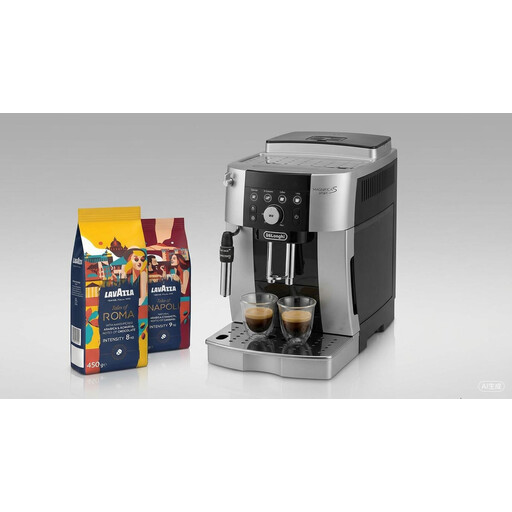 Image unavailable
De'Longhi Magnifica ECAM250.23.SB with Lavazza Tales of Napoli & Roma, 2 x 450 g packs
Worth considering for regular espressos if you’re happy to prepare and clean the milk by hand when you have a milk-based drink.
An automatic machine sold with the Lavazza coffees listed in the bundle title. Check that its size and the care required for the steam wand suit the way you’ll use it.
View on Joybuy
 Image unavailable
De'Longhi Magnifica S ECAM22.140.B, black
Worth considering if you want to make espresso from beans without measuring each portion into a portafilter.
An automatic espresso machine with a grinder. If milk-based drinks are part of your decision, check what’s involved in using the steam wand and measure the space you have available.
View on Joybuy
 Image unavailable
HiBREW H16 automatic espresso machine
Worth considering if you make different types of coffee at home and would like an automatic bean-to-cup machine.
The product title lists a grinder, six types of coffee and a touchscreen. Read the manual to understand how to clean the milk system and descale the machine before choosing this model.
View on Joybuy
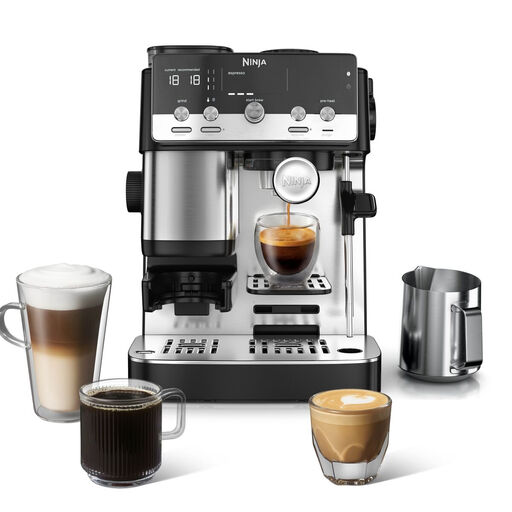 Image unavailable
Ninja Luxe Café Mini ES301EU, espresso and filter coffee
Worth considering if your household wants to grind beans and switch between espresso and filter coffee.
The product title describes a two-in-one machine with a built-in grinder. Check the milk frother configuration for the ES301EU variant and what maintenance involves before choosing it for the drinks you usually make.
View on Joybuy
Frequently asked questions
How many coffees do you need to make for a grinder to be worthwhile compared with capsules?
There’s no number of cups that applies to every household. Compare the cost of both machines, the coffee you actually buy and the maintenance required over the same period. Previous per-cup cost figures quoted by Que Choisir are no substitute for working it out for yourself.
What maintenance does a bean-to-cup espresso machine need?
You’ll need to empty and clean the containers, and descale the machine as instructed for that model. Follow the manual for the brewing unit, filters and milk system: accessible parts and maintenance steps vary from one machine to another.
Do capsules always have to go in general waste?
No. In France, how you sort them depends in part on the material and local guidance. ADEME outlines recycling schemes for aluminium and plastic capsules; check your local council’s instructions and any collection points before throwing them away.
What should you do if a machine bought from a retailer doesn’t match its description?
In France, a machine sold by a retailer to an individual may be covered by the legal guarantee of conformity if it doesn’t match the description provided. According to information from the Ministry of the Economy, keep your proof of purchase and contact the seller to have your claim assessed.


