If you make several espressos regularly, a bean-to-cup machine is a good choice for households that want to choose their coffee and are happy to clean the machine. Capsules offer a pre-portioned option with fewer steps. Soft pods are another simple way to make coffee, although they may not deliver the same kind of espresso. A portafilter machine is for those who want to take a hands-on role in making their coffee. Before choosing, consider these different ways of making coffee alongside the space you have, noise levels, the drinks you want and the maintenance required for the specific model.
Who are these machines for?
Households that make several espressos
If you make several coffees regularly, being able to choose your beans may matter more than cutting down on the steps involved. However, a grinder takes up space and needs regular maintenance, so weigh these considerations against how often your household makes coffee.
People who want to make coffee quickly
Pre-portioned capsules mean you don't have to grind and measure out coffee for every cup. This convenience means choosing a compatible capsule format, and you’ll still need to descale the machine periodically.
Fans of hands-on coffee-making
If measuring the coffee and handling the portafilter are part of the pleasure of making an espresso, a manual machine may suit you better. You’ll also need to clean it after use and, if you want to grind your own beans, have a suitable grinder.
How do the options compare?
Bean-to-cup
Worth considering: if you make several espressos regularly and want to choose your own beans.
Bear in mind: the grinder and containers need cleaning, and the machine may take up more space and make more noise than a capsule machine, according to UFC-Que Choisir.
Capsules
Worth considering: if everyone wants to make a pre-portioned cup quickly, without grinding or tamping the coffee.
Bear in mind: you’ll need capsules that are compatible with the machine, and a way to deal with the packaging after use.
Soft pods
Worth considering: if the convenience of a soft pod matters more to you than controlling the extraction.
Bear in mind: the drinks on offer and the taste in the cup depend on the system. A soft pod won’t necessarily produce the same espresso as one extracted at high pressure.
Portafilter
Worth considering: if you want to measure, tamp and adjust the way your coffee is made.
Bear in mind: there are more steps involved, and you’ll need to clean the portafilter after every use.
| Criteria |
What to check |
Who it matters to |
| Choice of coffee |
Check whether the machine takes beans, ground coffee or a specific portion format, then consider whether that coffee suits your preferences. |
If I make several espressos every day, I want to choose my coffee without relying on a single portion format. Around 42% of consumers would put this freedom of choice first. |
| Everyday steps |
Compare the steps involved in making a cup and cleaning the machine straight afterwards. Also check the descaling instructions. |
When I’m making several coffees before heading out, I’d rather use a pre-portioned serving and keep the steps to a minimum. Around 25% of consumers would prioritise fewer steps. |
| Pods and space |
Check the dimensions, the soft pod format and how many cups the model you’re considering can make. |
With limited worktop space, I’m mainly looking for a simple soft pod machine, while accepting that the result will differ from an espresso made with a portafilter. Around 17% of consumers would put this need first. |
| Hands-on preparation |
Check which filters and accessories are included, and how to clean the portafilter. If you want to use beans, make sure you have a suitable grinder. |
I’d rather measure and tamp the coffee myself, even if each cup takes longer. Around 16% of consumers would make this hands-on control their priority. |
Things to bear in mind
-
Assuming an automatic machine looks after itself
The containers, internal circuits and, depending on the model, milk system all need attention. You’ll still need to descale the machine, even if it makes coffee automatically.
Check the manual for the model you’re considering to see what needs doing after each cup and how often to descale it. This will depend, among other things, on how much you use the machine and how hard your water is.
Allow time for cleaning, and budget for the descaling products or filters specified for the model, where applicable.
-
Buying a grinder without checking the space or noise
UFC-Que Choisir points out that an automatic grinder can take up more space and be noisier than a capsule system. This can be especially important in an open-plan kitchen or if you make coffee early in the morning.
Measure the space available, remembering to leave room to access the water tank and containers. If noise is a key factor, look for a noise measurement for the specific model.
-
Assuming all capsules go in the same recycling stream
According to ADEME, capsules put in household waste are incinerated or sent to landfill. The right way to sort them depends on their material and the local guidance.
Follow the recycling information on the packaging and your local council’s guidance rather than assuming how to dispose of a capsule based only on its stated material.
Brands to know when comparing ranges
De'Longhi
De'Longhi offers bean-to-cup espresso machines, including models in the Magnifica range, with features that vary by model.
- The range includes machines that make coffee from beans, as well as models designed for milk-based drinks.
- De'Longhi France says that how often you need to descale depends, among other things, on the hardness of your water. Also check the features and milk system of the model you choose.
Philips
Philips sells automatic espresso machines and provides support for using and maintaining them.
- Philips support offers information on maintenance, accessories and repairs.
- Before choosing a model, check which parts and service options are available for it. The availability of support alone doesn’t tell you how reliable it is.
Nespresso
Nespresso machines are designed for specific capsule systems.
- Nespresso France publishes care instructions and offers support for its machines.
- Check which capsule system the model takes and whether it can be repaired. Nespresso says that repairs may not be possible if parts are no longer available.
Senseo
Senseo offers soft pod machines, with features that vary across the range.
- According to Senseo France, the Senseo Original can make two cups at once and has a 0.7 L water tank.
- These specifications apply to the Senseo Original. Check the tank size, features and pod format for any other model.
Machines for different needs
These models let you compare two ways of making espressos regularly at home: a bean-to-cup machine to automate the process, or a portafilter machine for a more hands-on approach. To compare the models, check which drinks they make, how much maintenance they need and how much space they take up.
 Image unavailable
Philips EP2230/10 Series 2200 LatteGo
A bean-to-cup model to consider if your household wants to make espressos and have the option of milk-based drinks too. Check which drinks this version offers and read the care instructions before choosing.
View on Joybuy
 Image unavailable
De'Longhi Magnifica Start ECAM220.21.WW, white
A bean-to-cup machine to consider for a household that regularly makes several coffees. Compare the drinks and settings you want, then check the dimensions and care instructions for this model.
View on Joybuy
 Image unavailable
De'Longhi Magnifica S ECAM22.140.B, black
This bean-to-cup model automatically makes coffee from beans. If several people will be using it, compare the drinks it makes and check the manual for cleaning instructions.
View on Joybuy
 Image unavailable
HiBREW H16, automatic bean-to-cup espresso machine
Worth considering if your household wants a bean-to-cup machine with a choice of drinks. Check that the drinks on offer suit your preferences, and consult the manual for maintenance instructions.
View on Joybuy
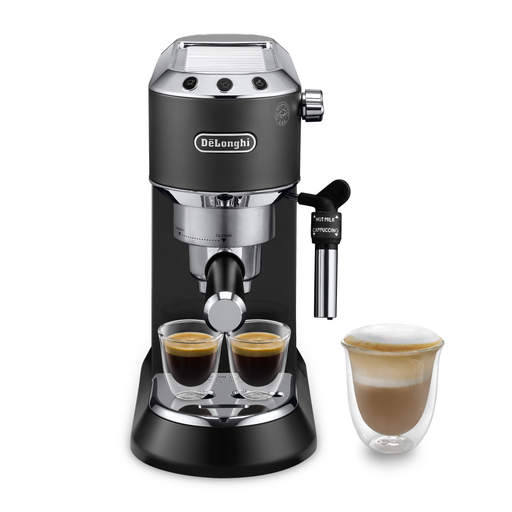 Image unavailable
De'Longhi Dedica Style EC685.BK, black
This portafilter machine is for people who prefer to get involved in making their coffee rather than use an automatic grinder. Allow time to measure the coffee and clean the machine after use. If the tank capacity could affect your decision, check the specifications for this version.
View on Joybuy
Frequently asked questions
How often should you descale a coffee machine?
How often you need to descale depends on the model, how much you use it and the hardness of your water. For its relevant machines, Nespresso France recommends descaling every three months or after around 300 capsules, and more often in hard water. Follow the instructions for your own machine and use an approved product.
Are bean-to-cup machines necessarily unreliable in the long term?
No. The presence of a grinder alone doesn’t tell you how long a model will last. In 2017, UFC-Que Choisir reported on a test of four machines that showed no signs of weakness after 2,500 coffees. This result doesn’t predict the reliability of current models. When choosing, check the care instructions and repair options for the specific machine.
Are capsules always recycled after they’re thrown away?
No. ADEME says that capsules put in household waste are incinerated or sent to landfill. Check the recycling information on the packaging and the collection options available in your local area.
Who should you contact if a machine bought in France is faulty?
If you’re a private individual and bought the machine from a professional seller in France, you can make a claim under the legal guarantee of conformity against the seller, according to the Directorate-General for Competition Policy, Consumer Affairs and Fraud Control. Keep your proof of purchase and a copy of the product listing so you can explain the fault or the advertised feature that’s missing. This is different from simply returning an item because you’ve changed your mind.


