An automatic machine with a grinder is a good choice if you regularly make espresso from beans and are happy to clean its containers and follow the descaling instructions for your model. If you often make milk-based drinks, check how the milk system is cleaned too. If you’d rather keep handling to a minimum or are short on space, compare capsule, pod and filter coffee machines based on the drinks you actually want to make.
Who is this type of machine for?
UFC-Que Choisir presents grinder-equipped machines as an option for coffee enthusiasts and regular coffee drinkers. How often you make coffee isn’t the only deciding factor, though: the drinks you want and the maintenance you’re prepared to do matter too.
You make espresso every day
If you want to use beans without measuring them out and preparing each cup by hand, an automatic machine with a grinder is worth considering. You’ll also need to rinse the containers regularly and carry out the maintenance set out in the instruction manual, as UFC-Que Choisir points out.
Your household makes milk-based drinks
Check what you need to do after each drink, then find out whether the carafe or nozzle needs to be taken apart. The way the milk system works and how it is cleaned should suit how often you make these drinks.
You want to keep things simple
If space or ease of everyday use is your priority, compare a grinder-equipped machine with capsule, pod and portafilter machines, as well as filter coffee makers. These appliances don’t necessarily make the same drinks or use the same coffee formats.
What sets these machines apart?
If you regularly make espresso without capsules, start by thinking about the maintenance you’re happy to do and the drinks you like. If pre-measured coffee suits you, look at capsules or pods. A portafilter requires hands-on preparation, while a filter coffee maker offers a different way to make coffee.
| What matters to you |
What to check |
Who it suits |
| Espresso from beans |
Check that the model has a grinder and offers the drinks you’ll actually make. |
If I make espresso often, I want to use beans without having to repeat the whole process for every cup. Around 33% of consumers put this automated bean-to-cup feature first. |
| Everyday maintenance |
Check the manual for instructions on rinsing the containers and descaling. UFC-Que Choisir points out that these procedures vary between models. |
When I have limited time for cleaning, I want to know what needs doing between uses and when descaling. For around 25% of consumers, easy maintenance comes before other considerations. |
| Milk-based drinks |
Look at the type of milk system and the parts that need cleaning after use, rather than relying on the number of recipes alone. |
If I regularly make cappuccinos, I need a milk system that’s easy to clean as part of my routine. Around 25% of consumers prioritise this. |
| Space and size |
Measure the available space and allow room to access the reservoirs. For capsules or pods, check which format is compatible; for a filter coffee maker, make sure it suits the drink you want. |
If I have limited worktop space, I may be happy to use a different coffee format to find an appliance that fits. This is the main consideration for around 17% of consumers. |
What to check before you buy
-
Relying on automatic rinsing alone
Rinsing doesn’t replace cleaning the containers and accessible parts. UFC-Que Choisir also points out that descaling may involve several steps, depending on the machine.
Check the model’s manual to see which tasks need doing regularly and which are triggered by an alert.
Allow time for these tasks and set aside the cleaning products recommended for your appliance.
-
Overlooking the coffee format
Beans, capsules and pods aren’t interchangeable, and they don’t all work in the same machines. If you choose a pre-measured format, check which products are compatible with the system.
Before choosing an appliance, confirm which type of coffee it takes and what other consumables are listed in the manual.
-
Choosing milk-based drinks without checking how to clean the system
Automatic preparation doesn’t remove the need to maintain the milk system. De’Longhi, for example, says that the milk circuit on the relevant automatic systems must be cleaned after every milk-based drink.
Compare the steps required after use, the parts that can be removed and the washing instructions for the specific model.
-
Assuming every model in a range has the same features
Milk systems, recipes and removable parts can vary between similar models. A feature listed for one version doesn’t guarantee that another has it.
Make a note of the full model number and check its manual and the configuration on sale before you choose.
Brands and ranges to know
These range examples help you compare milk systems and the maintenance they involve. Don’t assume that a feature on one model applies across the whole brand.
De’Longhi
According to De’Longhi, the Magnifica Evo ECAM290.61.SB combines one-touch coffee and milk recipes with the LatteCrema Hot system.
- For this model, De’Longhi lists five one-touch recipes and automatic cleaning after using LatteCrema Hot.
- This cycle doesn’t replace a thorough clean of the carafe. De’Longhi says the circuit must be cleaned after every milk-based drink on the relevant automatic systems.
Philips
The 3300 Series EP3347/90 is an example of a bean-to-cup machine with the LatteGo milk system.
- Philips lists six drinks and 12 grind settings for the EP3347/90, and describes LatteGo as a two-part system with no tube.
- Check the manual for the washing and descaling instructions, as well as guidance on the filter used with this model.
Melitta
The CI Touch is another example to consider when maintenance of the milk system is an important factor.
- Melitta describes cleaning programmes and products designed for its bean-to-cup machines.
- To clean the CI Touch milk system, Melitta says you need to detach the tube, take apart several components and rinse them.
Bean-to-cup machines on Joybuy
These models let you make espresso from beans at home. The selection also includes an appliance that combines espresso and filter coffee. Check how each model prepares milk and what maintenance it requires.
 Image unavailable
Philips 2200 Series EP2230/10 with LatteGo
Worth a look if you want to make espresso from beans and have a milk system. The Joybuy listing for the EP2230/10 describes LatteGo as a two-part carafe with no tube. Before choosing this model, check its recipes, full cleaning instructions and the accessories included in the configuration on sale.
View on Joybuy
 Image unavailable
De’Longhi Magnifica Start ECAM220.21.WW, white
This bean-to-cup machine is a good fit if you mainly want to make espresso every day. If you also want to prepare milk, check how the steam wand works and how to clean the ECAM220.21.WW; don’t assume it prepares milk drinks automatically.
View on Joybuy
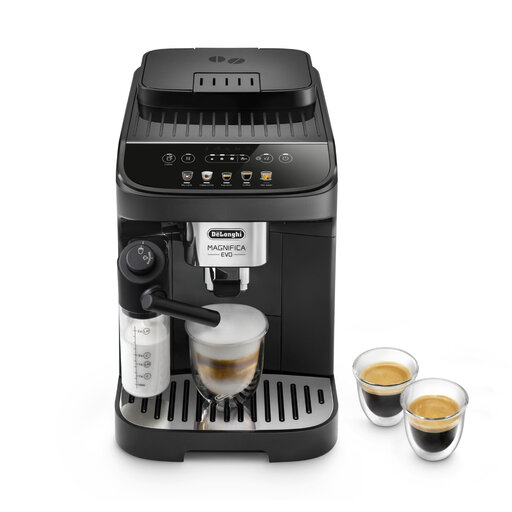 Image unavailable
De’Longhi Magnifica Evo ECAM290.61.B LatteCrema, black
Consider this model if milk-based drinks are part of your routine as well as espresso from beans. Check the recipes available on the ECAM290.61.B and the instructions for cleaning its carafe: the rinse function doesn’t remove the need to follow the milk system’s maintenance instructions.
View on Joybuy
 Image unavailable
De’Longhi Magnifica S ECAM22.140.B, black
This grinder-equipped machine is for anyone who wants to make espresso from beans. If you plan to use the steam wand, be prepared to prepare the milk by hand and check how to clean it. Also measure the space you’ll need to access the removable parts.
View on Joybuy
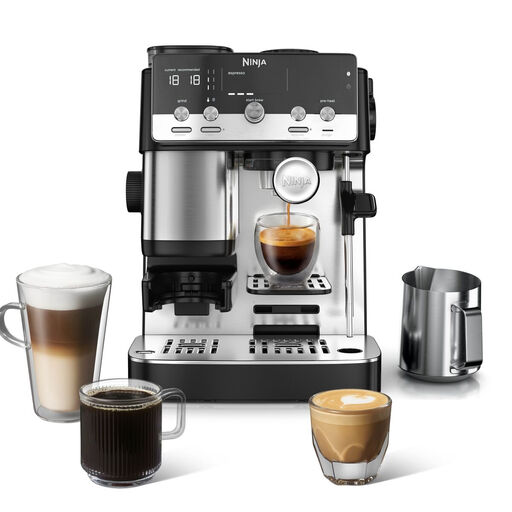 Image unavailable
Ninja Luxe Café Mini ES301EU, espresso and filter coffee
Worth considering if you want to make espresso and filter coffee with an appliance that has a built-in grinder. For the ES301EU, check the milk frother setup and what’s involved before relying on it to prepare milk-based drinks automatically.
View on Joybuy
Frequently asked questions
When should you descale a bean-to-cup coffee machine?
Follow the alert and procedure for your model rather than using a schedule that assumes every machine is the same. UFC-Que Choisir points out that descaling times and the manual steps involved vary between models. If you use a water filter, check its instructions for use and replacement too.
Does the milk system need cleaning after every drink?
For the automatic systems covered by its instructions, De’Longhi says to clean the circuit after every milk-based drink. Check your model’s manual to find out which cycle to run and which parts need washing separately.
How can you compare the maintenance involved with two milk systems?
Compare the parts you need to take apart, whether there’s a tube and the washing instructions for each model. Philips describes LatteGo as a two-part system with no tube, while Melitta says cleaning the CI Touch involves removing a tube and rinsing several components.
What guarantee applies to a machine bought from a professional retailer in France?
According to the French Ministry of the Economy, the statutory guarantee of conformity applies to new, second-hand and refurbished goods sold by a professional to a private individual in France. Keep your proof of purchase and the product description in case the item you receive doesn’t match what was advertised.


