Buying priorities
Start by comparing running costs and maintenance, then check whether the machine’s size, noise level and consumables system genuinely suit your kitchen and routine.
| Priority |
What to check |
Your needs |
| Cost over several years |
Compare the machine, coffee or pods, descaling products, any required filters and rinsing cycles. Que Choisir states that the per-cup cost of a bean-to-cup machine is two to three times lower than that of a pod espresso, depending on purchasing and usage conditions. |
I want to know whether the investment matches the number of drinks I actually make, rather than choosing based solely on the purchase price. |
| Maintenance |
Check the required procedures for the coffee-grounds container, drip tray, water tank, brew unit, descaling and milk system. Also check the alerts and manual actions required by the model. |
I prefer a routine I can follow regularly, without discovering the necessary steps between coffees after I have bought the machine. |
| Size and noise |
Note the width × depth × height and allow room to open trays and tanks. For noise, look for an independent sound-level measurement rather than relying on a marketing name. |
The machine must fit beneath my wall units, not obstruct the walkway and remain acceptable in an open-plan kitchen or early in the morning. |
| Consumables and waste |
Check the accepted format, local availability and capsule material. ADEME states that aluminium or plastic capsules go in packaging recycling; options for paper capsules depend on the local recycling system. |
I want to be able to choose my coffee easily and know exactly how to sort the used consumables at home. |
Bean-to-cup machines on Joybuy
These Joybuy options are bean-to-cup machines for households that regularly prepare coffee from whole beans.
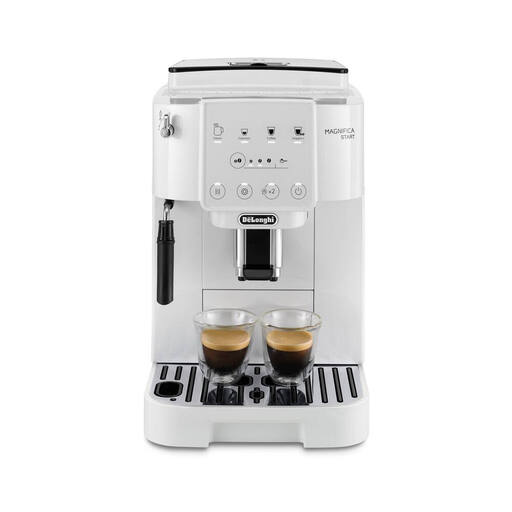 Image unavailable
White De’Longhi Magnifica Start ECAM220.21.WW
For a household that wants to prepare bean coffee and occasional milk drinks using straightforward recipes.
Conical grinder with 13 settings, 1.8 L tank, 250 g bean hopper, grounds container rated for 14 cups and dimensions of 240 × 440 × 350 mm.
Allow clearance around the 440 mm depth and look for an independent noise measurement if you have an open-plan kitchen.
Joybuy
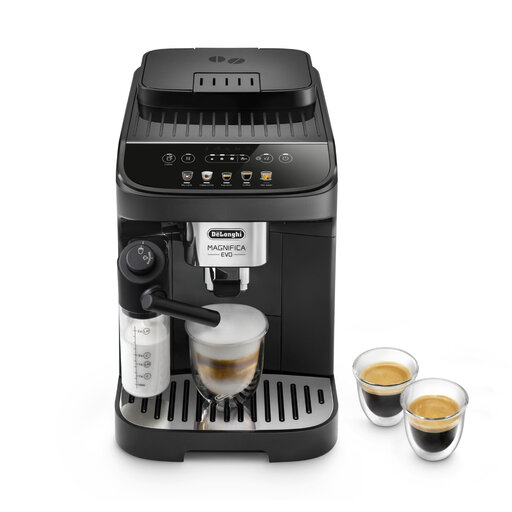 Image unavailable
Black De’Longhi Magnifica Evo LatteCrema ECAM290.61.B
Worth considering if frequent milk drinks and automatic cleaning of the milk system are priorities.
Grinder with 13 settings, LatteCrema system, 1.8 L tank, 250 g bean hopper, grounds container rated for 14 pucks and dimensions of 240 × 440 × 360 mm.
Confirm the exact number of recipes before buying, and allow sufficient space around the appliance.
Joybuy
 Image unavailable
Black Philips 2200 Series LatteGo EP2230/10
This option suits a household that alternates between black coffee and milk drinks while looking for removable maintenance components.
Four advertised drinks, LatteGo system, 12 grind settings, 1.8 L tank, 275 g hopper, grounds container for 12 pucks and dimensions of 246 × 371 × 433 mm.
Check that it will fit beneath your wall units, and confirm AquaClean filter availability if you plan to use one.
Joybuy
 Image unavailable
HiBREW H16 automatic espresso machine with grinder
Worth considering for mornings when several drinks are made one after another and household members want to save their preferences.
Advertised dual boiler, six drinks, conical grinder with 15 settings, touchscreen, milk system, 1.5 L tank and dimensions of 270 × 320 × 310 mm.
Check the capacity of the containers, the exact cleaning procedures, noise level and spare-part availability before buying.
Joybuy
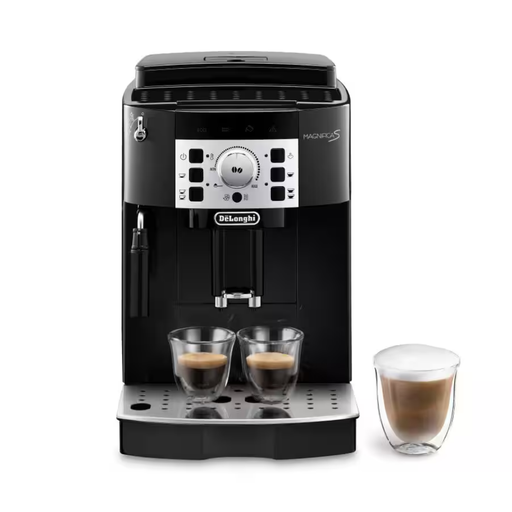 Image unavailable
Black De’Longhi Magnifica S ECAM22.140.B
For everyday use with whole beans or pre-ground coffee, plus milk drinks prepared with the steam wand.
Integrated grinder, ground-coffee option, 1.8 L tank, two-cup preparation, steam wand, water filter and descaling alert.
Before installation, confirm the dimensions, container capacities, noise level and brew-unit cleaning procedure.
Joybuy
Frequently asked questions
Is a bean-to-cup coffee machine necessarily more economical for a household that drinks a lot of coffee?
Not automatically: you need to factor in the machine, beans, cleaning products, descaling and how long you use it for. However, Que Choisir states that a bean-to-cup espresso can cost two to three times less per cup than a pod espresso; apply this guide to your own consumption and the products you actually buy.
How can you genuinely compare the noise levels of bean-to-cup espresso machines?
Look for an independent measurement that distinguishes rinsing, grinding and dispensing, rather than relying on a simple marketing claim. Que Choisir states that it uses a sound-level meter and also examines vibration and stability during preparation.
Are coffee capsules recyclable in France?
According to ADEME, aluminium or plastic capsules should be placed in the packaging recycling stream. Paper capsules can only be composted at home, through shared composting or in a food-waste collection when a suitable solution is available nearby, so check your local instructions.
Does the repairability index apply to coffee machines in France?
The ministerial list cited for the repairability index includes laptops, lawnmowers, dishwashers, vacuum cleaners and pressure washers, but not coffee machines. To compare two models, check the availability of spare parts, the repair network and warranty conditions directly.


