
Livraison le jour même ou le lendemain

Qualité garantie

Débloquez vos offres de bienvenue: Livraison GRATUITE | Jusqu'à -80 % | 30 jours d'essai gratuits à JoyPlus
Téléchargez l'application
There's nothing quite like the aroma of freshly ground coffee filling the kitchen in the morning. For a coffee lover, upgrading from pods or a drip filter to a bean-to-cup coffee machine is a real milestone. But faced with the overwhelming array of models, features, and prices, making a choice can quickly become a headache.
This guide is here to help you see things more clearly. Our mission? To give you the keys to finding the machine that will elevate your daily routine, without drowning you in marketing jargon.
Before jumping on a specific model, let's review the three fundamental criteria that truly set one machine apart from another.
It all depends on how much control you want over your espresso preparation.
The number one advantage of a bean-to-cup machine is the unparalleled freshness of the coffee. The quality of the grinder is therefore a non-negotiable point. Here's what to look out for:
For fans of cappuccinos and latte macchiatos, the milk system is a decisive factor.
To help you find the right fit, we've selected three iconic machines, each catering to a specific user profile.
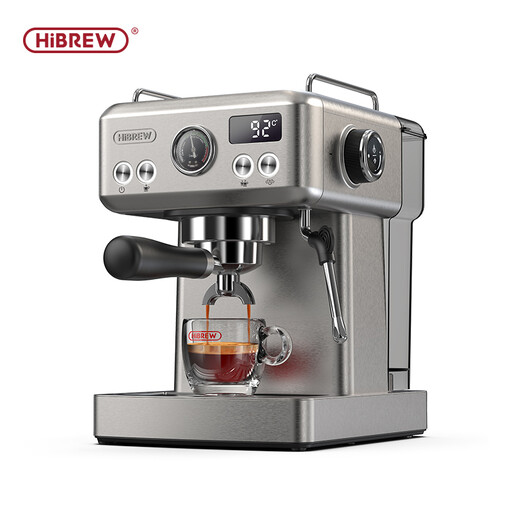
Why it stands out: The HiBREW H10A is a semi-automatic machine for those who want to learn the craft of a barista. It offers a level of customisation that is rare in its price range, allowing you to adjust the extraction temperature, pre-infusion time, and even the steam temperature. Its 58?mm portafilter is a professional standard, guaranteeing even extraction.
Highlights:
Who is it for? For the enthusiast who already owns a good grinder and dreams of mastering the art of espresso. This is a machine that rewards curiosity and the desire to learn.
See details for the HiBREW H10A
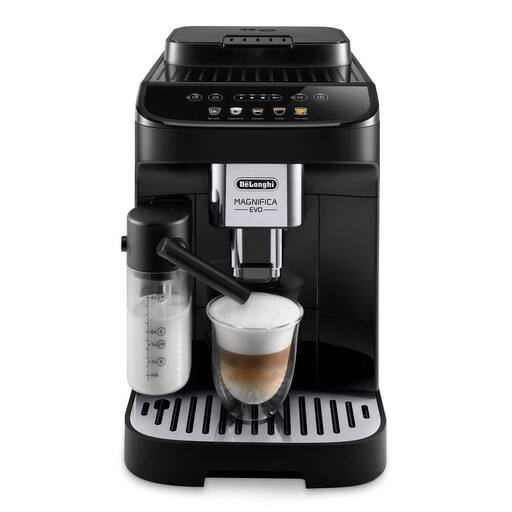
Why it stands out: This De'Longhi bean-to-cup coffee machine is the epitome of simplicity. Its key advantage is the LatteCrema Hot system, which automatically prepares a dense, creamy milk foam for perfect cappuccinos. Its touch-sensitive interface with colourful icons makes it incredibly easy to use.
Highlights:
Who is it for? For those who love cappuccinos and lattes but don't want any hassle. If you're looking for an all-in-one machine that guarantees consistent results with minimal effort, this model is for you.
Discover the De'Longhi Magnifica Evo
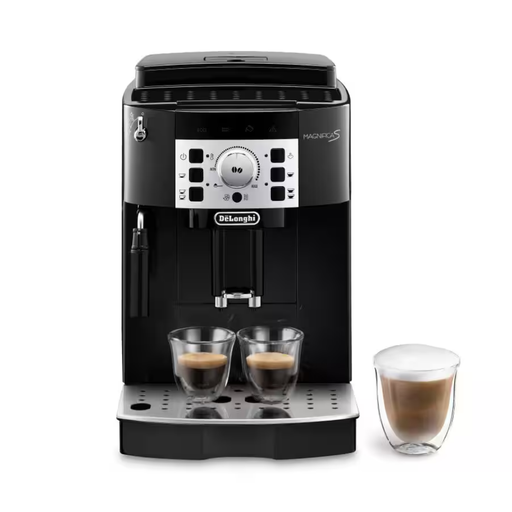
Why it stands out: The Magnifica S is a tried-and-true classic that focuses on the essentials: an excellent espresso made from freshly ground beans. It's a reliable and compact automatic espresso machine, perfect for taking your first steps into the world of bean-to-cup coffee.
Highlights:
Who is it for? For those who want to switch to bean-to-cup coffee primarily for the quality of their espresso. It's a wise first investment, ideal if you prefer black coffee and don't mind doing it yourself for your milk-based drinks.
View the product page for the De'Longhi Magnifica S
Our selection covers three main profiles, but the world of bean-to-cup machines is vast. If you haven't found your perfect match yet, many other hidden gems await.
To discover a wider range, browse our complete selection of coffee machines.
1. What is the difference between an automatic and a semi-automatic machine? An automatic machine handles everything from A to Z: it grinds, tamps, and extracts the coffee. A semi-automatic machine, like the HiBREW H10A, lets you dose and tamp the ground coffee in the portafilter yourself, giving you full control over the final result.
2. How do you maintain a bean-to-cup coffee machine? Regular maintenance is the key to your machine's longevity and the great taste of your coffee. It relies on three simple steps: empty the puck box and drip tray daily, clean the brew group (the part that presses the coffee) weekly, and perform a full descaling when the machine prompts you (every 2 to 3 months, depending on your water hardness).
3. Is a pressure of 15 or 20 bars really important? The ideal pressure for an espresso extraction is around 9 bars at the coffee puck. Manufacturers advertise the pump's maximum pressure (15, 19, or 20 bars). Think of it as a mark of performance: a powerful pump ensures that the ideal 9-bar pressure will be reached and maintained stably, even with a very fine grind or a firm tamp. It is therefore a good indicator of the machine's consistency.