
Livraison le jour même ou le lendemain

Qualité garantie

Débloquez vos offres de bienvenue: Livraison GRATUITE | Jusqu'à -80 % | 30 jours d'essai gratuits à JoyPlus
Téléchargez l'application
The aroma of freshly ground coffee filling your kitchen as you wake up... A small daily luxury is within reach, thanks to the bean-to-cup coffee machine. It promises to transform this morning ritual into a moment of pure pleasure. Yet, in a market saturated with marketing promises and endless spec sheets, it's easy to make a mistake. An ill-suited appliance quickly becomes a source of frustration, whether due to tedious maintenance or superfluous features that drive up the price.
To help you avoid these common pitfalls, let's break them down together.
To make an informed choice, focus on the components that truly impact the quality of your drink and the longevity of your automatic coffee machine.
The freshness of the grind is the main advantage of a coffee machine with a built-in grinder. The quality of this grinder is therefore a non-negotiable criterion.
The heating system determines the preparation speed and temperature stability—a key factor for a perfect extraction.
A well-maintained bean-to-cup coffee maker is a guarantee of a machine that lasts. To make your life easier, check for these features:
Rather than a random laundry list, we've matched iconic models with user profiles to help you find the machine that's truly right for you.
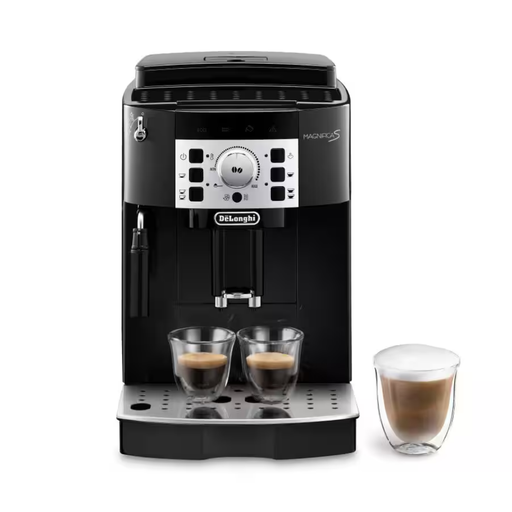
Why we recommend it: For those who want the essentials—an excellent espresso from fresh beans—without breaking the bank. The De'Longhi Magnifica S is a reliable workhorse that gets straight to the point: an adjustable grinder, simple controls, and a manual steam wand to get started with cappuccinos. It's the ideal entry point into the world of bean-to-cup espresso.
This model focuses on the essentials, without costly frills. Its removable brew group greatly simplifies cleaning and ensures perfect hygiene over the long term.
Reliability and simplicity: Direct controls via a dial and buttons. Manual steam wand: For full control over milk foam texture.
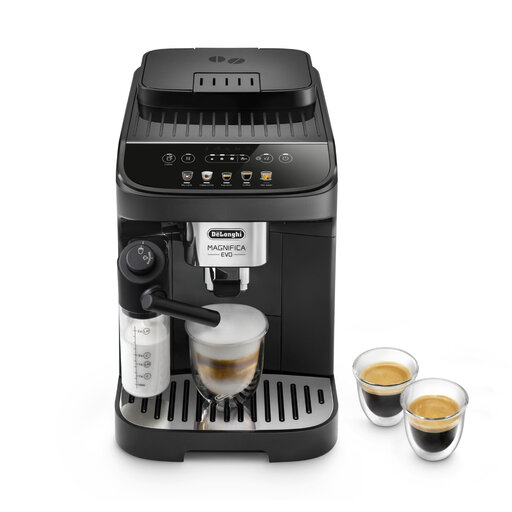
Why we recommend it: Ideal for those who prioritize convenience and love milky drinks. This machine automatically prepares cappuccinos and latte macchiatos with its integrated carafe. Its colourful touch interface makes selecting drinks ultra-intuitive, perfect for rushed mornings.
It sidesteps the pitfall of complex milk system maintenance. The carafe has an automatic cleaning function activated with a single touch, and its components are dishwasher-safe.
LatteCrema System: For dense and creamy milk foam, prepared automatically. Easy cleaning: Integrated cleaning function for the milk carafe.
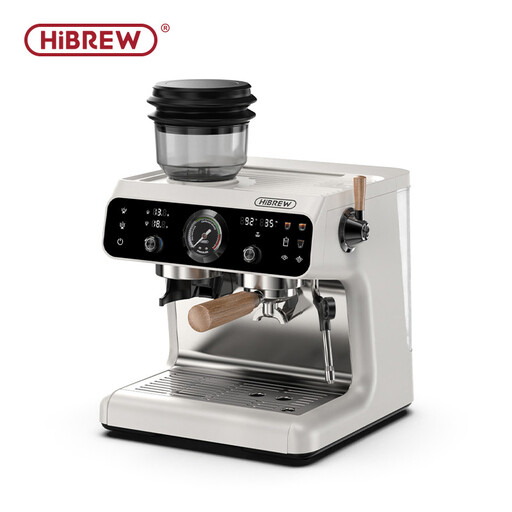
Why we recommend it: For the user seeking near-professional control. This model stands out with its dual boiler system, 58 mm pro-standard portafilter, and PID temperature control. It allows you to experiment with grind fineness (30 levels), temperature, and extraction time to perfect every cup.
Rather than piling on automatic recipes, this machine offers surgical control over the key extraction parameters. It doesn't sell you dozens of drinks, but the tools to master them yourself.
Dual boiler: Simultaneous extraction and milk frothing, with no waiting. PID temperature control: Pro-level thermal stability for optimal extraction. 30-level grinder: For ultra-precise grind adjustment.
We've compiled a complete, up-to-date selection of machines that meet our strictest quality criteria.
The lifespan of a bean-to-cup espresso machine is typically between 5 and 10 years. This longevity heavily depends on the build quality, frequency of use, and, most importantly, the rigour of its maintenance. Descaling as soon as the machine requests it and performing a weekly cleaning of the brew group are the two essential steps to extend its life.
Not necessarily. Each material has its strengths and weaknesses. Ceramic grinders are often quieter and generate less heat, which can preserve the most volatile aromas of the coffee. On the downside, they can be more brittle. Stainless steel grinders, which are very common, are extremely robust and durable. Ultimately, the geometry of the burrs and the consistency of the grind are far more important than the material itself.
The maintenance cost is relatively modest but essential. It mainly comes down to purchasing descaling products and, for some models, water filter cartridges. On average, you should budget between $30 and $60 per year to keep your machine in perfect health. It's a small investment to protect an appliance that costs several hundred dollars.