
Livraison le jour même ou le lendemain

Qualité garantie

Débloquez vos offres de bienvenue: Livraison GRATUITE | Jusqu'à -80 % | 30 jours d'essai gratuits à JoyPlus
Téléchargez l'application
Switching from filter coffee or pods to an espresso machine with a grinder is a real game-changer for any coffee lover. It’s the promise of an unparalleled aroma, released from beans freshly ground just moments before extraction. However, when faced with a jungle of technical specifications—dual boiler, bar pressure, grinder type—making a choice can quickly become overwhelming.
I'm the Head of Product Recommendations at Joybuy, and my role is to guide you in this quest. This guide will demystify the specifications that truly matter and present a selection of models that meet specific needs, so you can prepare a pro-level espresso without ever leaving your kitchen.
Before diving into our selection, let's review the essential criteria for making the right choice.
The heating system is the heart of the machine. There are two main types:
The quality of your espresso depends on the interplay between the coffee grind and the water pressure.
A professional-grade coffee machine also stands out for its durability and ease of use. A stainless steel body is not only aesthetically pleasing but also durable and easy to clean. Also consider the capacity of the water tank (1.5L is a comfortable minimum) and the bean hopper, as well as how easy it is to clean the drip tray and the brew group.
Here are three models that stand out from the crowd and cater to distinct user profiles, from the demanding user to the manual extraction enthusiast.
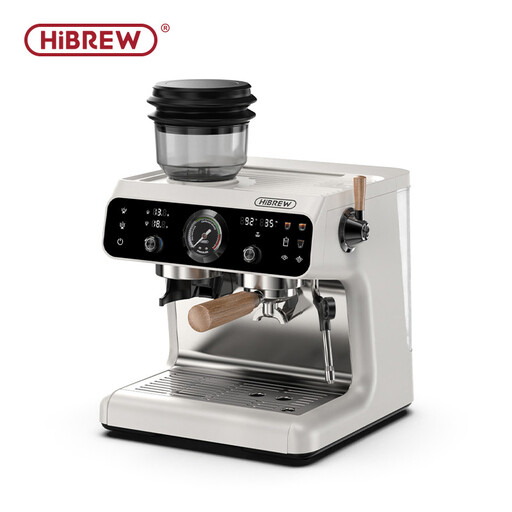
Key Features
The HiBREW H7B is a true home barista station. Its masterstroke: a dual boiler and dual pump system that allows you to extract espresso and steam milk at the same time, with no loss in performance. Its integrated conical burr grinder offers 30 grind settings for absolute control. The 7-level PID temperature control and colour touchscreen make it a tool that is as precise as it is intuitive for the most discerning users.
Advantages
Who is it for? The ideal machine for the enthusiast who wants a barista experience at home, to master every parameter, and to prepare complex milk-based drinks without the wait. It would also be a great fit for a small office or co-working space.
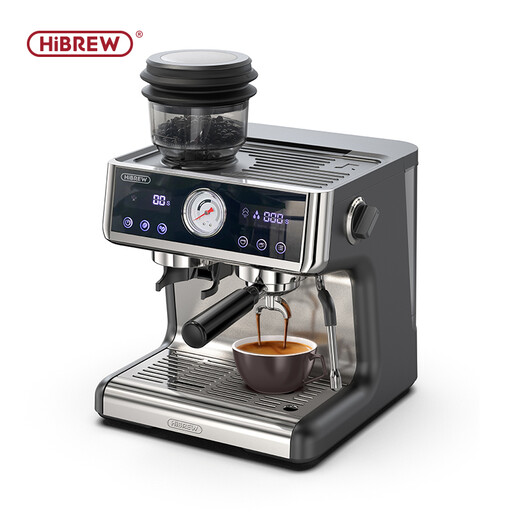
Key Features
The HiBREW H7A shares many qualities with its bigger sibling, including its dual boiler system and 20-bar pump. It also offers a stainless steel conical burr grinder with 30 grind settings. Its interface is simplified here, with an LCD touchscreen that allows you to easily customise the temperature and cup volume. Its brushed stainless steel chassis gives it a look that is both robust and modern.
Advantages
Who is it for? For those seeking the benefits of a dual boiler machine and a quality grinder in a format that is both high-performing and easy to master. It's the perfect balance between cutting-edge features and everyday simplicity.

Key Features
Please note: this model does not include a grinder. It is intended for those who already own a grinder or prefer to use pre-ground coffee.
This IAGREEA manual espresso machine focuses on the essentials: quality extraction and a design that's built to last. Equipped with a powerful 20-bar pump and a full stainless steel body, it is designed for durability. Its rapid heating system allows you to prepare an espresso in record time. The manual steam wand offers complete control over the milk foam texture for customised cappuccinos and lattes.
Advantages
Who is it for? For purists who already own their own grinder and are looking for a reliable, high-performance manual machine dedicated to extraction. It is also a smart choice as a first step towards a quality semi-professional machine.
Our selection focuses on a few flagship models, but the world of coffee machines is vast. To discover a wider range of machines suited to all budgets, feel free to explore our complete category.
Discover all our espresso machines
The optimal pressure, applied directly to the coffee grounds (the "puck"), is 9 bars. However, machines often display their pump's maximum pressure (15, 19, or 20 bars). A more powerful pump is an assurance that this 9-bar pressure will be reliably reached and maintained stably throughout the extraction, which is a mark of quality and consistency.
The number one benefit is freshness. Coffee aromas are extremely volatile and begin to oxidise just minutes after grinding. Grinding the beans right before extraction preserves all the complexity and richness of the coffee. It also allows for total control over the fineness of the grind, a decisive factor in achieving the perfect espresso.
Regular maintenance is the key to its longevity and the quality in your cup. It relies on three essential actions: